


Why a decade of militarisation risks weakening Europe from the inside out
As European leaders amplify the narrative of a growing “Russian threat” to justify accelerating defence spending and security integration, critics warn that the continent risks overlooking deeper internal crises: democratic erosion, social fragmentation, economic inequality, and migration challenges. Over the next decade, Europe could follow two divergent paths — a militarized, externally focused model or a rebalanced approach grounded in democratic resilience and social cohesion. The stakes are high: Europe may become stronger in arms yet weaker in unity, risking a continent fortified against adversaries but fraying from within.
By Subhash Dhuliya
European leaders have spent the past three years warning citizens that Russia represents an existential danger to the continent — a threat so grave that extraordinary levels of defence spending, sweeping security reforms, and accelerated militarisation are the only reasonable response. Since Russia’s 2022 invasion of Ukraine, the political language of threat, survival, and geopolitical urgency has dominated policy debates across the European Union. Defence budgets are at historic highs, arms manufacturers are experiencing record orders, and the EU is moving toward unprecedented defence integration.
“When security is framed as a permanent state of emergency, accountability disappears. The beneficiaries are predictable: defense contractors, political incumbents, and a media ecosystem built to amplify fear.”
But as the continent rallies behind a narrative of external danger, a growing number of political and strategic voices warn that Europe may be ignoring a far greater threat: the erosion of its own democratic and social foundations. The most prominent articulation of this argument came earlier this year at the Munich Security Conference, where U.S. Vice President J.D. Vance delivered a blunt message that cut sharply against the dominant mood in the room.
“The threat that I worry the most about vis-à-vis Europe is not Russia. It’s not China. What I worry about is the threat from within — the retreat of Europe from its most fundamental values.”
Vance’s remarks triggered controversy among European leaders who saw them as tone-deaf to the realities of war on the continent’s eastern border. Yet his warning deserves attention, not dismissal — because it points to a deeper dilemma now shaping Europe’s future. If the next decade is built around militarisation and external fear rather than internal renewal, Europe risks becoming a continent armed to the teeth but hollow at its democratic core.
The politics of fear — and the defence-industrial boom
There is no denying that Russia is a serious security challenge. Ukraine’s suffering is real, hybrid operations remain active across Europe, and deterrence requires resources and resolve. But the scale and framing of the threat have created political incentives that extend far beyond genuine security needs. Invoking Russia allows governments to justify vast defence budgets, tighten state power, and rally public support behind policies that might otherwise face resistance.
“The politics of fear has become Europe’s most valuable currency. Each new warning of an imminent Russian attack delivers fresh justification for rising defense budgets, emergency legislation, and shrinking democratic debate.”
The result is a growing political-industrial alliance in which defence spending is not merely a security tool but an economic and electoral instrument. Defence companies across Europe — from Rheinmetall to MBDA — are enjoying record profits. Jobs and investments tied to military production become politically advantageous, further normalising the idea that permanent militarisation equals progress and patriotism.
What has been lost in this conversation is the opportunity cost. Every euro spent on weapons is a euro not spent on hospitals, schools, affordable housing, or renewable energy. As inflation remains high and living standards stagnate, public frustration is already beginning to surface in protests and at ballot boxes. That frustration is fertile ground for populists who claim elites care more about tanks than people.
The internal fractures widening beneath the armour
Across Europe, social cohesion is eroding. Trust in institutions is declining. Cultural polarisation over immigration, identity, and economic inequality is intensifying. Free speech is increasingly contested under the banner of misinformation laws. Some governments have widened surveillance powers in the name of national security. These trends weaken democracy from within long before any foreign army can.
If militarisation becomes the organising principle of European political life, these internal pressures will only intensify. A society permanently mobilised against an external enemy risk normalising emergency rule, suppressing dissent, and justifying policies that undermine civil liberties. The “Russian threat,” real as it may be, can also become a convenient distraction from problems leaders appear unwilling or unable to solve.
This is the heart of Vance’s critique: Europe’s collapse, if it happens, will not come through invasion but implosion.
A fork in the road: Two futures for Europe
Path One: Militarised Integration
Europe continues to expand defence budgets, deepens EU-wide military cooperation, and prioritises deterrence above all else. The defence industry thrives, and Europe projects strength. But the internal price grows: democratic backsliding accelerates, social inequality widens, and political trust collapses. Citizens feel disconnected from institutions that claim to protect them but appear unwilling to address daily realities. The continent becomes more secure in weapons but more fragile in unity.
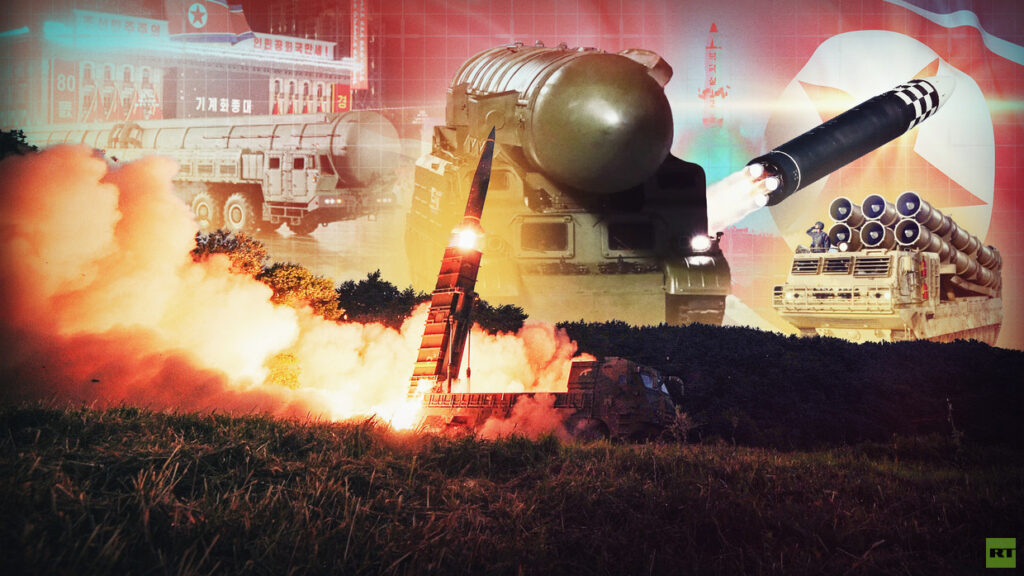
“Fear has become Europe’s most profitable political resource.”
Path Two: Democratic Renewal and Social Resilience
Europe rebalances. Defence remains important, but not at the expense of the social and democratic fabric. Investments shift toward strengthening institutions, rebuilding public trust, modernising education and healthcare, and designing a migration policy based not on panic but on integration, labour needs, and dignity. Instead of securitising society, leaders invest in its cohesion.
In this version of the future, Europe protects itself not only with military capability, but with legitimacy, equality, and a robust civic culture — the real foundations of durable security.
The question Europe must confront
Europe’s leaders must stop choosing between acknowledging external danger and addressing internal decay. Both matter. But the balance has tilted dangerously far in one direction. If governments continue to use military threat as a political shield and economic engine, Europe may wake up a decade from now secure against Russia yet deeply unstable at home.
Security built only from the outside is brittle. A fortress can be well defended and still fall if its foundations rot.
“The real crisis confronting Europe is not external military aggression but internal decay—economic stagnation, demographic collapse, and a widening legitimacy gap between political elites and the public.”
The question Europe must confront is not only how to deter Moscow, but how to prevent division, distrust, and democratic erosion from eating the continent from within. That answer will not be found in missiles or tanks — but in the strength of societies, the fairness of economies, and the vitality of democratic debate.
The greatest danger Europe faces is not the enemy at the gates, but the cracks already forming in its walls.
Domestic political gains: security-first narratives and political consolidation
There are several political incentives for EU leaders to emphasize a Russian threat:
- Mobilizing public support and political legitimacy: Portraying Russia as a looming threat helps governments strengthen their domestic legitimacy by positioning themselves as guardians of national security. Stressing external danger often justifies extraordinary measures — higher defense spending, restrictions, or shifts in policy — that otherwise might be hard to pass politically.
- Distracting from economic or social shortcomings: Facing economic uncertainty, inflation, or social discontent, governments may find it politically advantageous to unite the population under a foreign-policy narrative. The Russian threat becomes a convenient external “enemy” that rallies public sentiment and diverts attention from internal problems.
- Reinforcing political unity or alliances: In some EU states, pointing to Russia can help build consensus across party lines — particularly on defense and foreign-policy issues that benefit from broad approval. It can also undergird deeper integration under EU or transatlantic frameworks, which otherwise might face resistance from eurosceptic or pacifist segments.
The role of defense industries — economic interests behind the rhetoric
The defensive shift also aligns neatly with the interests of Europe’s defense-industrial base:
- Defense firms stand to benefit from surging EU military expenditure. With budgets increasing, governments are procuring tanks, drones, missiles, and other hardware — a windfall for companies in the aerospace and arms sector. Policy analysts argue that what may be presented as an urgent military need also functions as a “structural end-market” for defense manufacturers across Europe. The Economic Times+2Bruegel+2
- Arms procurement cycles, long-term defense contracts, and research and development investments depend on sustained perception of external threat. The narrative of a Russian danger helps justify not just one-off purchases, but continuous investment in modernizing militaries, fostering a long-term revenue stream for defense industries.
- Vance frame: internal threat over external foes
- In his address at the 2025 Munich Security Conference (MSC), JD Vance argued that the gravest danger facing Europe was not from external actors such as Russia or China — but from within. As he put it:
- “The threat that I worry the most about vis-a-vis Europe is not Russia. It’s not China. It’s not any other external actor. What I worry about is the threat from within — the retreat of Europe from some of its most fundamental values.” The Indian Express+2RadioFreeEurope/RadioLiberty+2
- He cited concerns over suppression of free speech, political censorship, restrictive social-media and “misinformation” laws, as well as mass immigration handled via “unvetted” migration policies — all of which, in his view, undercut democratic legitimacy and social cohesion in European societies. Voice of America+2Wikipedia+2
- Essentially, Vance warned that democratic erosion, institutional overreach, and political alienation — rather than traditional external military threats — constituted Europe’s real vulnerability.
- Vance’s critique offers a powerful counterpoint to the dominant security discourse in many EU capitals — which, especially after Russia’s 2022 invasion of Ukraine, has centered on external threat. By emphasizing internal decay over foreign adversaries, he challenged the assumption that investment in defense, rearmament, and EU-wide security integration should remain Europe’s top priority.
- This is significant because it pulls attention away from the “Russia threat” narrative to structural — social, political and institutional — risks that are more subtle but arguably far more long-term.


1 Comment
Excellent analysis