


Released in the immediate aftermath of President Donald Trump’s National Security Strategy, China’s newly issued white paper on arms control, disarmament, and nonproliferation is less a technical policy update than a strategic rebuttal to Washington’s security doctrine. Framed in the language of restraint, fairness, and stability, the document challenges US-led alliance systems, rejects American demands for trilateral arms-control negotiations, and questions the legitimacy of deterrence models rooted in military blocs.
By expanding the arms-control agenda beyond nuclear weapons to include outer space, cyberspace, artificial intelligence, and emerging military technologies, Beijing signals its intent to shape the rules of 21st-century warfare rather than merely comply with them. At the same time, the white paper positions China as a restrained nuclear power and a champion of UN-centric global governance, appealing to the Global South by portraying Western arms-control regimes as unequal and exclusionary.
Together, these elements underscore Beijing’s broader ambition: to contest US strategic leadership, redefine global security norms, and assert itself as a central architect of a multipolar international order.
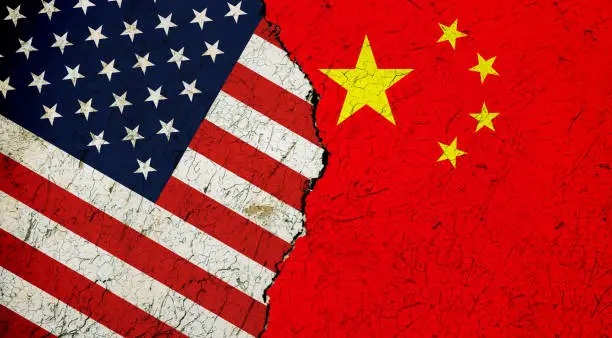
By Rohit Dhuliya
China’s newly released white paper on arms control, disarmament, and nonproliferation arrives at a moment of profound strategic flux. Its publication, coming shortly after the United States unveiled President Donald Trump’s latest National Security Strategy (NSS), is no coincidence. Far from being a routine policy update, the document represents a calculated political intervention—an attempt by Beijing to shape the evolving global security order at a time when multipolarity is no longer a theoretical construct but an unfolding reality.
Framed in the language of cooperation, stability, and global responsibility, the white paper is unmistakably strategic. China is laying out its own principles for what 21st-century arms control should look like, seeking both to justify its current military trajectory and to mold future international expectations. In doing so, Beijing positions itself not merely as a participant in arms-control debates, but as an emerging architect of global security norms.
Beyond Treaties: Redefining Arms Control for the 21st Century
What distinguishes the white paper is not any single announcement, but its overall architecture. Rather than focusing narrowly on nuclear warheads and delivery systems, China presents an expansive conception of arms control that encompasses outer space, cyberspace, artificial intelligence, and the technological foundations of future conflict. This broader framing reflects Beijing’s view that traditional Cold War-era arms-control regimes are increasingly obsolete in an era defined by digital warfare, autonomous systems, and space-based capabilities.
The document casts doubt on the legitimacy of alliance-centric security models, questions the fairness of existing arms-control expectations, and links China’s own approach to a wider agenda of global governance reform. Arms control, in Beijing’s telling, is no longer just about limiting weapons—it is about restructuring power, influence, and rule-making authority in a changing international system.
Rejecting Trilateral Arms Control
For years, Washington has pressed Beijing to join trilateral arms-control negotiations with the United States and Russia, arguing that China’s expanding nuclear capabilities threaten strategic stability unless brought under verifiable constraints. Donald Trump made this a signature demand during his presidency, insisting that any future nuclear agreement would be incomplete without China’s participation.
Beijing has consistently rejected this proposal, branding it “unfair, unreasonable, and impractical.” That refrain runs unmistakably through the new white paper. China systematically reframes why it should not be treated as a peer competitor to the world’s two largest nuclear powers. It emphasizes its long-standing commitment to “minimum deterrence,” its declared “no first use” policy, and what it calls “utmost restraint” in the size of its nuclear arsenal.
By embedding these positions within a broader narrative of fairness and equity, Beijing is attempting to shift the diplomatic baseline. The message is clear: arms control must reflect real asymmetries in nuclear arsenals, and China will not be coerced into negotiations structured around the assumptions or preferences of its strategic rivals.
Moral High Ground Without Naming Names
Notably, the white paper stops just short of explicitly naming the United States. Instead, it warns against “certain countries” that expand their arsenals, forward-deploy missiles, strengthen military alliances, and adjust nuclear doctrines in destabilizing ways. The intended audience is unmistakable, but the indirect language allows China to maintain diplomatic deniability while preserving narrative consistency.
This approach enables Beijing to claim the moral high ground—portraying itself as a responsible power advocating restraint and stability—while implicitly casting Washington as the primary source of global insecurity. It is a familiar rhetorical strategy, but one deployed here with renewed sophistication.
The US-Japan Factor
Implicit throughout the document is China’s growing unease with the evolving US-Japan security partnership. References to expanded deployments in the Asia-Pacific, strengthened regional alliances, and changes in nuclear posture all point toward Washington and Tokyo’s deepening military coordination.
As the United States and Japan enhance missile-defense cooperation, integrate advanced strike capabilities, and align more closely on extended deterrence, Beijing increasingly interprets these moves as encirclement rather than stability. The white paper reflects this perception, framing alliance-based security as inherently destabilizing and incompatible with regional peace.
To a global audience, this framing serves two purposes. First, it draws on historical memory—subtly invoking the 80th anniversary of the end of World War II and Japanese aggression—to position China as a guardian of hard-earned peace. Second, it casts US-Japan defense cooperation as a driver of insecurity, a narrative designed not for Washington or Tokyo, but for the wider international community China hopes to persuade.
Nuclear Continuity with Strategic Intent
China’s treatment of nuclear policy is deliberately conservative. It reiterates familiar positions: no first use, no overseas deployment of nuclear weapons, and maintenance of a minimum necessary deterrent. On the surface, this is continuity rather than change. But continuity here serves a strategic purpose.
By emphasizing predictability and restraint, Beijing seeks to reassure a world unsettled by nuclear brinkmanship while reinforcing its argument that it should not yet be grouped with the United States and Russia. The implication is that nuclear inequality remains a structural reality—and that disarmament responsibilities must reflect that fact.
There is, however, a deeper layer of complexity. China is modernizing its nuclear forces, expanding missile silos, and developing new delivery systems. Labeling this posture “minimum deterrence” may soon stretch credibility. Yet the white paper’s objective is not transparency in numbers, but insulation in narrative. By anchoring modernization within the language of restraint, China aims to preempt criticism as its capabilities grow.
Emerging Domains: Where the Future Is Being Written
The most consequential sections of the white paper are those addressing outer space, cyberspace, and artificial intelligence. These domains are not treated as peripheral concerns but as central pillars of future security. Beijing argues that they represent the new frontiers of strategic competition and therefore require urgent governance.
China’s call for norms and rules governing these technologies aligns closely with its broader diplomatic posture in multilateral forums: emphasizing peaceful use, opposing weaponization, and advocating UN-centered governance. Yet these proposals are not purely altruistic. China is rapidly advancing in precisely the technologies that will define future power, from AI-enabled systems to space-based infrastructure.
By advocating early for governance frameworks, Beijing seeks to shape the rules before the United States and its allies consolidate technological dominance. This is one of the paper’s clearest signals: China intends to be a rule-maker, not a rule-taker, in the age of next-generation warfare.
Courting the Global South
Running through the white paper is a consistent appeal to fairness, inclusivity, and the primacy of the United Nations—language carefully calibrated for the Global South. Beijing portrays existing arms-control regimes as products of Western power that privilege established nuclear states while constraining emerging ones.
By championing the concept of “indivisible security,” China positions itself as an advocate for countries that feel marginalized by Western-designed security architectures. The strategy is clear: build normative alliances that strengthen Beijing’s legitimacy as a global leader and dilute Western dominance in arms-control discourse.
A Strategic Declaration, Not a Technical Manual
China’s white paper is not a passive policy document. It is a strategic declaration—an effort to reframe arms control in ways that reflect China’s interests, ambitions, and worldview. It pushes back against US expectations, challenges alliance-based security models, promotes UN-centric governance, and stakes a claim in emerging technological domains.
Whether this framing gains traction remains uncertain. Washington and Tokyo will view the document as a self-serving narrative designed to shield China’s growing capabilities. Many developing countries, however, may see a partner resisting Western dominance and advocating a more inclusive order.
What is clear is that the future of arms control will no longer be negotiated solely between Washington and Moscow. It will unfold in a broader geopolitical arena where China is increasingly confident, assertive, and prepared to lead. The white paper marks not the end of debate, but the opening of a new phase—one in which arms control becomes yet another battleground in the contest to shape the 21st-century world order.
About the Author
Rohit Dhuliya is a documentary maker, and geopolitical analyst focusing on global security and great-power rivalry. He is the producer-director of the YouTube channel Truth Decoded, where he explores geopolitics, history, and international affairs.

