


Is Washington quietly turning its back on the post–Cold War alliance system it once built and led? Reports of a proposed “Core 5” grouping—bringing together the US, Russia, China, India, and Japan—suggest a strategic rethink underway in American foreign policy. By questioning the relevance of the G7, downgrading Europe’s centrality, and favoring ad-hoc power forums over value-based alliances, the US appears to be signaling fatigue with the institutional architecture of the post-1991 order. If true, this shift marks not just a tactical adjustment but a profound reorientation—from alliance leadership to transactional great-power management—reshaping how global order itself may be negotiated in the years ahead.
Rohit Dhuliya
Beyond the G7: Is Washington Reimagining Global Power Through a ‘Core 5’?
Reports that the United States is quietly considering the creation of a five-nation power bloc—bringing together the US, Russia, China, India, and Japan—have stirred debate well beyond Washington. According to multiple media outlets, including Defense One, the idea appeared in a longer, unpublished draft of the US National Security Strategy (NSS) released last week by the Trump administration. The proposed forum, dubbed the “Core 5,” would function as a platform for dialogue among the world’s most consequential powers, operating outside the Western-dominated G7 framework.
While the White House has denied the existence of any alternative or classified version of the NSS, and the Kremlin has urged caution in treating such claims, the report itself is revealing. Whether or not the proposal was formally endorsed, its logic reflects long-standing currents in US strategic thinking—particularly under Donald Trump—and highlights a deeper crisis in the architecture of post–Cold War global governance.
A Challenge to the G7’s Relevance
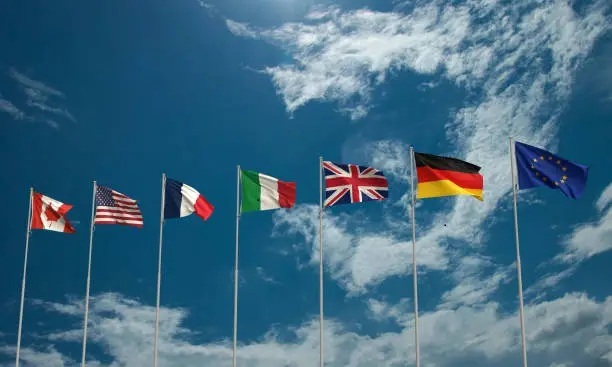
The G7 has long been a symbol of Western economic and political coordination. Yet its representational legitimacy has steadily eroded. Together, G7 countries no longer reflect the balance of global power, economic weight, or geopolitical influence. China and India—two of the world’s largest economies and populations—are excluded, while Russia’s suspension in 2014 over Crimea further narrowed the forum’s scope.
Trump has repeatedly argued that expelling Russia from the G8 was a “big mistake,” contending that Moscow’s continued presence might have prevented the escalation that culminated in the Ukraine war in 2022. His critique taps into a broader dissatisfaction with multilateral forums that are heavy on consensus rhetoric but increasingly detached from geopolitical realities.
The reported “Core 5” concept appears to respond directly to this gap. By grouping the US with Russia, China, India, and Japan, Washington would be acknowledging a simple truth: global stability cannot be negotiated meaningfully without engaging the major centers of power, regardless of ideological alignment.
Strategic Pragmatism Over Ideological Alignment
What makes the Core 5 idea striking is not its secrecy, but its pragmatism. Unlike the G7, which is bound together by shared political values and alliance structures, the proposed grouping would be unapologetically transactional. It would prioritize power, influence, and problem-solving over ideological coherence.
The reported plan for regular summits—each focused on a specific global issue—suggests a functional rather than normative approach to diplomacy. Middle East security, and particularly the normalization of relations between Israel and Saudi Arabia, reportedly tops the agenda. This choice is revealing. It signals Washington’s desire to bring Russia and China into discussions where they already exert influence, rather than attempting to manage global crises through Western-only mechanisms that increasingly lack leverage.
Such an approach aligns with Trump’s broader worldview: international politics as a series of deals among strong states, rather than rule-based cooperation anchored in liberal institutions.
Downgrading Europe, Reframing NATO
Equally significant are reports that the unpublished draft proposed downgrading Washington’s role in Europe’s defense. The idea of pushing NATO toward a tougher “burden-sharing” model is not new; Trump has long criticized European allies for underinvesting in defense while relying on American security guarantees.
What is new is the reported emphasis on bilateral relationships with select EU countries—Austria, Hungary, Italy, and Poland—seen as more aligned with US priorities. This signals a shift away from treating Europe as a cohesive strategic partner and toward a more fragmented, interest-based engagement.
If accurate, this approach reflects a fundamental reassessment of Europe’s strategic value.
From Washington’s perspective, Europe increasingly appears as a security consumer rather than a security provider, preoccupied with internal divisions and unable to act decisively without US leadership. The Core 5 concept, by contrast, centers power politics in regions Washington deems more strategically consequential.
Russia: Between Exclusion and Indifference
For Russia, the reports are met with cautious distance. The Kremlin has said it has seen no official statements from Washington and advised skepticism. President Vladimir Putin, in a recent interview with India Today, went further, stating that Russia has no plans to rejoin the G7, arguing that the group’s relevance continues to decline.
This posture reflects Moscow’s broader strategy since 2014: disengaging from Western-dominated institutions while seeking alternative platforms—such as BRICS, the Shanghai Cooperation Organisation, and bilateral ties with China and India—to assert its global role. From this perspective, a Core 5 format would only be attractive if it treated Russia as an equal power rather than a rehabilitated outcast.
Trump’s belief that Russia’s exclusion fueled confrontation resonates with this narrative, even if Moscow remains skeptical of Washington’s intentions.
China and India: Between Opportunity and Suspicion
China’s inclusion in a Core 5 would be both inevitable and contentious. Beijing has long criticized Western-led governance structures as unrepresentative and outdated. A forum that places China on equal footing with the US and Russia would align with its demand for recognition as a central pillar of global order.
At the same time, China would view any US-led initiative with suspicion, particularly one that appears designed to manage or constrain its rise through selective engagement rather than genuine power-sharing.
India’s position would be even more delicate. As a strategic partner of the US, a member of the Quad, and a participant in BRICS and the SCO, New Delhi has carefully balanced its relationships across competing blocs. A Core 5 could elevate India’s global stature, but it would also expose it to pressure to take clearer positions in US-China and US-Russia rivalries—something India has consistently resisted. Japan’s inclusion, meanwhile, underscores the enduring importance Washington places on its Pacific alliances, even as it questions the utility of European ones.
A Symptom of Systemic Transition
Whether or not the Core 5 proposal formally exists, the debate surrounding it reflects a deeper transformation. The post–Cold War order, anchored in Western institutions and assumptions of liberal convergence, is giving way to a more fragmented, power-centric system.
In this environment, forums like the G7 struggle to remain relevant, while new configurations—formal or informal—emerge to manage competition among great powers. The Core 5 idea captures this transition: a recognition that global stability now depends less on shared values and more on managed rivalry.
Denials, Ambiguity, and Strategic Signaling
The White House’s denial that any unpublished NSS draft exists may be accurate in a narrow procedural sense. Yet strategic documents often circulate in draft form precisely to test ideas and signal intent. Even as speculation, the Core 5 concept functions as a message—to allies, rivals, and domestic audiences—that Washington is willing to rethink sacred cows.
It also reinforces Trump’s consistent message: alliances are negotiable, institutions are tools rather than commitments, and power realities should trump ideological preferences.
A Thought Experiment With Real Consequences
The reported Core 5 plan may never materialize as a formal institution. But as a thought experiment, it is deeply consequential. It questions the centrality of the G7, challenges Europe’s privileged position in US strategy, and acknowledges the irreversible shift toward a multipolar world.
In doing so, it exposes a core tension in contemporary US policy: the desire to retain global leadership while shedding the costs of alliance maintenance and institutional stewardship. Whether Washington can reconcile these goals remains uncertain.
What is clear, however, is that debates like this signal the end of complacency. The architecture of global power is being renegotiated—quietly, controversially, and often behind closed doors. The Core 5, real or imagined, is a sign of that reckoning.
About the Author
Rohit Dhuliya is a documentary maker, and geopolitical analyst focusing on global security and great-power rivalry. He is the producer-director of the YouTube channel Truth Decoded, where he explores geopolitics, history, and international affairs.

