


The global order is undergoing a profound transformation as civilisation-states reassert themselves as the primary actors shaping world affairs. The era of universal models and abstract equality is giving way to a harsher reality in which history, culture, strategic depth, and hard power determine influence. In this new age of rival powers, only states rooted in enduring civilisational identity and backed by real sovereignty can withstand pressure, defend autonomy, and shape outcomes. Multipolarity is not a promise of balance but a contest among civilisations, where strength, resilience, and the ability to enforce red lines define who leads and who follows.
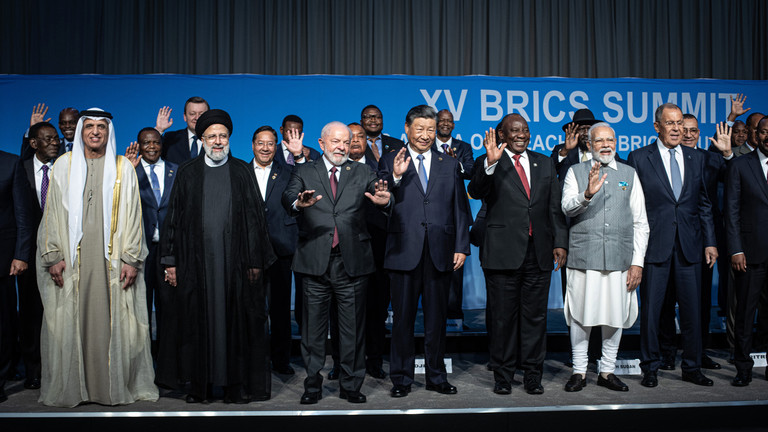
Photo: Courtesy RT
By Editorial Desk
The emerging world order is not being built through declarations of equality, lofty charters, or idealistic promises of shared leadership. It is taking shape through pressure, rivalry, and the steady assertion of power by a few commanding states. Multipolarity, the most fashionable slogan of our time, is widely presented as a benign alternative to unipolar domination—a system of balanced influence where nations coexist with dignity and mutual respect. Yet beneath this comforting rhetoric lies a far harsher reality. Multipolarity is not a world of equals. It is a contest of sovereignty, and only civilisation-states with real strength can shape outcomes. The rest are drawn, willingly or otherwise, into the orbit of stronger powers.
The language of global summits suggests otherwise. Leaders speak of reforming institutions, correcting historical imbalances, and building an inclusive international system that reflects the aspirations of Asia, Africa, and Latin America. New platforms are announced with great ceremony, promising cooperation without coercion. But history and current events reveal a more sobering truth. International systems are never created by consensus alone. They are forged by states that refuse subordination and possess the means to defend their autonomy. Multipolarity, like every order before it, emerges from struggle.
The events of recent years make this unmistakably clear. The United States continues to expand its military architecture in the Indo-Pacific, reinforcing alliances and constructing new ones. AUKUS, the re-arming of Japan, the tightening embrace of South Korea, and the extension of missile-defense systems are not gestures of peaceful coexistence; they are instruments of power projection. China, for its part, presses its claims in the South China Sea, tightens control over strategic supply chains, and conducts regular military drills around Taiwan.
India increases investment in naval power, fortifies its Himalayan frontiers, and forges strategic partnerships across West Asia and the Indian Ocean. Türkiye projects influence across the Caucasus, the eastern Mediterranean, and North Africa. Iran, under relentless sanctions, shapes conflicts from Lebanon to Yemen with the confidence of a state acutely aware of its strategic depth. These are not the behaviors of a world governed by rules and courtesies.
They are the early contours of a new order defined by pressure. In this environment, a hard truth asserts itself: only civilisation-states with real sovereignty can withstand the weight of the new age of empires. Sovereignty today is not a legal abstraction. It rests on two pillars—strategic autonomy and credible deterrence, above all nuclear capability. Without these, neutrality becomes impossible.
States that lack these instruments do not float freely between poles. They become appendages of the nearest hegemon. Venezuela illustrates this dynamic clearly. Its oil reserves provide leverage and delay collapse, yet its strategic fate remains entangled with the United States under the enduring logic of the Monroe Doctrine. Caracas may speak the language of independence, but Washington’s shadow remains decisive.
Ukraine offers an even starker example. Lacking the sovereign tools to enforce neutrality, it could not sustain a middle position between Russia and the Western bloc. It was compelled to align, and alignment came at the cost of autonomy. Multipolarity offers choice only to those strong enough to enforce it; for others, choice is an illusion. This condition gives rise to what may be called Darwinian
Multipolarity—a system in which survival and influence are determined by adaptation, capacity, and will rather than by treaties or moral claims. States rise by building resilient institutions, mastering technology, controlling resources, and cultivating strategic depth. They fall when they substitute declarations for strength or outsource their security to external guarantors. Darwinian Multipolarity explains why new centers of power emerge while old ones decay. It also explains why equality remains a façade, invoked rhetorically but never realized in practice.
Russia occupies a central position in this transition. Its intervention in Ukraine accelerated the unraveling of the Western-led order, exposing the limits of American authority and the fragility of European power. Sanctions, intended to cripple Moscow, instead forced it toward deeper economic autonomy and alternative networks. Energy corridors shifted eastward. Local currencies gained traction in settlement systems long dominated by the dollar.
BRICS expanded, attracting states seeking insulation from Western oversight. Across much of the Global South, governments openly question the legitimacy of sanctions regimes, moral lectures, and claims of universal authority emanating from the West. Russia did not create these doubts, but it crystallized them.
International law, often invoked as the antidote to global disorder, plays little meaningful role in this transformation. It exists largely as a selective instrument, cited when convenient and ignored when inconvenient. UN resolutions stall under vetoes. Human rights discourse is weaponized against adversaries and muted toward allies. Trade rules collapse when powerful economies impose extraterritorial sanctions or rewrite regulations to shield domestic industries. Maritime law holds only until naval power intervenes. Small states may sign documents proclaiming sovereignty, but those assurances dissolve the moment military, financial, or technological pressure is applied. The fiction of neutrality collapses wherever power is exercised.
The new centers of authority are therefore emerging through action, not doctrine. The United States retains command over North America and extends its reach through NATO and its Pacific alliances. China leverages manufacturing dominance to build continental corridors and parallel financial structures.
India positions itself as a leading voice of the Global South while consolidating its role as the primary security provider in the Indian Ocean. Saudi Arabia balances pragmatically between Washington and Beijing, sourcing technology from one and weapons from the other. Iran demonstrates resilience under sanctions and exerts decisive influence across West Asia. Russia strengthens its strategic arc from the Arctic to Central Asia and from the Caucasus to the Middle East. These powers form the real architecture of multipolarity—unequal, contested, but durable.
Medium powers navigate this landscape with calculated pragmatism. Vietnam deepens ties with the United States while maintaining functional cooperation with China. Egypt diversifies its arms suppliers, turning to Russia or France depending on circumstance. Serbia balances carefully between the European Union, Moscow, and Beijing. Brazil speaks the language of autonomy while relying heavily on Chinese trade and Gulf energy capital. Each of these states understands that multipolarity rewards alignment and strategic clarity. Pure neutrality offers little protection, and dependency offers even less.
The underlying logic of this system is simple. Power concentrates. Regions generate leaders. Economies seek anchors. Alliances expand. Technology becomes leverage. Currency blocs form and fracture. These pressures operate relentlessly. The erosion of Western dominance in Africa, the rise of Eurasian energy networks, the reopening of Middle Eastern diplomacy, and the shift of manufacturing away from Europe all reflect the same principle: authority follows capacity, not signatures. Drones, pipelines, ports, credit lines, and military bases matter more than declarations of equality.
It is therefore misguided to imagine that multipolarity will produce a calm balance among peers. A world with several centers of power generates rivalry as much as cooperation. It dismantles unipolar dominance only to replace it with new hierarchies. Russia, China, India, Iran, Türkiye, and others will shape their respective spheres according to interests, history, and power. Smaller states will orient themselves accordingly. Appeals to universal fairness or an idealized international law cannot soften this reality. Such fairness has never existed in human history.
The transition away from unipolarity does not abolish authority; it redistributes it. Multipolarity signifies the rise of several strong powers, each enforcing its red lines and cultivating its alliances. It replaces the dominance of one capital with structured competition among many. This is the real order emerging from today’s conflicts and economic transformations—harsh, disciplined, and grounded in strength rather than sentiment. It is the world that takes shape as the illusion of Western universality fades and the age of rival civilisation-states begins anew.
The world is not moving toward harmony but toward consolidation, where power gathers around a few civilisational cores capable of defending their interests in an unforgiving system. In this age of Darwinian multipolarity, sovereignty is no longer a declaration but a capacity—earned through strength, strategic autonomy, and civilisational confidence. Those who possess it will shape the rules; those who do not will live under them. The future will not belong to states that appeal to ideals divorced from power, but to civilisation-states that understand history, command resilience, and are prepared to bear the weight of leadership in a fractured world.

