


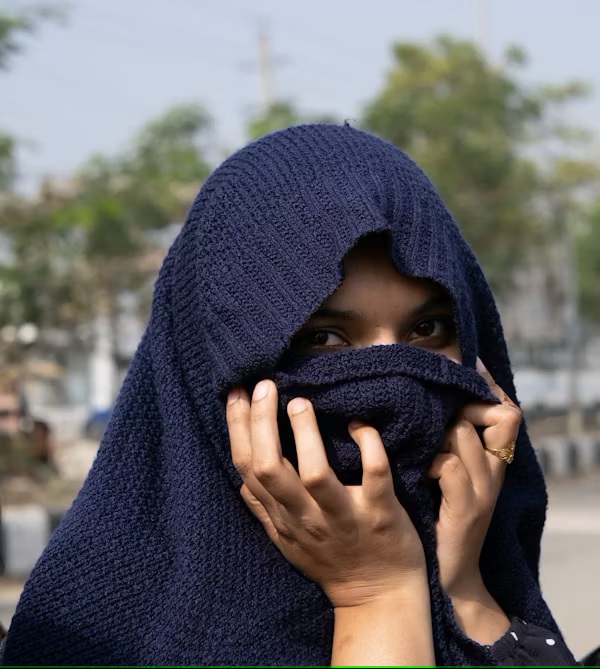
From ancient civilizations to modern nation-states, the hijab has evolved from a cultural practice into one of the most contested symbols of faith, identity, and power. More than just a piece of cloth, it reflects history, politics, and culture, while also raising a fundamental question of choice. Around the world, its meaning shifts depending on who decides: when women wear it freely, the hijab expresses belief, agency, and identity; when it is imposed or restricted, it can become a tool of control or even enslavement. Understanding the hijab today requires looking beyond religion to the social, political, and cultural forces that shape women’s autonomy and freedom.
By Rohit Dhuliya
Few symbols in the contemporary world evoke as much debate, emotion, and political meaning as the hijab. Often reduced to a piece of cloth, the hijab has become a powerful marker of identity, belief, culture, resistance, and control. To some, it represents devotion and dignity; to others, oppression and patriarchy.
In still other contexts, it is simply a cultural norm, inherited rather than consciously chosen. Understanding the hijab requires moving beyond binaries. It demands a historical lens, a cultural sensibility, and an ethical commitment to individual freedom. This article traces the historical origins of the hijab, examines how it is practiced across different regions and political systems, and engages with the enduring question: is the hijab a symbol of faith, slavery, culture—or all three at once?
The Meaning of Hijab
The term hijab originates from the Arabic root meaning to conceal, screen, or separate. In the Qur’anic context, hijab does not initially refer to a headscarf but to the broader concept of modesty, privacy, and moral conduct. Over time, in popular and legal usage, the word came to denote the head covering worn by Muslim women in public.
Islamic teachings on modesty apply to both men and women, prescribing humility in dress and behavior. However, women’s dress has been far more regulated and scrutinized, turning the hijab into a visible and contested symbol in social and political life.
Pre-Islamic Origins of Veiling
Veiling did not originate with Islam. Long before the rise of Islam in the seventh century, various forms of head and face covering existed across ancient civilizations. In Mesopotamian and Assyrian societies, veiling marked social status, distinguishing elite women from enslaved or marginalized groups.
In ancient Greece and Rome, respectable women covered their heads in public as a sign of modesty and honor.
Byzantine and Persian societies also practiced veiling among upper-class women. These practices were social rather than religious and governed ideas of gender, class, and respectability. Islam emerged within this cultural environment and absorbed some of these norms.
Hijab in Early Islamic Society
With the advent of Islam, ideas of modesty were articulated within a religious framework. Qur’anic verses encouraged women to dress modestly and draw coverings over themselves, but they did not prescribe specific garments or styles. As a result, early Islamic practices varied widely according to region, class, and local customs.
Long before Islam, veiling marked class, status, and respectability. Islam did not invent the veil but absorbed existing cultural practices, later transforming them into moral and social codes that varied widely across regions and eras.
Urban and elite women were more likely to veil than rural women. In this period, the hijab functioned more as a marker of identity and respectability than as a uniform religious obligation.
Regional Evolution Across the Islamic World
As Islam spread across continents, veiling practices evolved differently in each region. In Persia, the chador became prominent. In Arab societies, styles ranged from simple headscarves to abayas and face veils shaped by climate and tradition.
In North Africa, veiling blended Berber, Arab, and Ottoman influences. In South Asia, practices such as purdah, burqa, and the dupatta reflected a fusion of Islamic norms and local patriarchal customs.
In Southeast Asia, the hijab developed more recently and often appears colorful and stylistically diverse. What is often perceived as a single Islamic practice is, in reality, a wide spectrum of cultural expressions.
Colonialism, Modernity, and the Politics of Unveiling
European colonialism reshaped the meaning of the hijab. Colonial narratives portrayed veiled women as symbols of backwardness, using women’s dress to justify claims of cultural superiority.
In response, several post-colonial states pursued modernization projects that targeted veiling. In Turkey, secular reforms discouraged hijab in public institutions for decades. In Iran, forced unveiling policies were imposed in the 1930s. In these cases, unveiling was not a voluntary act of liberation but a form of state control that replaced traditional authority with political coercion.
Islamic Revival and the Return of the Hijab
From the late twentieth century onward, many Muslim societies witnessed what scholars describe as an Islamic revival or religious resurgence, a complex phenomenon shaped by political, social, and global forces rather than theology alone. This revival unfolded against a backdrop of failed post-colonial development models, authoritarian governance, widening economic inequality, and disillusionment with secular nationalism. As secular ideologies and Western-inspired modernization projects failed to deliver social justice or political stability, many people—particularly the urban middle classes and educated youth—turned toward religion as a source of moral certainty, identity, and collective purpose.
In the late twentieth century, the hijab moved from the private realm into the political spotlight. Revivalist movements and state ideologies turned a personal marker of modesty into a public symbol of loyalty, resistance, and identity.
A major catalyst for this revival was resistance to Western political, cultural, and economic dominance. Western influence in Muslim-majority countries, often reinforced through military interventions, Cold War alliances, and cultural globalization, generated deep anxieties about cultural erosion and moral decline. In this context, visible Islamic symbols, including the hijab, became a means of asserting cultural authenticity and moral independence. Wearing the hijab increasingly signaled not only personal piety but also a rejection of Western norms of dress, gender relations, and social life.
The Iranian Revolution of 1979 marked a decisive and globally influential turning point. By overthrowing a Western-backed monarchy and establishing an Islamic Republic, Iran demonstrated that religion could serve as a powerful political force. The new regime made hijab legally mandatory for women in public spaces, transforming it from a discouraged or optional practice into a state-enforced symbol of Islamic governance. In Iran, the hijab became intertwined with notions of citizenship, ideological loyalty, and national identity. Over time, this state control also generated resistance, turning the hijab into a contested symbol—both of conformity and defiance.
Similar, though less radical, revivalist trends appeared elsewhere. In Egypt, the spread of the hijab from the 1970s onward was driven largely by grassroots movements, university campuses, and Islamist organizations rather than state coercion. Young, educated women began adopting the hijab as a conscious choice, framing it as a modern yet Islamic identity that reconciled education and public participation with religious values. Here, the hijab represented moral discipline, social respectability, and belonging to a broader Islamic movement.
In Pakistan, the revival gained momentum during and after the Islamization policies of the late 1970s and 1980s, particularly under General Zia-ul-Haq. While hijab was never made legally mandatory, state rhetoric, media, and educational reforms encouraged conservative interpretations of Islam. As a result, head coverings, dupattas, and veiling practices became more visible in public life, especially among urban middle classes. The hijab came to symbolize religious consciousness, social respectability, and alignment with Islamic values in a rapidly changing society.
In the Gulf states, oil wealth, rapid modernization, and exposure to global cultures created tensions between tradition and change. Religious revival in these societies often manifested through stricter dress norms, including the widespread use of abayas, shaylas, and in some cases face veils. Here, the hijab served as a stabilizing symbol—anchoring identity amid economic transformation and demographic change, while reinforcing conservative social values.
Across these diverse contexts, the late twentieth-century Islamic revival reshaped the hijab into a highly visible marker of identity. No longer merely a personal or cultural practice, it became a statement about faith, morality, politics, and belonging. Whether adopted voluntarily, encouraged socially, or enforced by the state, the renewed visibility of the hijab reflected broader struggles over modernity, authenticity, and power in Muslim societies navigating a rapidly globalizing world.
Contemporary Practices and Legal Frameworks
In the contemporary world, the hijab exists within a wide spectrum of legal systems, political ideologies, and social norms, making it one of the most visibly regulated and debated forms of religious expression. Far from being governed by a single religious rule, hijab practices today are shaped by state authority, constitutional principles, cultural expectations, and individual agency, often in tension with one another.
In some countries, veiling is mandated by law and closely linked to the ideological character of the state. Iran represents the most prominent example. Since the 1979 Islamic Revolution, the hijab has been legally compulsory for all women in public spaces, regardless of religion or nationality. The state enforces dress codes through legal penalties, fines, and morality policing, framing hijab as both a religious duty and a civic obligation. In this context, the hijab is not merely a marker of faith but a symbol of political conformity and ideological loyalty. The persistence of public resistance and periodic mass protests also shows how compulsory veiling has transformed the hijab into a site of contestation rather than consensus.
In Taliban-ruled Afghanistan, veiling has been enforced through even stricter interpretations of Islamic law. Women are required to cover themselves fully in public, often with the burqa, and violations are met with severe social and legal consequences. Here, the hijab—or more accurately, enforced veiling—functions as an instrument of social control, reinforcing rigid gender segregation and restricting women’s public presence. The absence of meaningful choice in such contexts underscores how state power can override both religious diversity and individual autonomy.
By contrast, in many Muslim-majority countries, the hijab is socially prevalent but legally optional. In Egypt, there is no law mandating hijab, yet it is widely worn, particularly in urban and middle-class settings. Social norms, family expectations, and religious movements play a greater role than legal coercion. Women may choose the hijab for reasons ranging from personal faith to social respectability, while others opt not to wear it without legal consequences.
India, Pakistan, and Bangladesh
In Pakistan, where Islam is the state religion, there is no legal requirement for women to wear the hijab. Its widespread use reflects religious belief, cultural tradition, and social expectation rather than statutory law. Styles range from simple headscarves and dupattas to full-body coverings such as the burqa, with greater diversity and individual choice visible in urban and cosmopolitan areas. While the state does not enforce veiling, social norms—shaped by religious conservatism, family expectations, and class—often influence women’s decisions, making the hijab a marker of respectability and religious consciousness rather than a legal obligation.
‘In India, a constitutionally secular country with a large Muslim minority, the hijab is likewise not legally mandated. Its practice varies widely across regions, communities, and generations. Many women wear the hijab as an expression of faith or cultural identity, while others do not. In recent years, however, the hijab has become politically and legally contested, particularly in educational institutions, where debates have centered on secularism, uniformity, and religious freedom. In this context, the hijab has moved beyond a personal or cultural practice to become a symbol entangled in broader political and identity-based conflicts.
In Bangladesh, a Muslim-majority country with a secular constitution, there is also no legal requirement to wear the hijab. The headscarf is commonly worn, especially in urban areas and among middle-class women, often as a blend of religious observance, cultural norm, and personal choice. At the same time, many Bangladeshi women do not wear the hijab and face no legal restrictions for doing so. Social attitudes toward veiling are generally less polarized than in some neighboring countries, allowing a relatively wide spectrum of dress practices. Here, the hijab functions more as a social and cultural expression than a political or legal mandate.
Across India, Pakistan, and Bangladesh, therefore, the hijab operates primarily as a social and identity marker, shaped by community norms, cultural traditions, and evolving political debates rather than by direct state enforcement.
Hijab in Western Countries
In most Western democracies, the hijab is legally protected as an expression of religious freedom and individual rights. Women in countries such as the United States, Canada, and the United Kingdom are generally free to wear the hijab in schools, workplaces, universities, and public institutions, although they may still encounter discrimination, stereotyping, or social prejudice. In these societies, the hijab often functions as a personal choice and a visible assertion of religious identity within multicultural settings, where legal protections coexist with social challenges.
In parts of Western Europe, especially France, strict interpretations of secularism have resulted in bans or limitations on religious symbols, including the hijab, particularly in public schools and government spaces. Similar debates and partial restrictions exist in countries such as Belgium, Austria, and some German states. In these contexts, the hijab becomes a focal point of broader debates about integration, gender equality, and national identity, with supporters of restrictions viewing it as incompatible with secular public space, and critics arguing that such policies disproportionately target Muslim women and limit their autonomy.
At the same time, for many Muslim women living in Western societies, the hijab has acquired new and layered meanings. Beyond religious observance, it can represent cultural belonging, pride in heritage, or a conscious resistance to assimilation and Islamophobia. In increasingly polarized public debates, the hijab in the West often serves as a visible site where questions of freedom, diversity, and women’s agency are negotiated, reflecting broader tensions within pluralistic societies.
Taken together, these contrasting approaches demonstrate that the hijab is regulated not solely by religious doctrine but by state ideology and political priorities. Whether enforced, encouraged, tolerated, or restricted, the hijab reflects how governments define citizenship, secularism, morality, and women’s roles in society. As a result, the meaning of the hijab shifts across borders—from a compulsory symbol of state identity, to a voluntary expression of faith, to a contested marker of difference—revealing that contemporary hijab practices are as much about power and governance as they are about belief.
Hijab as a Cultural Symbol: Faith, Identity, and Power
Beyond the domains of religion and formal politics, the hijab is deeply embedded in culture, where it often operates as an inherited social practice rather than a consciously articulated religious choice. In many societies, women begin wearing the hijab because it is part of family tradition, community expectation, or local custom. Mothers, grandmothers, and peers transmit its meaning across generations, making it a visible marker of belonging and social acceptance. In such contexts, the hijab symbolizes continuity, respectability, and moral standing, signaling adherence to shared values rather than explicit theological commitment.
As a cultural symbol, the hijab can offer women a sense of identity and rootedness. It may affirm communal bonds, provide social legitimacy, and protect women from moral scrutiny in conservative environments. For some, it functions as a cultural language—communicating maturity, modesty, or honor—without necessarily reflecting deep religious conviction. Yet culture, while stabilizing, can also become prescriptive. When traditions harden into rigid norms, deviation may invite stigma, exclusion, or moral judgment. In these situations, the hijab ceases to be a benign cultural inheritance and becomes a tool of conformity, limiting women’s ability to define their own identities.
This tension leads to the broader and more contested question: Is the hijab a symbol of faith, slavery, or culture? The answer is not singular but conditional. The hijab is a symbol of faith when it is worn freely, as an expression of personal belief, conscience, and spiritual discipline. It represents agency when women choose it on their own terms, regardless of social approval or disapproval. Conversely, it becomes a symbol of subjugation when it is imposed—whether through state law, family pressure, or cultural coercion. In such cases, the hijab reflects unequal power relations rather than religious devotion.
Equally important is the recognition that coercion operates in both directions. Forcing women to remove the hijab in the name of secularism, modernity, or liberation is as violative of autonomy as forcing them to wear it. Both practices deny women the right to self-determination and reduce their bodies to sites of ideological control. When choice is absent, the hijab—whether present or absent—loses its moral legitimacy.
The hijab carries no single meaning. It empowers when chosen freely, oppresses when imposed, and becomes cultural when inherited without question. The real debate is not about the cloth, but about who controls the choice.
Between Faith and Enslavement
The hijab carries no single, fixed meaning; its significance is shaped by power, context, and choice. It empowers women when it is worn freely, as a conscious expression of faith, identity, or personal conviction. It becomes cultural when inherited as tradition, passed down through generations and normalized by custom. But it turns into a symbol of enslavement when imposed—by the state, by religious authority, by family, or by social coercion—reducing women’s bodies to sites of control and obedience rather than autonomy.
True enslavement does not lie in the garment itself, but in the denial of agency. When women are punished for not wearing the hijab, their bodies become regulated by law and morality. When women are punished for wearing it, their faith and identity are policed in the name of secularism or modernity. In both cases, women are stripped of the fundamental right to decide for themselves, trapped between competing ideologies that claim to speak on their behalf.
Ultimately, the hijab is neither inherently liberating nor inherently enslaving. Its meaning emerges from context, consent, and control. When choice is genuine, the hijab becomes one among many expressions of identity. When choice is absent, it becomes a symbol not of faith or culture, but of domination. The question we must confront, then, is not what women wear—but whether they are free to decide for themselves.
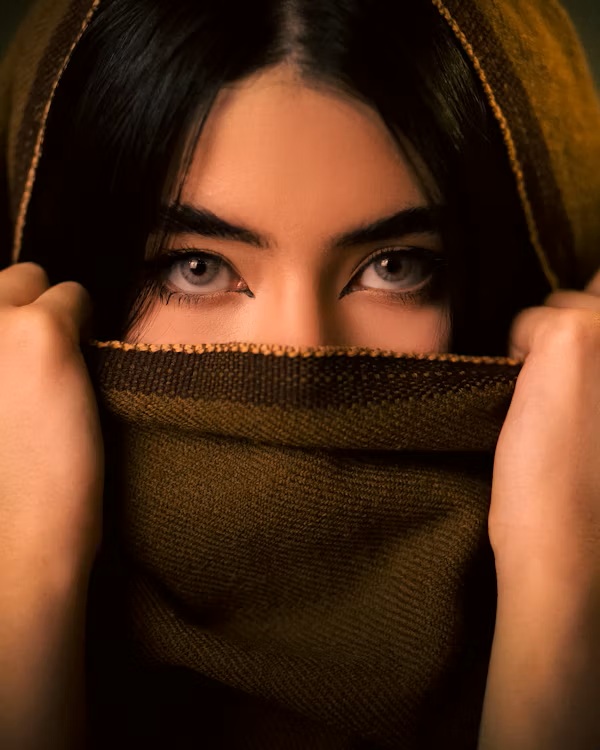
The real moral and political question, therefore, is not whether women should veil or unveil, but whether they are free. A society that measures women’s liberation by enforcing dress codes—religious or secular—merely replaces one form of domination with another. The hijab becomes a symbol of women’s enslavement only when choice is absent; where freedom exists, it becomes simply one among many expressions of belief and belonging. The true test of progress lies not in controlling what women wear, but in ensuring that their choices are genuinely their own.
Photo: Yeasir Ahmed & Farshad Sheikhzadeh. Unsplash
About the Author
Rohit Dhuliya is a filmmaker known for his insightful, thought-provoking documentaries and his writings on contemporary issues. His films have been featured at major festivals, including the Mumbai International Film Festival, Swedish International Film Festival, Signs Film Festival (Kerala), Monadnock International Film Festival (USA), and the Global Peace Film Festival (USA).His acclaimed documentary Wounds of Change won the Rising Star Award at the Canada International Film Festival and was showcased at the University of Heidelberg. His recent film Gandhi Rediscovered has received multiple honours, including the Short Documentary Award at the Portland International Film Festival and the Golden Sparrow Film Festival, along with an official selection at Monadnock.

