


Once one of Latin America’s richest countries, Venezuela today stands as a cautionary tale of how political centralization, economic mismanagement, international sanctions, and external interventionist policies can destabilize a nation. Venezuela’s crisis reflects a broader pattern in global geopolitics, where U.S. intervention strategies—widely viewed as unsuccessful in Iraq, Afghanistan, and elsewhere—have often compounded economic collapse, weakened institutions, and prolonged political instability rather than delivering lasting democratic or economic recovery.
By Rohit Dhuliya
From Oil Wealth to Crisis: How Sanctions, Power Politics, and U.S. Intervention Shaped Venezuela
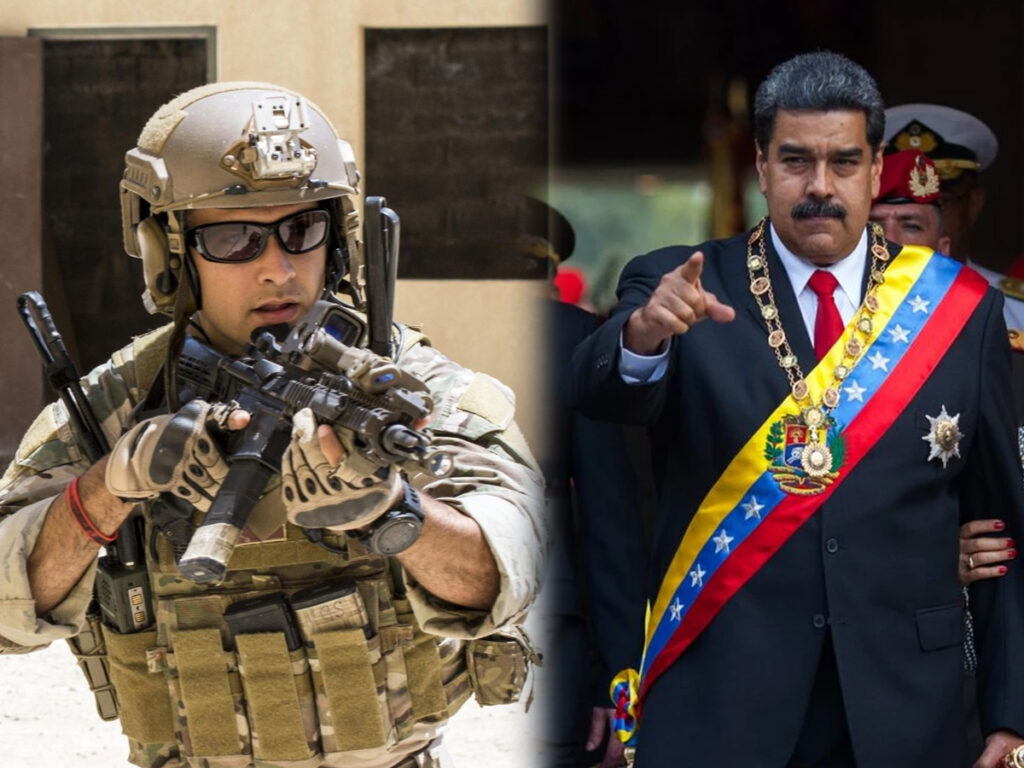
The sudden U.S.-led intervention in Venezuela—culminating in the capture of President Nicolás Maduro and the announcement that the country would be administered with the support of Venezuela’s vice president—has raised profound questions about both method and motive. What startled many observers was not merely the speed of the operation, but the apparent absence of sustained resistance from Venezuelan military forces. This anomaly prompted speculation: Was the intervention executed with extraordinary operational precision, or had segments of Venezuela’s political or military elite reached a tacit understanding with U.S. intelligence agencies, possibly facilitating regime change from within?
Uncertain Future
While Maduro’s removal marks a dramatic political rupture, it remains uncertain whether it represents a resolution or the opening of a deeper and more volatile conflict. History cautions against equating regime change with stability. In Iraq and Afghanistan, leadership collapse occurred swiftly, but the aftermath was defined by insurgency, institutional collapse, and prolonged foreign entanglement. Iran, despite decades of sanctions and pressure, has similarly resisted external coercion without yielding strategic closure. Venezuela may now be entering a comparable phase—one in which the fall of a leader is merely the prelude to a longer, more unpredictable struggle.
The renewed crisis has also revived a familiar and unsettling vocabulary in American foreign policy. When U.S. officials frame Venezuela through the lens of interventionism and invoke the Monroe Doctrine, the implications extend far beyond humanitarian concern or democratic restoration. Such language signals a strategic recalibration rooted in older doctrines of hemispheric dominance, recalibrated for an era defined by great-power rivalry. To understand what is unfolding in Venezuela, it is essential to examine not only the mechanics of U.S. action, but the broader strategic logic that animates them.
Hybrid Intervention and the New Face of Warfare
The so-called “invasion” of Venezuela has not resembled a traditional military occupation. Instead, it reflects a hybrid model of warfare—one that combines economic strangulation, covert operations, diplomatic isolation, political delegitimization, and the persistent threat of force. Over the years, sanctions have devastated Venezuela’s economy, foreign assets have been frozen, opposition figures have been internationally recognized and supported, and military intervention has remained conspicuously “on the table.”
This approach exemplifies a contemporary strategic template: destabilization without formal war. By avoiding outright invasion, the intervening power minimizes political costs while maximizing pressure on the target state. Yet this raises a critical question—why Venezuela, and why now?
The Monroe Doctrine Revisited
To answer this, one must confront the revival of the Monroe Doctrine. Articulated in 1823, the doctrine initially sought to prevent European powers from reasserting colonial control in Latin America. Framed as a defensive principle, it was not originally intended as a license for U.S. domination. Over time, however, it evolved into precisely that—an ideological justification for American primacy in the Western Hemisphere.;;
Regime-Change Operations Across Latin America
Throughout the twentieth century, the doctrine underpinned numerous U.S.-backed coups, invasions, and regime-change operations across Latin America. In 1954, the CIA orchestrated the overthrow of Guatemala’s democratically elected president, Jacobo Árbenz, to protect U.S. corporate interests, most notably those of the United Fruit Company. In 1973, Washington supported the coup against Chile’s Salvador Allende, paving the way for Augusto Pinochet’s authoritarian rule in the name of anti-communism. Similar logic guided U.S. actions in the Dominican Republic (1965), Grenada (1983), and Panama (1989), where Manuel Noriega was removed after becoming more liability than asset.
When contemporary U.S. officials invoke the Monroe Doctrine in relation to Venezuela, they are not merely referencing history—they are reaffirming a worldview in which Latin America is treated as a strategic preserve rather than a collection of sovereign states. This resurgence of doctrine reflects not nostalgia, but necessity, driven by new geopolitical anxieties.
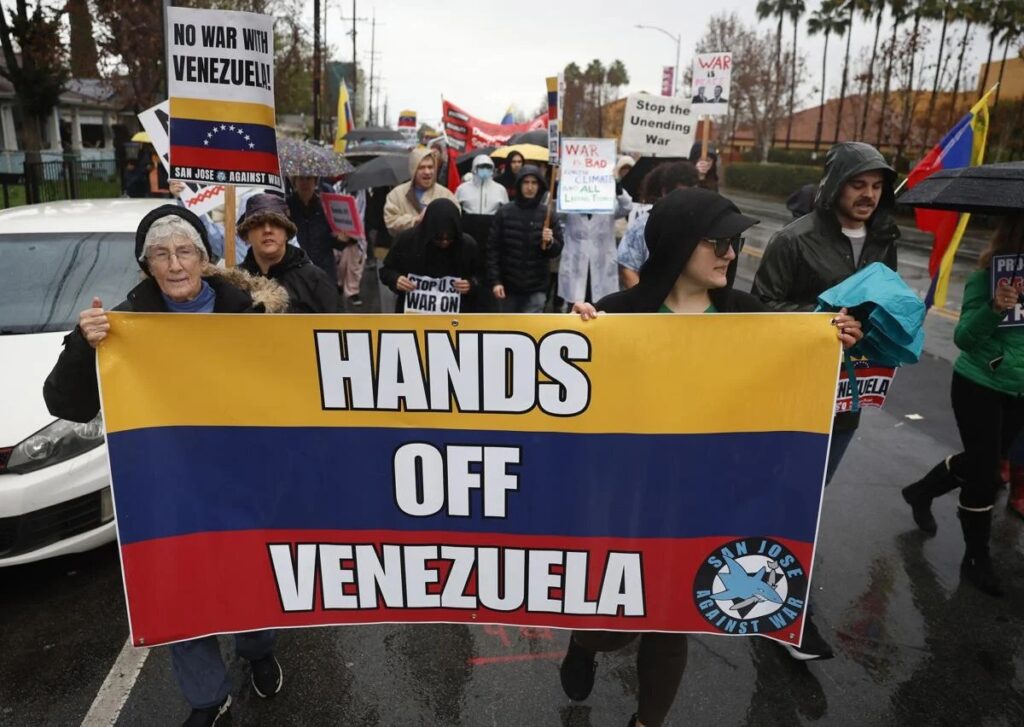
PROTEST
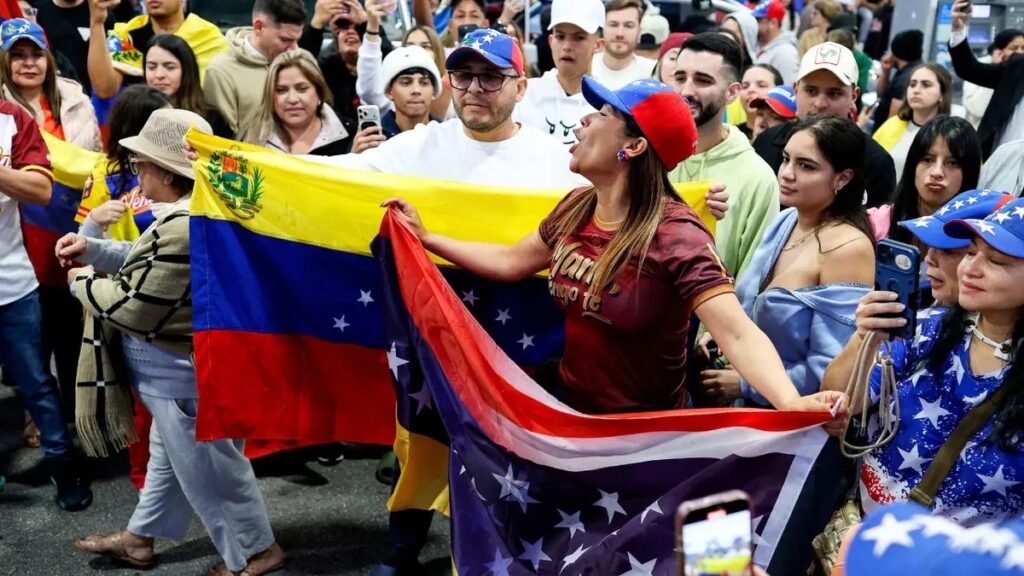
CELEBRATION
High Cost of Containing China
Oil is frequently cited as the primary motivation behind U.S. interest in Venezuela. With the world’s largest proven reserves, Venezuela’s energy wealth has long attracted external attention. Yet this explanation no longer suffices. The United States today is one of the world’s largest oil producers and is not dependent on Venezuelan crude for its energy security.
The true significance of Venezuelan oil lies not in American consumption, but in its geopolitical leverage. Control—or denial—of energy resources shapes global markets, influences allies and adversaries alike, and underwrites strategic power. In this context, Venezuela’s importance becomes inseparable from the rise of China.
China’s Footprint Across Latin America,
Over the past two decades, China has steadily expanded its footprint across Latin America, becoming the leading trading partner for several countries and a major financier of infrastructure, energy, mining, and technology projects. Venezuela occupies a particularly symbolic and strategic position within this expansion. Despite economic collapse and political isolation, Caracas cultivated deep ties with both China and Russia, positioning itself as a defiant node in an alternative global order resistant to U.S. pressure.
For Washington, this is intolerable. Venezuela is not merely a troubled petrostate; it is a visible challenge to U.S. dominance in its own hemisphere. Allowing China to entrench itself there would signal a broader erosion of American authority. Thus, the Venezuelan crisis is less about Caracas than Beijing.
Proxy Competition in a Multipolar World
Direct military confrontation between the United States and China is effectively unthinkable. As nuclear-armed economic superpowers deeply integrated into the global system, open war would be catastrophically self-defeating. Instead, rivalry unfolds indirectly—through trade wars, technology restrictions, sanctions regimes, diplomatic maneuvering, and selective interventions.
Venezuela represents one such theater in this wider contest. By weakening or neutralizing states aligned with China, Washington seeks to constrain Beijing’s global reach without triggering direct confrontation. This logic extends beyond Latin America to the Middle East, where Iran occupies a similar position in U.S. strategic thinking.
Energy Security and Proxy Wars
Energy security sits at the heart of this proxy competition. While the United States enjoys relative energy independence, China remains heavily reliant on imported oil, much of it transiting through vulnerable chokepoints such as the Strait of Hormuz. Any disruption in this corridor would have immediate consequences for China’s economy.
Here, Venezuela and Iran converge strategically. Both are major oil producers, both resist U.S. pressure, and both have cultivated close ties with China. Bringing these states to heel—or rendering them unstable—would grant Washington enormous leverage over global energy flows, price stability, and the economic resilience of its rivals.
Echoes of the Cold War
This strategic architecture bears striking resemblance to Cold War dynamics. Then, as now, direct confrontation between rival superpowers was avoided, while proxy conflicts proliferated across the developing world. The Vietnam War, U.S. support for the Afghan mujahideen against Soviet forces, and interventions in Angola and Central America all reflected this logic of indirect containment.
Today, China has replaced the Soviet Union, but the methods endure. Economic warfare, technological decoupling, financial pressure, and peripheral destabilization form the backbone of a new era of managed confrontation.
Finance, Sanctions, and Dollar Power
Finance constitutes another critical battlefield. The dominance of the U.S. dollar in global trade and finance enables Washington to impose crippling sanctions and isolate adversaries with remarkable efficiency. Venezuela’s economic collapse cannot be understood without acknowledging the central role of financial exclusion and asset freezes.
China, for its part, is attempting to hedge against this vulnerability. By accumulating gold reserves, promoting yuan-based trade settlements, and exploring alternative financial architectures, Beijing seeks to reduce its exposure to dollar weaponization. While these efforts will not displace the dollar in the near term, they underscore a long-term strategy to dilute U.S. financial hegemony.
Control over energy producers like Venezuela and Iran reinforces this financial power. Energy markets and monetary systems are deeply intertwined, and influence over one amplifies leverage over the other.
The ‘Deep State’ Narrative Returns: Trump, Tulsi Gabbard, and the Politics of Foreign Intervention
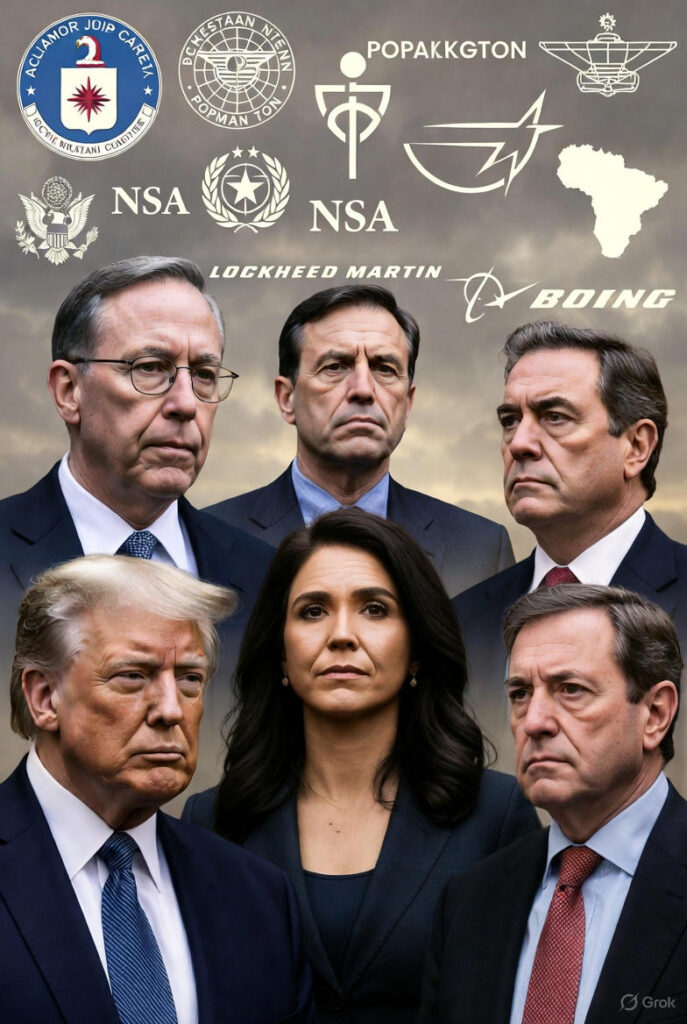
Trump, Tulsi Gabbard & US Top Brass
The Venezuelan episode also exposes the stark constraints—and often the outright impotence—of electoral politics in reshaping U.S. foreign policy. Presidents from across the political spectrum, including Donald Trump during his campaigns, have repeatedly promised to end “endless wars” and reject the interventionist status quo. Trump explicitly campaigned on terminating forever wars, criticizing past regime-change operations in Iraq and elsewhere as wasteful disasters that drained American resources and lives. Similarly, Tulsi Gabbard—now serving as Director of National Intelligence in his administration—has long positioned herself as a fierce opponent of such adventures.
As a 2019 presidential candidate and later as a Trump appointee, Tulsi Gabbard repeatedly warned that U.S. military intervention in Venezuela would be “disastrous,” predicting it would bring death, destruction, civil war, and heightened threats to national security while echoing the failures of Iraq, Libya, and Afghanistan. Just months before the Maduro capture, in late 2025, Gabbard publicly declared that the “counterproductive and endless cycle of regime change or nation-building” was over under Trump’s leadership.
Yet policy continuity persists with striking force. Despite these proclamations, the Trump administration executed a direct military operation in Venezuela—conducting airstrikes, capturing Nicolás Maduro, and announcing U.S. administration of the country—actions that directly contradict the anti-interventionist rhetoric both Trump and Gabbard had championed. This glaring divergence underscores that U.S. foreign policy is shaped far less by individual leaders or campaign promises than by enduring institutional forces: the so-called Deep State—entrenched elements within defense establishments, intelligence agencies (such as the CIA and elements of the intelligence community), corporate interests tied to energy and defense contracting, and longstanding strategic doctrines that prioritize hemispheric dominance and great-power competition.
These bureaucratic and institutional actors often operate independently of—or even in opposition to—the elected executive, sustaining interventionist impulses regardless of who occupies the White House. Trump’s first term saw similar tensions, where promises to withdraw from foreign entanglements clashed with pressures from advisors and agencies favoring regime pressure in places like Venezuela.
In his second term, despite Gabbard’s role and her prior criticisms of “regime change wars,” the machinery of power—including hawkish voices in the national security apparatus—appears to have prevailed, enabling the Venezuela operation as part of a broader revival of Monroe Doctrine-style assertiveness against perceived Chinese and Russian influence.
Presidents may change, and their public rhetoric may shift dramatically, but the entrenched machinery of power remains remarkably consistent, often overriding proclaimed intentions and exposing the limits of democratic accountability in foreign affairs. This reality raises profound questions about whether true reform is possible without dismantling or fundamentally reorienting these institutional bulwarks.
Conclusion: Managed Conflict and Unmanaged Consequences
Venezuela is not an isolated crisis. It is a window into an emerging global order defined by managed conflict rather than outright war. The revival of the Monroe Doctrine, the strategic targeting of Venezuela and Iran, the containment of China, and the weaponization of energy and finance all point toward a future characterized by calibrated confrontation.
History offers a sobering warning. Proxy wars rarely remain contained. In an interconnected, heavily armed world, instability in one region can cascade rapidly into broader crises. The very strategies designed to avoid great-power war may ultimately generate risks that exceed those of direct confrontation.
Venezuela, then, is not merely a battleground over sovereignty or ideology. It is a test case for a new era of global rivalry—one in which the costs of containment may prove far higher than its architects anticipate.
About the Author
Rohit Dhuliya is a filmmaker known for his incisive documentaries and writings on contemporary issues. His films have screened at major international festivals worldwide. His award-winning Wounds of Change won the Rising Star Award at the Canada International Film Festival, while his recent film Gandhi Rediscovered has received multiple honours, including Short Documentary Awards at international festivals.

