


India’s highway boom has transformed mobility and logistics, but it has also sparked a growing debate over tolls, long concession periods and who ultimately benefits. As public funds, private capital and user charges intersect, the economics of highways reveal a complex balance between infrastructure growth and public trust.
By Newswriters News Desk
India’s highway expansion over the past decade has been among the most ambitious infrastructure programmes undertaken anywhere in the world. From a slow-moving, under-funded road network plagued by bottlenecks and poor connectivity, national highways have been transformed into the backbone of India’s logistics, mobility and economic integration.
Yet this transformation has also produced a parallel debate over tolls: how much is being collected, for how long, and whether users are paying far more than the actual cost of building these roads. At the heart of this debate lies the complex political economy of highway financing, where public funds, private capital, long concession periods and steadily rising toll rates intersect.
Between 2014 and 2025, India’s national highway network expanded from roughly 91,000 kilometres to more than 146,000 kilometres. This represents an addition of over 55,000 kilometres to the core national highway grid, while the total length of highways built or upgraded during this period, including widening, access-controlled corridors and economic corridors, exceeds 95,000 kilometres. Construction accelerated sharply after 2017, peaking in 2020–22, when average daily highway construction touched nearly 30 kilometres per day. Even after pandemic disruptions, highway building remained a priority, with over 12,000 kilometres constructed in 2023–24 and more than 5,500 kilometres in 2024–25.
This rapid expansion required unprecedented financial commitment. Over the last decade, cumulative investment in national highways is estimated at well over ₹10 lakh crore. Annual capital expenditure by the National Highways Authority of India (NHAI) rose from less than ₹50,000 crore in 2014–15 to over ₹2 lakh crore in 2023–24, with provisional spending touching ₹2.5 lakh crore in 2024–25.
These figures include direct government budgetary support, borrowings by NHAI, private investment under public-private partnership (PPP) models and monetisation proceeds from existing assets. Flagship programmes such as Bharatmala Pariyojana alone account for several lakh crore rupees, covering economic corridors, border roads, coastal highways and expressways.
Over the last decade, India has poured more than ₹10 lakh crore into expanding its national highway network, adding tens of thousands of kilometres at unprecedented speed. This expansion has redefined connectivity and logistics efficiency, but it has also locked the road sector into long-term financial commitments that depend heavily on sustained toll revenues.
The financing model underpinning this expansion is mixed. In some cases, highways are built entirely using public funds under the Engineering, Procurement and Construction (EPC) model, where contractors are paid upfront and the road remains fully government-owned. In other cases, highways are developed under PPP arrangements, such as Build-Operate-Transfer (BOT) or Hybrid Annuity Model (HAM).
Under BOT-toll projects, private concessionaires invest capital, construct the highway, operate it and collect tolls for a fixed concession period, typically between 15 and 30 years, after which the asset is transferred back to the government. Under HAM, the government bears a significant portion of construction cost upfront, while the private player recovers the rest through fixed annuity payments rather than tolls, reducing traffic risk.
Tolling, however, remains central to the economics of highways, whether roads are publicly funded or privately built. Under the National Highways Fee Rules, tolls are levied on specific stretches to recover capital cost, maintenance expenses, financing charges and a reasonable return. Rates are notified annually and revised every year, usually linked to wholesale price inflation. With the nationwide rollout of FASTag and the shift towards electronic toll collection, toll revenues have become more efficient, transparent and scalable. Annual toll collections on national highways have surged from around ₹13,000 crore in 2014–15 to well over ₹60,000 crore by 2023–24, making tolling one of the fastest-growing non-tax revenue streams in the transport sector.
It is this scale and persistence of toll collection that has triggered criticism. Critics argue that on several highway stretches, cumulative toll revenues over time exceed the original construction and maintenance costs by large margins, sometimes multiple times over.
Toll collection lies at the heart of highway financing, yet it remains the most visible and contentious aspect for users. In several cases, cumulative toll revenues have exceeded construction costs by wide margins, fueling criticism that highways have become perpetual revenue streams rather than time-bound cost-recovery projects.
Parliamentary panels, audit observations and opposition leaders have repeatedly questioned why tolls continue to be collected long after capital costs appear to have been recovered. The argument is not merely about absolute numbers, but about the structure of concession agreements, which allow toll collection for decades regardless of how quickly costs are recovered in practice.
Specific examples have sharpened public scrutiny. On the Gurgaon–Jaipur stretch of NH-48, toll collections over the years have exceeded ₹9,000 crore, while reported construction and maintenance costs were around ₹6,400 crore. On the Delhi–Gurgaon expressway, toll revenues surpassed original construction costs within years, yet tolling continued until court intervention. Such cases have become emblematic of what critics describe as “perpetual tolling”, where users continue to pay not just for road use and maintenance, but for financial structures that favour long-term revenue certainty for concessionaires and lenders.
From the perspective of private investors, long tolling periods are not windfall gains but necessary risk compensation. Highway projects involve significant upfront capital, long gestation periods, land acquisition delays, traffic uncertainty and regulatory risk. Financing costs, especially in earlier years when interest rates were higher, substantially inflate the effective cost of projects. Maintenance obligations over 20–30 years are also non-trivial, particularly for high-traffic corridors. From this viewpoint, toll revenues exceeding headline construction costs do not automatically imply excess profit; they reflect the time value of money, debt servicing and lifecycle maintenance.
Yet public dissatisfaction persists because tolls are paid daily and visibly, while financing logic remains abstract. For regular commuters, transporters and small businesses, toll expenses add directly to living and operating costs. India’s tolling density has increased significantly, with toll plazas now appearing at intervals of 60 kilometres or less on many corridors. For freight operators, tolls have become a major component of logistics costs, sometimes rivalling fuel expenses on long hauls. Critics argue that when highways are built substantially with public funds, continued tolling blurs the line between user charge and revenue extraction.
The government has attempted to address this tension through policy refinements. The shift from BOT-toll to HAM reduced reliance on tolls for new projects. Asset monetisation through Infrastructure Investment Trusts (InvITs) allows the government to lease out mature highway assets to investors for a fixed period, using proceeds to fund new construction without raising tolls further. Proposals such as distance-based tolling and multi-lane free-flow systems aim to make tolling more equitable and reduce congestion costs. Annual passes for frequent users have been introduced to ease the burden on daily commuters.
Despite these measures, the fundamental economics remain politically sensitive. Highways generate clear macroeconomic benefits: reduced travel time, lower vehicle operating costs, improved supply chains, regional integration and productivity gains. Studies consistently show that better highways reduce logistics costs as a share of GDP and boost economic growth. Local economies along highway corridors benefit from real estate development, industrial clusters, tourism and services. Governments gain not only toll revenue but also higher tax collections from economic activity enabled by better connectivity.
While governments gain infrastructure without immediate fiscal strain and investors secure predictable long-term returns, road users bear the daily cost through toll payments. The broader economy benefits from faster transport and lower logistics costs, but public acceptance hinges on whether tolling is seen as fair, transparent and linked to service quality.
The primary beneficiaries of highway economics, therefore, are multiple and layered. The state benefits through infrastructure creation without bearing the entire fiscal burden upfront. Private investors benefit from predictable long-term cash flows backed by essential infrastructure assets.
Users benefit from faster, safer and more reliable travel, even if they pay directly for it. The broader economy benefits from efficiency gains that are diffuse but substantial. The conflict arises when the distribution of costs and benefits appears misaligned in everyday experience, particularly when tolls feel endless or disconnected from road quality.
The challenge for policymakers is not whether to toll highways, but how to design tolling regimes that are transparent, time-bound and publicly credible. Clear communication about concession periods, cost recovery logic and maintenance obligations remains weak. So does public access to project-level data on investment, revenue and profit. Without this transparency, toll plazas become symbols of unfairness rather than instruments of infrastructure finance.
India’s highway programme is likely to continue expanding, with expressways, logistics corridors and greenfield alignments planned across regions. As capital requirements grow, tolling and monetisation will remain central to funding strategy. Whether public trust keeps pace with physical expansion will depend on how convincingly the state can demonstrate that tolls are a price for better roads, not a permanent levy detached from the economics that justified them in the first place.
When Roads Are Built, But the Toll Never Ends
Ultimately, India’s highway boom reflects a trade-off between speed of infrastructure creation and the price paid by users over time. While massive investment has undeniably transformed connectivity and lowered logistics costs, the persistence of tolls long after roads are built has raised uncomfortable questions about transparency, equity and accountability. If highways are to remain symbols of national progress rather than everyday irritants, tolling must be clearly linked to actual costs, service quality and defined recovery periods—otherwise, public trust risks becoming the next casualty of India’s infrastructure success.
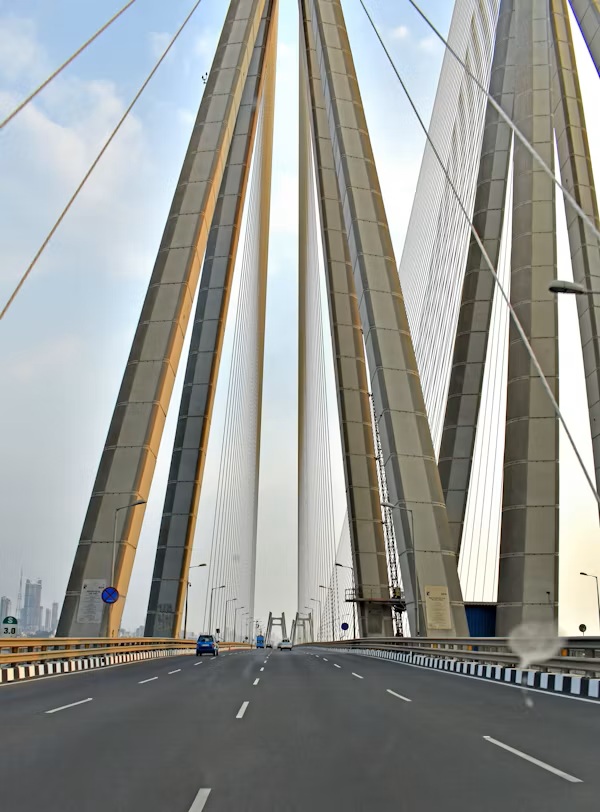
Photo: Brijender Dua, Unsplash

