


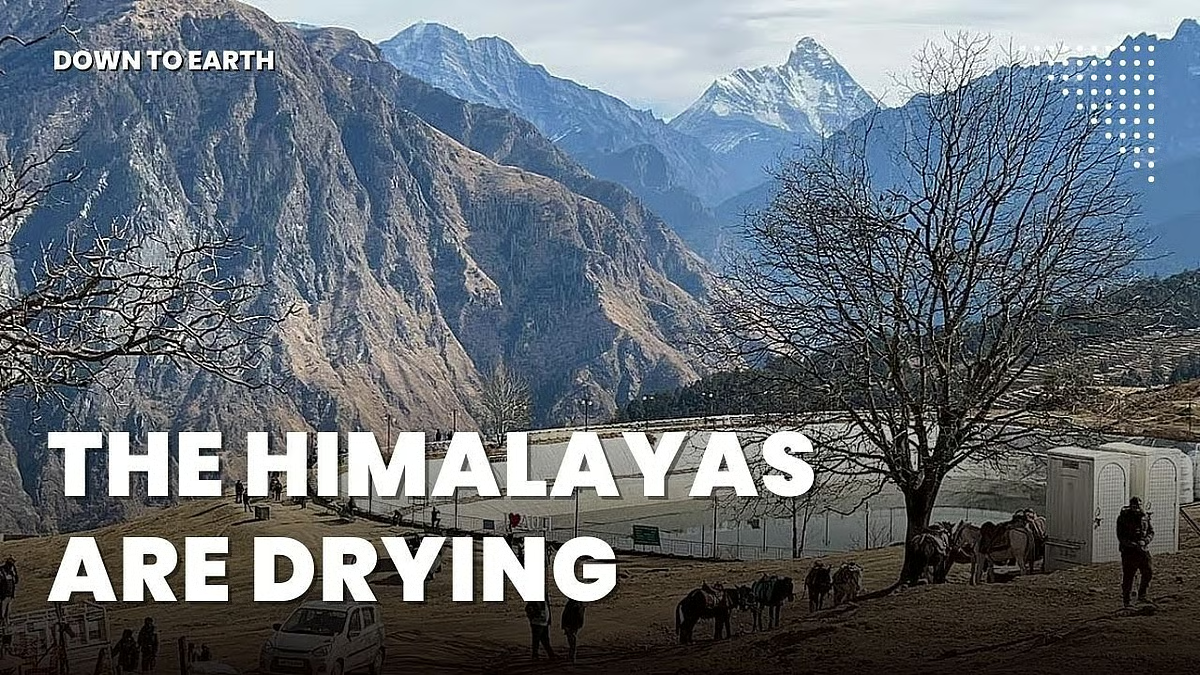
This winter, the Himalayas appear strangely stripped of their familiar whiteness. In Uttarakhand, the snow that once settled quietly on peaks, nourished rivers, shaped agricultural rhythms, and anchored cultural memory has largely failed to arrive. What remains are bare slopes and uneasy questions.
The winter drought unfolding across the region is not merely an environmental disruption; it marks the fading of a visual and spiritual mystique that has long defined the mountains.
Scientists warn that the vanishing snow reflects deeper climatic shifts in the Himalayas, with consequences that will be felt far beyond these fragile heights — from forests and farms to the millions who depend on Himalayan waters downstream.
By Newswriters News Desk
For generations, winter in Uttarakhand has been synonymous with snow-covered peaks, frozen streams, and white-blanketed pilgrimage routes. From Kedarnath and Badrinath to Auli and the higher reaches of Pithoragarh and Uttarkashi, snowfall has been central not only to the region’s ecology but also to its economy, culture, and water security. This winter, however, large parts of Uttarakhand have remained conspicuously snow-free well into January, raising concerns among scientists, policymakers, and local communities alike.
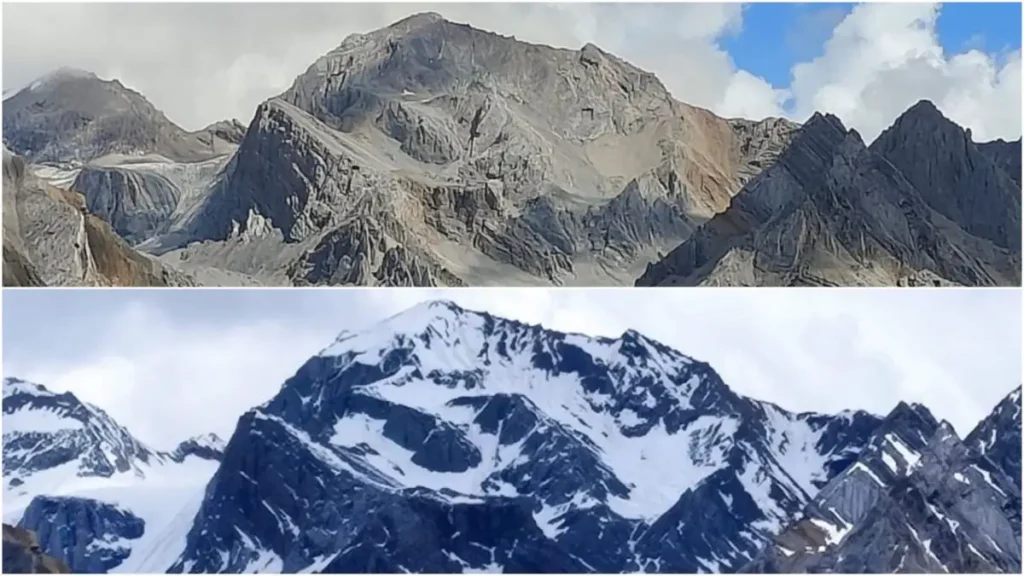
Meteorological data indicate that December recorded negligible to zero precipitation across most districts, making it one of the driest early winters in recent memory. Even traditionally snow-reliable zones at higher altitudes saw delayed or absent snowfall, leaving mountain slopes unusually bare. What might appear at first glance as an aberration of weather is increasingly being interpreted as a signal of deeper climatic shifts affecting the western Himalayas.
What Went Wrong This Winter
The immediate cause of Uttarakhand’s snow deficit lies in the absence or weakness of western disturbances, the mid-latitude weather systems that bring winter rain and snow to north India. Originating over the Mediterranean region, these systems typically travel eastward and deposit moisture over the Himalayan belt between December and February.
This season, however, these disturbances have either been too weak, short-lived, or tracked further north, bypassing Uttarakhand altogether. According to senior officials at the regional meteorological centre in Dehradun, the state experienced prolonged dry spells due to persistent high-pressure conditions, which suppressed cloud formation.
A senior meteorologist explained, “Winter precipitation in Uttarakhand is highly dependent on western disturbances. When these systems weaken or shift their path, the entire seasonal cycle of snowfall and rainfall is disrupted.”
Clear skies, while often associated with cold nights, have paradoxically worsened the situation. Without cloud cover, daytime temperatures rise slightly, further reducing the chances of snow formation, especially at mid-altitudes. The result has been a cold but dry winter, a combination that is increasingly common in Himalayan regions.
Beyond Weather: The Climate Dimension
While meteorologists caution against attributing any single season solely to climate change, climate scientists argue that the current winter fits into a longer pattern of warming and drying trends observed across the Himalayas over the past two decades.
Research consistently shows that the Himalayan region is warming faster than the global average. Rising temperatures are pushing the snowline to higher elevations, meaning areas that once reliably received snow now experience rain or no precipitation at all. Reduced snow accumulation also means faster melting of what little snow does fall, shortening the duration of snow cover.
A climate researcher working on Himalayan cryosphere studies noted, “We are witnessing a gradual transition from snow-dominated winters to rain-dominated or dry winters at many elevations. This has serious implications for glaciers, rivers, and ecosystems.”
Such shifts do not occur uniformly every year, but when dry winters become more frequent, they indicate a changing climatic baseline rather than random variability.
Hydrology at Risk
Snow is not just a scenic feature of Uttarakhand’s winters; it is a critical component of the region’s water system. Snowpack acts as a natural reservoir, releasing water slowly during spring and early summer. This gradual melt sustains rivers, replenishes groundwater, and feeds thousands of springs that provide drinking water to mountain villages.
The lack of winter snowfall raises concerns about reduced river flows later in the year, particularly during the pre-monsoon months when water demand peaks. Environmental experts warn that a poor snow season can translate into water stress during summer, affecting both rural and urban areas downstream.
A hydrologist associated with Himalayan watershed studies explained, “Rainfall runs off quickly, but snow stores water. When snow declines, rivers become more erratic—flooding during heavy rain and shrinking during dry periods.”
Agriculture and Horticulture Under Pressure
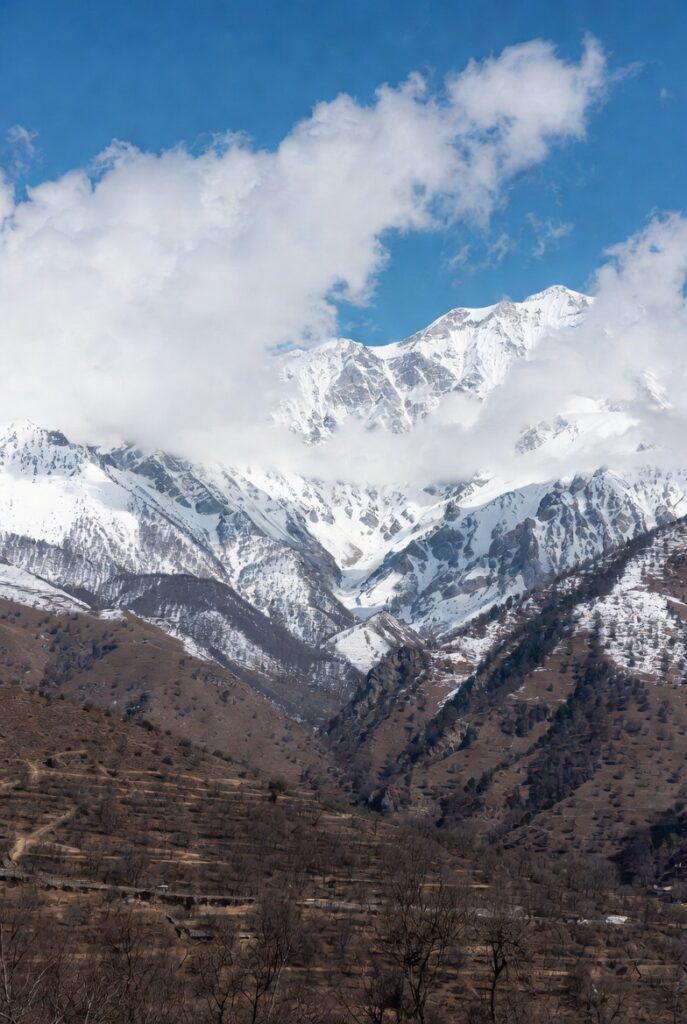
The snow deficit has also alarmed farmers and orchardists. Apple growers in districts such as Uttarkashi and Chamoli depend on prolonged winter chill and snow to meet the chilling hour requirements of fruit trees. Without adequate cold exposure, flowering becomes irregular, directly impacting yields.
Farmers report increased uncertainty. “Earlier, snow would protect the soil and provide moisture,” said an orchardist from a high-altitude village. “Now the soil remains dry, and pests are increasing.”
Winter crops, too, suffer from moisture stress, while the absence of snow cover leaves plants vulnerable to sudden frost events.
Forest Fires in an Unlikely Season
One of the most alarming consequences of the snowless winter has been the early onset of forest fires. January is typically a period when snow and moisture keep forest floors damp. This year, dry leaf litter and parched undergrowth have created conditions conducive to fires, forcing forest departments to issue early warnings.
Ecologists point out that frequent winter fires can have long-term consequences, degrading soil quality, threatening biodiversity, and accelerating erosion. Alpine and sub-alpine ecosystems, which rely on snow insulation to protect roots and microorganisms, are particularly vulnerable.
Tourism and Cultural Impacts
Tourism, a major economic pillar of Uttarakhand, has also been affected. Winter tourism thrives on snow-based activities and scenic landscapes. Snowless slopes have disappointed visitors, reducing footfall in some destinations and affecting livelihoods linked to hospitality and adventure sports.
Beyond economics, snow holds cultural and spiritual significance. For many mountain communities, snowfall marks seasonal transitions and is woven into local traditions and religious practices. Its absence has left many residents uneasy about what the future holds.
Is Relief in Sight?
Meteorological forecasts suggest that late-season western disturbances could still bring rain and snowfall to higher elevations. While such events may offer temporary relief, experts caution that one or two weather systems cannot compensate for an overall seasonal deficit.
Long-term adaptation, they argue, is essential. This includes better water storage systems, spring rejuvenation projects, climate-resilient agriculture, and improved forest fire management. Integrating climate risk into tourism and infrastructure planning is also increasingly seen as unavoidable.
A Warning Written on Bare Slopes
Uttarakhand’s snowless winter is not merely a story about missing snow. It is a reflection of changing atmospheric patterns, rising temperatures, and fragile mountain systems under stress. The implications extend far beyond one season, touching water security, livelihoods, biodiversity, and disaster risk.
As one climate expert summed it up, “When the mountains stop receiving snow the way they used to, it is not just a local concern. It is a warning for everyone who depends on the rivers that flow from them.”
Whether this winter becomes a turning point in policy and public awareness remains to be seen. What is clear, however, is that the absence of snow in Uttarakhand is no longer an exception—it is a trend demanding urgent attention.
PROMOTIONAL CONTENT