


The removal of Nicolás Maduro may mark the end of a regime, but not the beginning of stability. Venezuela’s crisis reveals a recurring flaw in interventionist logic: while foreign powers can dismantle governments, they cannot manufacture legitimacy. In societies with deep nationalist memory, intervention often converts political exhaustion into resistance—turning regime change into a prolonged struggle for consent.
By Rohit Dhuliya
Regime Change Is Easy, Stabilization Is Not: Nationalism, Intervention, and the Venezuelan Dilemma
The removal of an unpopular and repressive leader is often presented as a political and moral victory. Yet history repeatedly shows that the fall of a ruler does not automatically translate into political stability.
In fact, when regime change is driven by foreign intervention, the outcome is frequently the opposite: social polarization deepens, nationalism surges, and instability becomes entrenched. Venezuela, following the dramatic removal of Nicolás Maduro amid direct U.S. intervention, now stands at precisely this crossroads.
The central question is no longer whether Maduro was authoritarian or whether Venezuela’s economic collapse demanded change. Those debates are largely settled. The real question is more complex and historically consequential: how does a foreign power stabilize a country where intervention itself becomes the catalyst for resistance?
The Nationalist Paradox of Intervention
Political history is unambiguous on one point: foreign intervention tends to transform domestic political conflict into a nationalist struggle. Even regimes that suffer from low legitimacy can suddenly gain symbolic relevance when sovereignty is perceived to be under attack.
This paradox has played out across regions and decades. In Iran after the CIA-backed overthrow of Mohammad Mossadegh in 1953, the monarchy survived in the short term but lost long-term legitimacy, paving the way for the 1979 revolution. In Iraq in 2003, the removal of Saddam Hussein—an undeniably brutal ruler—initially appeared to liberate the population, yet rapidly devolved into insurgency, sectarian conflict, and institutional collapse. Afghanistan offered a similar lesson: regime removal was swift, but state-building proved elusive.
Venezuela fits this pattern in critical ways. While Maduro’s government was widely unpopular, associated with repression, corruption, and economic ruin, foreign intervention reframes political reality. The conflict shifts from Maduro versus Venezuelans to Venezuela versus an external power. Once that shift occurs, opposition figures risk being labeled collaborators, neutrality disappears, and grievances that were once directed inward are redirected outward.
Nationalism does not require ideological coherence. It thrives on perceived humiliation, loss of autonomy, and historical memory—elements deeply embedded in Latin American political consciousness
Venezuela’s Historical Memory and the Power of Sovereignty
Latin America’s political identity has been shaped by repeated episodes of foreign interference, particularly by the United States. From coups during the Cold War to economic coercion and sanctions regimes, intervention—real or perceived—has left a durable imprint on popular imagination.
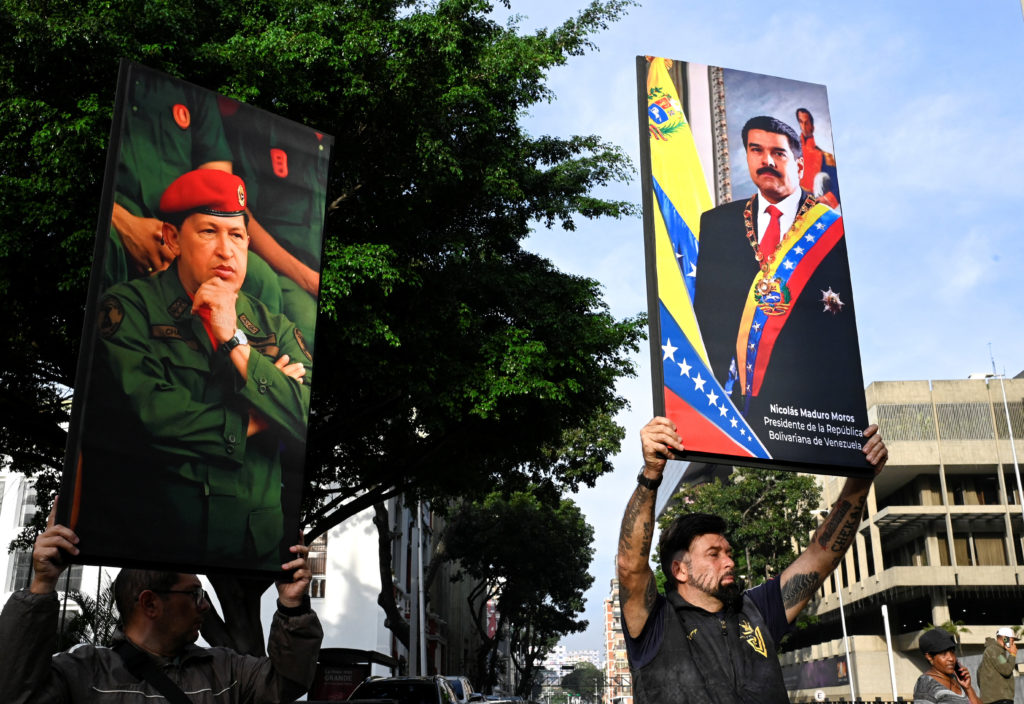
In Venezuela, Chavismo itself drew much of its symbolic strength from anti-imperialist narratives. Chavismo refers to the political ideology and movement inspired by former Venezuelan president Hugo Chávez, combining left-wing populism, resource nationalism, social welfare policies, and strong anti-imperialist rhetoric. It sought to redefine Venezuela as a sovereign, post-neoliberal state resisting U.S. dominance, while redistributing oil wealth through social programmes.
Over time, Chavismo evolved from a mass movement into a state-centric political system, deeply embedded in institutions, the military, and welfare structures. Even as Maduro’s leadership eroded popular support, Chavismo retained symbolic power as a nationalist and anti-imperialist identity, distinct from the individual ruler. Chavismo is deeply rooted in nationalism and public imagination. This distinction matters greatly in the current crisis.
Even deeply unpopular regimes can regain symbolic power once foreign intervention reframes political conflict as a question of sovereignty. In Venezuela, nationalism does not require Maduro—or even Chavismo as governance—to survive; it only requires the perception that political choices are being imposed from outside
Even citizens disillusioned with Maduro’s governance can react defensively when national sovereignty appears violated. National pride can mobilize populations that ideology failed to unify.
This dynamic explains why repression and unpopularity do not necessarily translate into political collapse once foreign intervention enters the picture. Instead, they can be temporarily neutralized by the more emotionally resonant language of national survival.
The U.S. Stabilization Model: Theory vs Reality
In theory, U.S. post-intervention stabilization rests on five pillars: rapid political transition, military co-optation, economic relief, narrative control, and a credible exit strategy. In practice, each of these pillars is structurally weak in the Venezuelan context.
1. Political Transition and the Problem of Legitimacy
The assumption that a new civilian authority can quickly replace an unpopular regime overlooks a fundamental issue: legitimacy cannot be imported. Venezuela’s opposition has long been fragmented, socially uneven, and regionally polarized. Any transitional authority perceived as externally installed risks lacking the social roots necessary to govern effectively.
Elections conducted under the shadow of intervention rarely confer legitimacy; they often deepen mistrust.
2. The Armed Forces as the Decisive Variable
Stabilization depends heavily on maintaining the cohesion of the regular military. Yet the Venezuelan armed forces are deeply nationalist in self-perception. Officers may accept short-term arrangements tactically but strategically the military is highly nationalistic. If the military comes to see itself as a guardian of sovereignty rather than a partner in transition, stabilization becomes impossible.
History suggests that militaries in post-intervention states tend to evolve into power brokers or spoilers, not neutral administrators.
3. Economic Relief as Political Pacification
Economic stabilization is often presented as the most effective antidote to unrest. Sanctions relief, humanitarian aid, and oil revenue recovery are expected to buy public acquiescence. Yet economic improvement is slow, uneven, and bureaucratic, while nationalist backlash is immediate and emotional.
Material relief rarely compensates for perceived loss of dignity. Moreover, aid associated with foreign presence is frequently interpreted as transactional or coercive.
4. Narrative Control in the Age of Instant Media
Intervening powers frequently underestimate the power of narrative. Images of foreign troops, arrests, and raids circulate faster than official explanations.
5. The Exit Dilemma
Every intervention promises a short stay, yet history offers no optimal timeline. Rapid withdrawal risks state collapse, as seen in Libya. Prolonged presence fuels resistance, as in Iraq and Afghanistan. Venezuela’s weakened institutions and polarized society make a clean handover especially difficult. There is no “Goldilocks” exit strategy.
In Latin America, where skepticism toward U.S. intentions runs deep, counter-narratives of imperialism, resource extraction, and regime engineering find ready audiences. Once narrative legitimacy is lost, even successful administrative measures fail to produce political stability
Managed Instability or Nationalist Insurgency
Given these constraints, three broad scenarios emerge.
The most likely is managed instability: the absence of full-scale civil war, but persistent protests, sabotage, criminal violence, and nationalist mobilization. Governance continues, but legitimacy remains thin and contested.
A second possibility is the emergence of a nationalist insurgency, framed not around ideology but sovereignty. This would involve urban guerrilla tactics, symbolic violence, and diplomatic isolation rather than territorial warfare.
The least likely scenario is successful stabilization—one that would require broad regional backing, UN involvement, Venezuelan-led political processes, and a clearly defined, limited foreign role. Such conditions do not exist.
Latin America’s Backlash: Regional Resistance to Intervention
Beyond Venezuela’s borders, the intervention has triggered significant diplomatic and political backlash across Latin America.
Several governments—including Brazil, Mexico, Colombia, Chile, and Uruguay—have publicly rejected unilateral military action, emphasising sovereignty, non-intervention, and regional stability. Even governments critical of Maduro have expressed discomfort with the precedent such intervention sets.
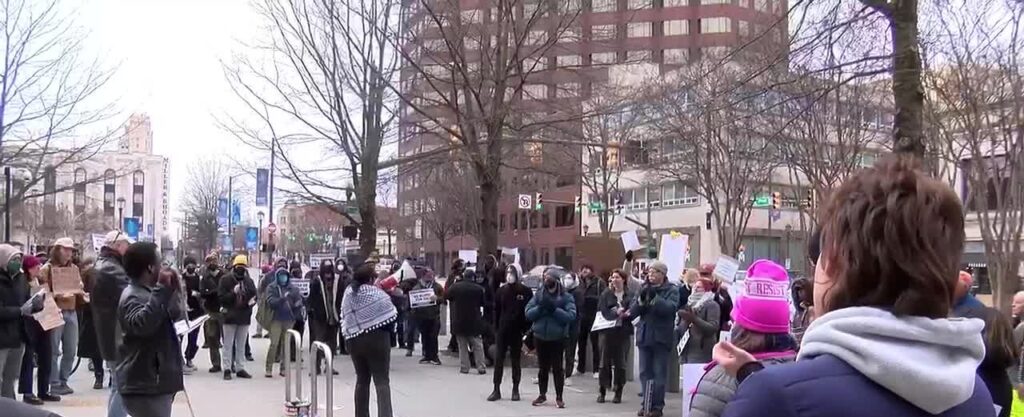
Left-wing parties, trade unions, and civil society groups across the region have organised protests framing the action as a return to Cold War-era interventionism. The fear is not just about Venezuela, but about normalising regime change as an instrument of policy.
This backlash complicates U.S. efforts to build regional legitimacy and increases the risk that Venezuela becomes a symbol of hemispheric resistance rather than democratic transition.
The Core Structural Problem
The Venezuelan case highlights a central flaw in interventionist thinking: regime change is a tactical operation; nation-building is a generational process. Foreign powers can remove rulers, disrupt institutions, and apply pressure—but they cannot manufacture national consent.
Nationalism does not need popular leaders or coherent ideology. It only needs the perception of external domination. In Venezuela, that perception risks transforming political exhaustion into political resistance.
History suggests that post-intervention success is rarely measured by order on the streets, but by legitimacy in the mind. Without Venezuelan ownership of the political transition, stability risks becoming a managed illusion—administratively functional, yet permanently contested
Conclusion: Control Is Not Consent
The United States may be able to control events on the ground, at least temporarily. What it cannot easily control is meaning—how those events are interpreted by Venezuelans themselves. In politics, meaning determines legitimacy, and legitimacy determines stability.
Venezuela’s future will be shaped less by the fate of Nicolás Maduro than by whether Venezuelans come to see the post-intervention order as their own. Without that sense of ownership, even the most carefully designed stabilization effort risks becoming another chapter in the long history of interventions that won battles but lost nations.
About the Author
Rohit Dhuliya is a filmmaker known for his incisive documentaries and writings on contemporary issues. His films have screened at major international festivals worldwide. His award-winning Wounds of Change won the Rising Star Award at the Canada International Film Festival, while his recent film Gandhi Rediscovered has received multiple honours, including Short Documentary Awards at international festivals.
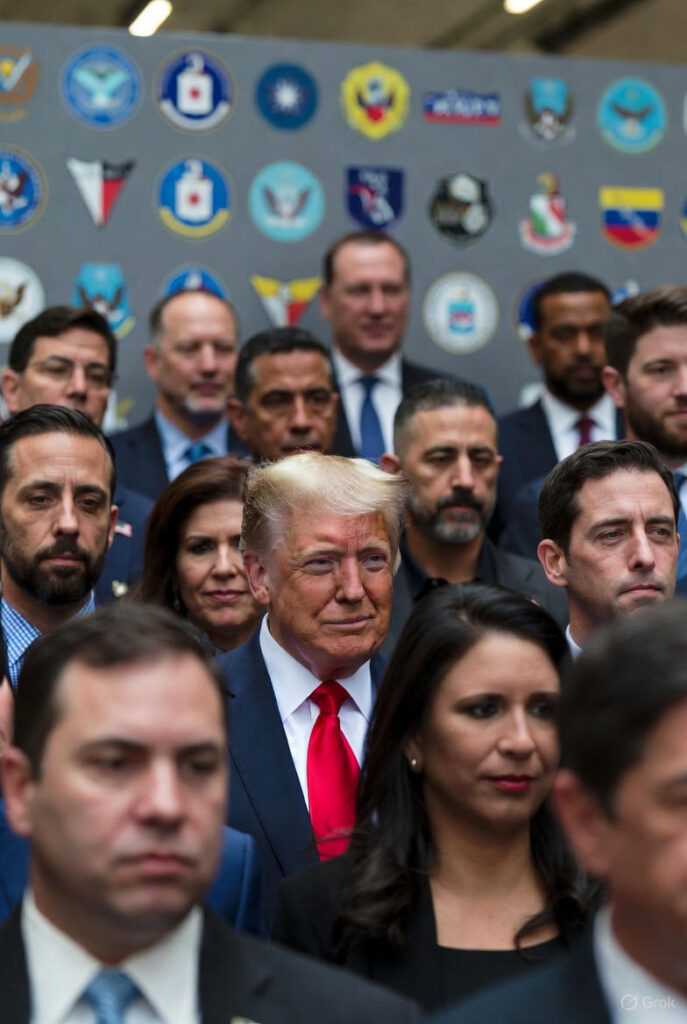
The US Leadership

