


In a dramatic and unapologetic pivot, President Donald Trump is single-handedly attempting to dismantle the rules-based international order the United States itself constructed after World War II. Through unilateral military strikes, the direct abduction of foreign heads of state, aggressive territorial rhetoric, and the sidelining of longstanding alliances and global institutions, Trump is reshaping global power dynamics on his own terms—bypassing multilateral consensus, congressional oversight, and traditional diplomatic norms.
Far from restoring American strength through restraint, these moves signal an era of naked unilateralism where Washington asserts dominance not as a guardian of shared rules, but as an unchallenged great power willing to rewrite the global order through sheer force and executive fiat.

By Muneshwar Prasad
For nearly eight decades following World War II, the United States positioned itself as the principal architect and defender of a rules-based international order. This system—built around institutions like the United Nations, NATO, the World Trade Organization, and a web of alliances and treaties—was designed to foster collective security, economic interdependence, and diplomatic norms to prevent another global catastrophe. Multilateralism, shared rules, and institutional cooperation were the cornerstones, with America often bearing the heaviest burdens in exchange for global stability and influence.
The “America First” Doctrine
Yet this framework, while effective in containing great-power conflict during the Cold War and promoting prosperity afterward, faced growing criticism. Detractors, spearheaded by Trump’s MAGA movement, argued that it allowed both allies and rivals to exploit U.S. security guarantees and economic openness—free-riding on American military protection and market access while the United States shouldered disproportionate burdens.
Trump’s foreign policy outlook is shaped by the concept of “America First.” Rather than viewing global stability as the primary goal of U.S. strategy, this doctrine emphasizes maximizing direct national benefits. From this perspective, alliances and international agreements are not permanent commitments but arrangements that must continually serve American interests. If they do not, they should be renegotiated—or abandoned.
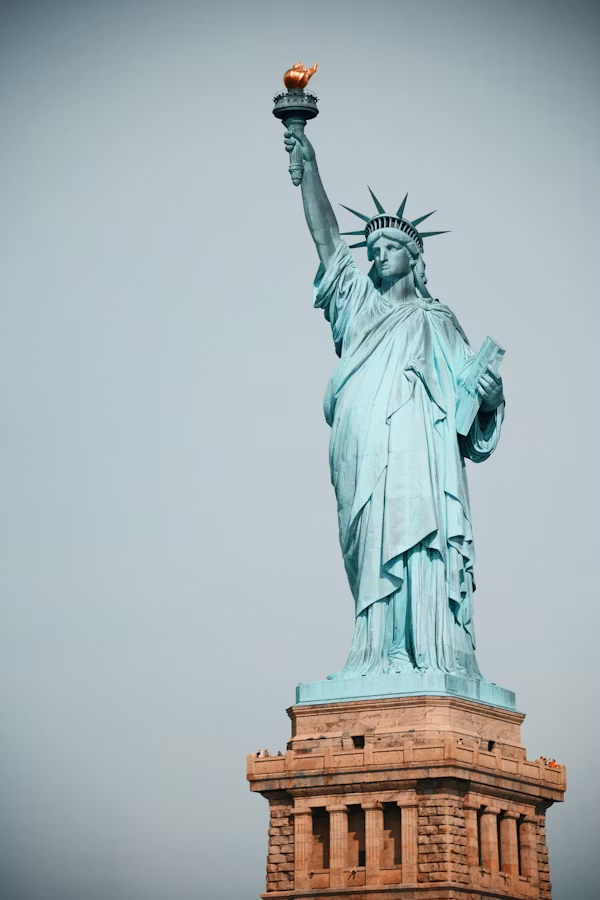
However, this critique rings hollow given Trump’s own glaring inconsistencies: he has alternately branded NATO as “obsolete” only to later declare it “very important,” oscillated between viewing Russia as a potential partner and a threat requiring careful management, praised China as a worthy economic peer in one breath while imposing punishing tariffs in the next, and shifted from aggressive confrontation to conciliatory deal-making depending on the political winds. These flip-flops reveal not principled reform but opportunistic self-interest, undermining the very predictability and alliances the “America First” rhetoric claims to restore.
What began as rhetorical challenges in Trump’s first term has evolved into a structural transformation in his second. Recent actions—military interventions, territorial rhetoric, and unilateral diplomacy—signal a decisive shift from custodian of order to practitioner of raw power politics.
The United States now operates with fewer self-imposed constraints, prioritizing direct leverage over multilateral consensus. This rupture is not subtle; it is overt and accelerating.
The Erosion of Covert to Overt Regime Change Tactics: Historically, U.S. efforts to influence or topple foreign governments relied on covert operations, economic sanctions, proxy support, or limited interventions—methods that allowed plausible deniability and preserved some diplomatic facade. The current era marks a stark departure toward explicit, high-visibility actions.
Trump promised the American people during his 2024 campaign that he would end wars, not start them, repeatedly positioning himself as the “candidate of peace” who would avoid new overseas military entanglements and bring troops home from endless conflicts.
He emphasized in victory speeches, inaugural remarks, and rallies that he would “stop wars,” measure success by the conflicts avoided rather than battles won, and keep the United States out of foreign quagmires—contrasting sharply with what he portrayed as the interventionist failures of previous administrations.
Yet the actions in Venezuela and Iran starkly contradict this pledge, revealing a presidency defined more by aggressive military intervention than by restraint or peacemaking.
In January 2026, U.S. forces launched a direct raid to capture and extract Venezuelan President Nicolás Maduro and his wife, an unprecedented operation that involved airstrikes, special forces insertions, and temporary U.S. oversight of Venezuela’s transition—framed by Trump as justice against an “outlaw dictator” but widely condemned as a blatant violation of sovereignty and international law.
In the Middle East, the pattern intensified with Iran. Following stalled nuclear negotiations, joint U.S.-Israeli airstrikes in late February 2026 targeted nuclear facilities, missile sites, and leadership compounds. Supreme Leader Ayatollah Ali Khamenei was killed in the opening wave, alongside other senior figures.
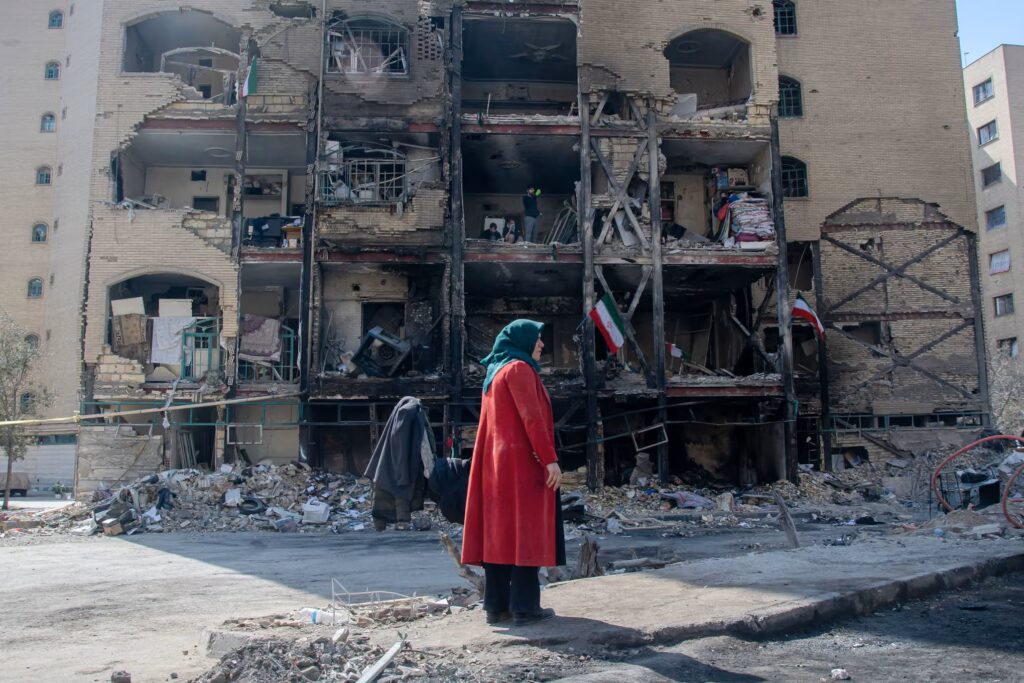
An Iranian woman stands in front of her Tehran home, which was hit in an airstrike.> Photograph: Hossein Esmaeil/UPI/Shutterstock
Sustained bombing degraded Iran’s military infrastructure, with regime change framed as an implicit objective. Iran retaliated with missile barrages against U.S. bases and Israel, escalating into open conflict. While the U.S.-Israel alliance has deep roots, the perception grows that American strategy increasingly aligns with Israeli priorities—potentially at the expense of broader U.S. autonomy in the region.
There is a marked departure from earlier doctrines. Regime change is no longer being pursued indirectly. It is being attempted through direct military degradation of the state of Iran itself.
Far from ending conflicts or avoiding overseas adventures, Trump has become a president of war rather than peace—authorizing regime-change-style operations abroad that echo the very “forever wars” he once decried, while his administration’s justifications shift and lack transparent strategy, further eroding the credibility of his earlier anti-interventionist rhetoric.
These operations reflect a shift: regime change is no longer pursued through shadows but through overt military degradation and leadership decapitation.
Conditional Alliances and the NATO Fracture
Adversaries face direct force, but traditional allies encounter transactional treatment and unilateralism.
NATO, the bedrock of transatlantic security since 1949, illustrates the strain. In the ongoing Ukraine conflict, U.S. decisions—such as engagement signals toward Russia and pressure on European partners to align with evolving priorities—have proceeded with minimal consultation.
Trump’s administration has intensified burden-sharing demands, threatening to reconsider commitments if allies fail to meet higher defense spending targets. While some European nations increased contributions, the rhetoric conveys that alliances are revocable contracts, not enduring pacts.
Compounding this, reports of a proposed “Core Five” (C5) grouping—potentially including the U.S., China, Russia, India, and Japan—emerged in drafts of national security documents. This elite forum, focused on hard power (population, military strength, influence) rather than democratic norms or wealth, would sideline traditional bodies like the G7 or full NATO. It suggests a preference for great-power deal-making over broad multilateralism, treating alliances as flexible tools rather than foundational commitments.
Such moves erode trust: if the leader of the alliance acts unilaterally or entertains alternatives that exclude partners, the collective defense guarantee weakens.
Revival of Territorial Ambition and Spheres of Influence
One of the most jarring departures from post-1945 norms is the resurgence of territorial rhetoric and great-power claims over geography.
Trump has repeatedly proposed acquiring Greenland from Denmark, citing Arctic strategic interests amid climate-driven route openings and resource competition. Legislation like the “Make Greenland Great Again Act” authorized negotiations, while public statements linked it to national security—sometimes implying pressure beyond diplomacy. Denmark and European allies rejected the idea outright, with warnings that forcible pursuit could end NATO.
Similar language targeted the Panama Canal. Trump asserted U.S. rights to “reclaim” control, citing excessive tolls and alleged Chinese influence, invoking treaty provisions allowing intervention if neutrality is threatened. Panama’s government resisted, annulling related contracts amid U.S. pressure.
Rhetoric extended to Canada, with repeated suggestions it become the “51st state” to eliminate tariffs, share defense burdens, or integrate economically—framed as mutually beneficial but carrying coercive undertones. Cuba faced renewed threats amid regional tensions.
This worldview revives pre-World War II logic: territory as leverage to claim, control, or negotiate under duress. It contravenes norms of sovereignty, non-annexation, and peaceful borders established after 1945.
These interconnected shifts—from overt military interventions and territorial assertions to transactional alliances and executive overreach—paint a stark picture of transformation, raising a deeper question: is this the emergence of a new American empire?
The United States is rapidly transitioning from its post-World War II role as the primary guardian of a rules-based international order to a classical great power: unilateral in action, strategic in pursuit of narrow national gains, and increasingly unbound by the self-restraint that once defined its leadership.
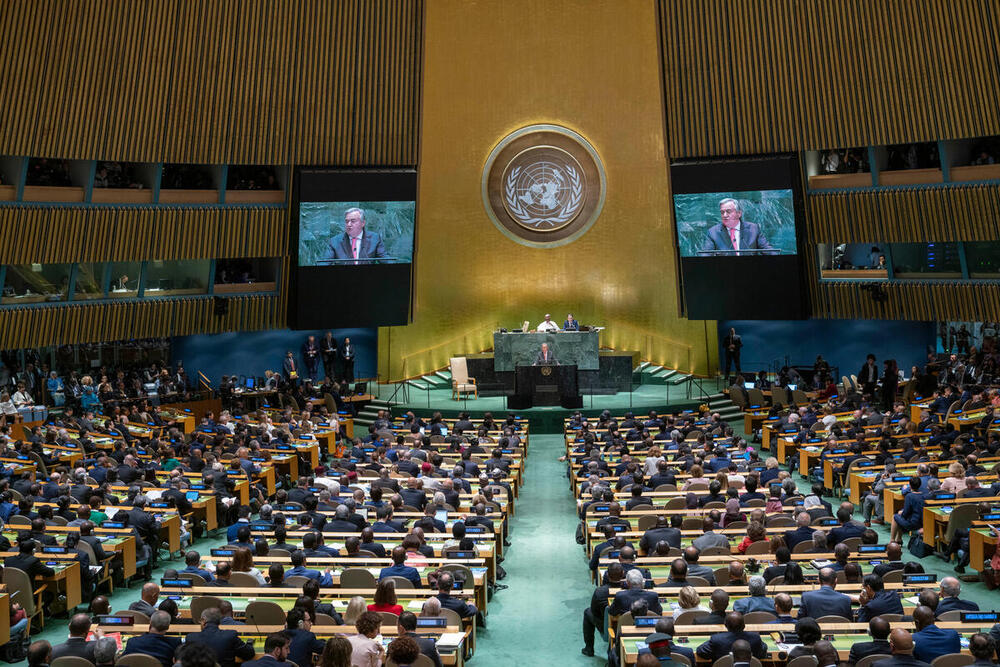
UN General Assembly
Global institutions, long central to legitimizing U.S. policies and fostering collective responses, have been relegated to the periphery.
The United Nations, in particular, has been conspicuously sidelined in the Venezuela and Iran crises—unlike the multilateral coalitions mobilized for earlier conflicts in Iraq or Afghanistan—where responses unfolded through bilateral deals, ad-hoc arrangements, or direct executive fiat with scant reference to collective security mechanisms or international law.
Executive actions have further accelerated this erosion by withdrawing the U.S. from dozens of organizations and treaties deemed contrary to national interests, signaling a broader devaluation: when raw power dictates outcomes without institutional mediation, such bodies become optional rather than essential, accelerating the fragmentation of the very order America helped build.
The consequences for global stability are profound and cascading. Predictability in international relations collapses when rules are applied selectively or ignored altogether, fostering insecurity, arms races, and opportunistic adventurism among states.
Trust among allies dissolves as commitments turn conditional and unilateral decisions proliferate, weakening collective deterrence and encouraging hedging or alternative alignments. Escalation risks multiply in a world governed by might rather than norms, as demonstrated by the rapid plunge into major military engagements abroad that contradict campaign promises of restraint.
Far from enhancing American primacy, this approach risks creating power vacuums, emboldening adversaries, and unraveling the cooperative frameworks that sustained stability for decades—leaving an uncertain, more volatile era where outcomes hinge on executive whim rather than shared principles.
The consequences of this shift are far-reaching and deeply destabilizing: when rules are applied selectively or discarded altogether, global predictability erodes, leaving states unable to reliably anticipate responses and fueling insecurity, arms races, and opportunistic behavior; conditional alliances dissolve trust among partners, prompting allies to hedge, seek alternative alignments, or weaken collective deterrence; and raw power dynamics—unmediated by norms or institutions—heighten the risk of miscalculation and escalation, as vividly demonstrated by the ongoing Middle East conflict and looming tensions in the Arctic and beyond.
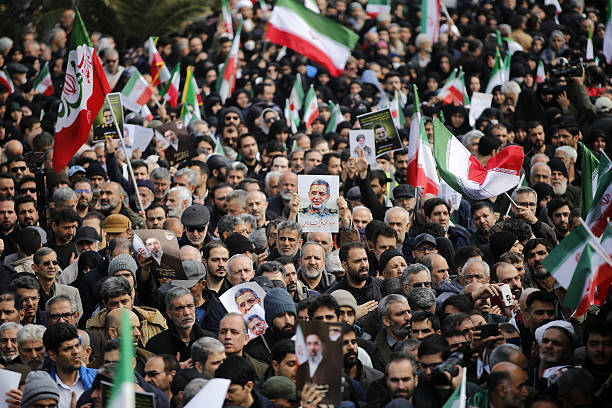
The Shattering of Illusions: A New Era of Raw Power Politics
The post-World War II rules-based order—imperfect but stabilizing—once anchored global affairs in shared expectations and institutional restraint. Its rapid unraveling under unilateral military adventurism, territorial revisionism, and institutional neglect has created a dangerous vacuum now filled by raw great-power competition, fragile norms, and pervasive uncertainty. Whether this represents a temporary aberration or a permanent realignment remains contested, yet deeper structural forces—resurgent nationalism, intensifying great-power rivalry, and widespread skepticism toward globalization—suggest the shift may prove enduring.
Even if future administrations attempt to revive multilateralism, the precedent of executive-led force, direct regime-change operations, and open territorial claims has been indelibly set. The comforting illusion of an inevitable, self-sustaining rules-based world has shattered; what emerges in its place is a colder, more volatile reality where power, not principles, dictates the global order.
About the Author
Muneshwar Prasad is a communication scholar, political commentator, and researcher. He specializes in international relations, journalism, and communication studies, Acknowledgment: This article was drafted with AI assistance and thoroughly reviewed/edited by the author for accuracy and insight.

