


India’s greatest strategic asset today is its people. With a young, skilled, and globally mobile workforce of over 600 million, India is fast emerging as the world’s talent powerhouse. Backed by sweeping labor reforms, a robust education and skilling ecosystem, and growing international demand, Indian professionals are filling critical skill gaps across technology, manufacturing, healthcare, and infrastructure worldwide. From advanced economies facing demographic decline to emerging industrial hubs, Indian talent is increasingly indispensable—driving productivity, innovation, and global growth while positioning India not just as a manufacturing hub, but as the skill capital of the world.
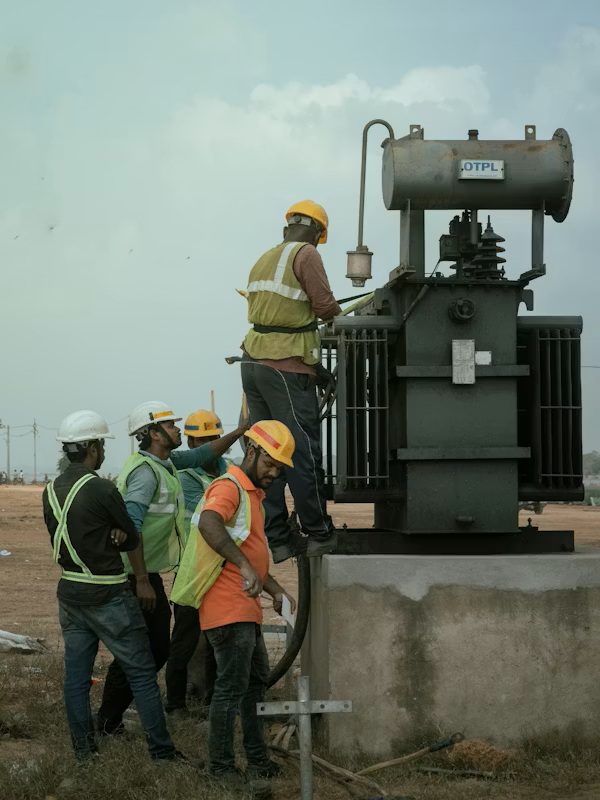
How Demography, Reform, and Global Demand Are Repositioning India at the Heart of Global Growth
By Rohit Dhuliya
As India marches toward its centenary of independence in 2047, aspiring to become a $10 trillion economy and a Viksit Bharat (Developed India), the country’s most decisive advantage is neither territory nor natural resources, but people. With a population of nearly 1.46 billion and a median age of just under 29, India stands at the center of a global demographic paradox: while advanced and industrialized nations grapple with aging societies and shrinking workforces, India is entering a prolonged phase of demographic and skill abundance.
Prime Minister Narendra Modi’s description of India as the “skill capital of the world” captures this historic moment. More than 600 million Indians are part of the workforce, and millions more will enter it over the next two decades. This human capital is rapidly becoming the cornerstone of India’s growth story—and an indispensable asset for global economies facing structural labor shortages.
At the same time, India’s pursuit of Aatmanirbhar Bharat (self-reliance) is not inward-looking isolationism. Instead, it reflects a confident integration with global markets, where Indian talent, trained to international standards, can serve both domestic manufacturing and global production networks. Nowhere is this convergence of national reform and global demand more visible than in India’s evolving labor ecosystem and its expanding workforce partnerships—particularly with countries such as Russia.
Reforming the Foundations: India’s New Labor Architecture
A key enabler of India’s emergence as a global workforce hub has been the comprehensive overhaul of its labor laws. For decades, India’s labor regime was fragmented, compliance-heavy, and misaligned with modern economic realities. Recognizing this constraint, the government undertook one of the most ambitious labor reforms in independent India’s history.
On November 21, 2025, India implemented four consolidated labor codes, replacing 29 central labor laws. Built on the principle of “One Nation, One Law,” these reforms mark a decisive shift toward simplification, uniformity, and flexibility:
- The Code on Wages, 2019 standardizes definitions of wages, workers, and employees, and introduces a legally binding national Floor Wage, ensuring income security while reducing interstate disparities.
- The Industrial Relations Code, 2020 creates a balanced framework between employers and workers, introducing faster dispute resolution mechanisms and establishing a Worker Re-Skilling Fund to support retrenched workers through training and short-term relief.
- The Code on Social Security, 2020 extends coverage to unorganized, gig, and platform workers—reflecting the realities of a modern, digital economy—and proposes Career Centers as upgraded employment exchanges connecting skills to jobs.
- The Occupational Safety, Health and Working Conditions Code, 2020 consolidates workplace safety laws, improving protections while reducing procedural bottlenecks for businesses.
Together, these reforms reduce compliance burdens, encourage formal employment, and align India’s labor ecosystem with global standards—an essential prerequisite for attracting foreign investment and facilitating cross-border workforce mobility.
Nari Shakti and Inclusive Growth
A defining feature of India’s labor reform agenda has been its emphasis on inclusion, particularly women’s empowerment (Nari Shakti). The codes reinforce the principle of equal pay for equal work, allow women to participate in all categories of employment including night shifts (with safeguards), and introduce work-from-home options for women returning from maternity leave.
This integration of gender equity into labor policy is not merely social reform—it is economic strategy. With female labor force participation still below potential, empowering women could significantly boost India’s productivity and global competitiveness, especially in sectors such as healthcare, services, education, and technology.
India and Russia: Workforce Mobility as Strategic Convergence
India’s emergence as a skill powerhouse coincides with a critical inflection point in India–Russia relations. The two countries share a long-standing Special and Privileged Strategic Partnership, grounded in mutual trust and strategic autonomy. President Vladimir Putin’s visit to India on December 4–5 for the 23rd India–Russia Annual Summit—the first since 2021—underscored the resilience of this relationship.
Sixteen memorandums of understanding were signed across seven sectors, including migration and mobility, signaling recognition that labor cooperation is becoming a core pillar of bilateral engagement.
Russia today faces an acute demographic and workforce crisis. Its population has declined from 147.2 million in 2021 to around 146 million in 2025. With a fertility rate of just 1.41, a median age nearing 42, and a labor force further depleted by military mobilization and outward migration, Russia is confronting a projected shortfall of up to 3.1 million workers by 2030.
Industrial regions such as Sverdlovsk—Russia’s heavy manufacturing and defense backbone—are particularly affected. Younger Russians increasingly shun factory work, while sanctions and inflation hovering near 8% have constrained productivity growth.
In this context, India’s youthful and skilled workforce presents a natural solution.
From Construction to High-Tech: A Shift in Indian Migration to Russia
Historically, Indian workers in Russia were concentrated in construction and textiles. This profile is now changing. Russian companies in machinery, electronics, and advanced manufacturing are actively seeking Indian professionals trained in engineering, fabrication, automation, and industrial maintenance.
According to Russian labor estimates, up to one million foreign workers—including Indians—could be recruited in the near term, with quotas for qualified foreign workers expected to rise sharply. Visa applications from India are projected to exceed 40,000 in 2025 alone.
Indian officials have acknowledged this trend. Within existing Russian regulations and quotas, Indian professionals are increasingly filling industrial gaps. The opening of a new Indian Consulate General in Ekaterinburg reflects the scale and institutionalization of this migration corridor.
For Russian firms, India’s new labor codes simplify recruitment, standardize employment conditions, and offer faster dispute resolution through streamlined tribunals. For Indian workers, structured migration pathways promise better protections, portability of social security, and opportunities for skill upgradation.
India in the Global Labor Market: A Comparative Advantage
Russia is not an isolated case. India has already emerged as the world’s leading source of skilled migration. A FICCI–KPMG study projects that by 2030, global demand for skilled workers will exceed supply by over 85 million, with the shortfall potentially reaching 250 million within 25 years.
Advanced economies—including Germany, Japan, South Korea, Canada, the US, and Russia—face demographic decline and acute skill gaps. While Africa also has labor surpluses, India stands apart due to its education infrastructure, technical training capacity, English-language proficiency, and governance systems capable of managing large-scale mobility.
India currently deploys around 700,000 workers abroad annually across technology, healthcare, logistics, manufacturing, and hospitality. In West Asia, over 9 million Indians form the backbone of Gulf economies, while remittances inject billions into India’s economy each year.
In North America and the Anglosphere, Indian professionals dominate technology, academia, and corporate leadership. Indian-origin CEOs lead some of the world’s most influential institutions, reflecting not just migration success but global integration of Indian talent.
Meanwhile, aging Asian societies such as Japan and Israel are formalizing government-to-government recruitment models with India—offering lessons for potential India–Russia frameworks focused on skill certification, language training, and worker protection.
Strategic Implications: Workforce as Geopolitical Capital
Beyond economics, India’s workforce mobility carries strategic significance. Indian workers are widely perceived as disciplined, adaptable, and politically neutral—an advantage in sensitive industrial and defense-linked sectors. Their presence embeds India more deeply into global supply chains while enhancing its soft power.
For Russia, access to Indian labor could stabilize industrial output, support diversification beyond energy exports, and mitigate the economic drag of demographic decline. For India, Russia offers a new frontier for workforce expansion beyond traditional destinations, strengthening Eurasian engagement amid a shifting global order.
Language barriers and cultural adaptation remain challenges, but these can be addressed through structured orientation programs, English-speaking supervisory systems, and bilateral skill centers—models India has already deployed successfully elsewhere.
From Workforce Surplus to Global Anchor
India and Russia stand at a pivotal juncture where demographic reality meets strategic opportunity. India’s labor reforms, demographic dividend, and expanding skill ecosystem have positioned it not merely as a manufacturing base, but as the workforce hub of the world.
As India advances toward Viksit Bharat, its ability to supply skilled, mobile, and adaptable human capital will shape not only its own growth trajectory but also the sustainability of aging industrial powers. Institutionalizing workforce cooperation—transparent, ethical, and mutually beneficial—can anchor a new phase in India–Russia relations and reinforce India’s global role.
In an era where people, not just capital or commodities, determine economic power, India’s greatest export may well be its skills—and its workers.
About the Author
Rohit Dhuliya is a documentary maker, and geopolitical analyst focusing on global security and great-power rivalry. He is the producer-director of the YouTube channel Truth Decoded, where he explores geopolitics, history, and international affairs.
PHOTO: Shubham Nayak. Unsplash

