


Most notorious sex-scandal in modern history
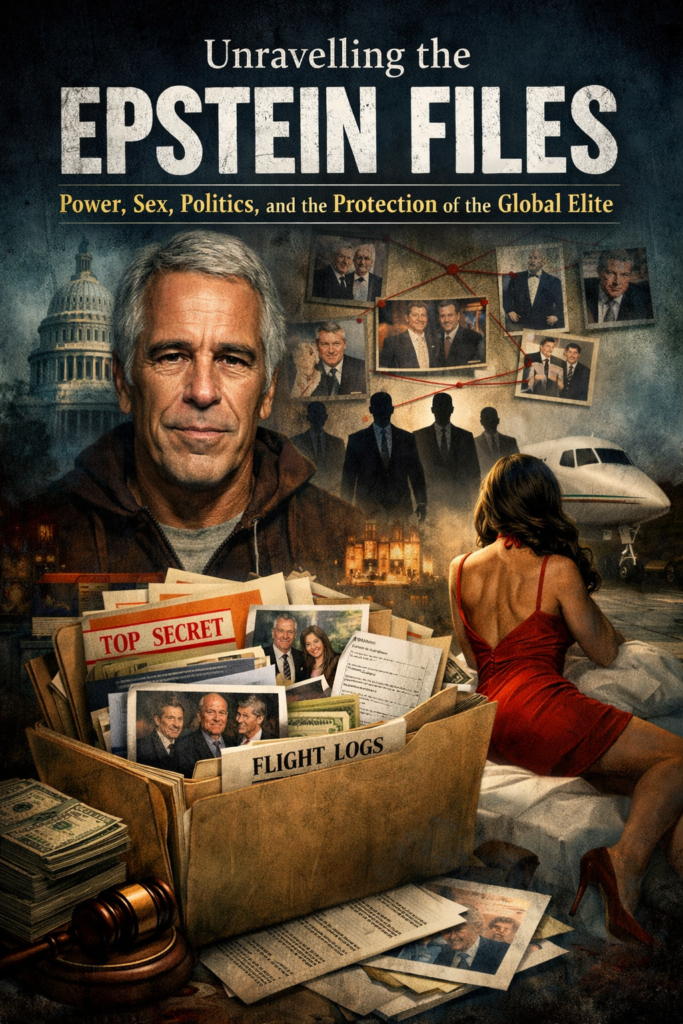
Jeffrey Epstein, a hedge fund manager turned socialite, built his empire on Wall Street savvy and connections to the ultra-wealthy. He was accused of sexually abusing dozens of underage girls, often recruiting them through a pyramid scheme disguised as massage opportunities at his lavish properties. Epstein owned palatial residences in Manhattan, Palm Beach, New Mexico, Paris, and a private Caribbean island. He flew a private jet—later infamous as the “Lolita Express”—and cultivated friendships with billionaires, royalty, academics, and presidents.
By Newswriters Editorial Team
The slow, unsettling release of the so-called Epstein files has transformed one of the most notorious sex-trafficking cases in modern history into a far larger story—one about power, privilege, and the structural failures of justice. What began as a criminal investigation into the abuse of underage girls has evolved into a disturbing exposé of how political leaders, corporate titans, and elite institutions repeatedly failed—or refused—to act.
As millions of pages of court records, emails, flight logs, and witness testimonies enter the public domain, the Epstein scandal is no longer just about one man’s crimes. It is about the systems that protected him, the networks that normalized his presence, and the moral vacuum that allowed exploitation to persist for decades.
Who Was Jeffrey Epstein? From Obscurity to Untouchability
Jeffrey Epstein’s rise was as improbable as it was opaque. Beginning his career as a school teacher, Epstein transitioned into finance in the late 1970s, eventually presenting himself as a hedge fund manager catering exclusively to ultra-wealthy clients. His precise source of wealth was never fully explained, yet it financed a lifestyle of extraordinary excess.
Epstein owned palatial residences in Manhattan, Palm Beach, New Mexico, Paris, and a private Caribbean island. He flew a private jet—later infamous as the “Lolita Express”—and cultivated friendships with billionaires, royalty, academics, and presidents.
Behind this façade of influence lay a predatory operation. By the early 2000s, Epstein was accused of sexually abusing dozens of underage girls, many recruited through a pyramid-style grooming system disguised as paid “massages.” Victims were often minors from economically vulnerable backgrounds, paid to recruit other girls.
The 2008 Plea Deal: Justice Deferred
Epstein was first arrested in 2005 in Florida after parents reported abuse. Despite testimony from more than 30 victims, he received an extraordinarily lenient plea deal in 2008. He pleaded guilty to soliciting a minor and served just 13 months in jail—most of it on work release.
The deal, later described by critics as a gross miscarriage of justice, allowed Epstein to avoid federal prosecution and shielded unnamed co-conspirators. For many observers, this moment marked the clearest evidence that wealth and connections had distorted the legal process.
Epstein returned to elite social circles largely unscathed.
Arrest and a Death That Raised More Questions Than Answers
In 2019, federal prosecutors in New York arrested Epstein on sweeping charges of sex trafficking involving girls as young as 14. This time, the case threatened to expose the full scope of his network.
But before the trial could begin, Epstein was found dead in his jail cell. Authorities ruled his death a suicide. Yet malfunctioning cameras, guard failures, and procedural lapses fueled widespread skepticism. For many, Epstein’s death symbolized the ultimate failure of accountability.
His longtime associate, Ghislaine Maxwell, was later convicted in 2021 for her role in recruiting and grooming victims, confirming that Epstein did not act alone.
What Are the Epstein Files—and Why Do They Matter?
The “Epstein files” refer to a vast archive of court documents, depositions, emails, photographs, flight records, financial transactions, and police reports gathered over multiple investigations.
There is no single explosive “client list.” Instead, the files reveal hundreds of interconnected details: who visited Epstein’s properties, who flew on his planes, who corresponded with him after his conviction, and how institutions repeatedly ignored warning signs.
The cumulative effect is devastating. These documents illustrate not only Epstein’s crimes, but also the social acceptance that surrounded him—even after he was a convicted sex offender.
Bill Clinton: Proximity Without Accountability
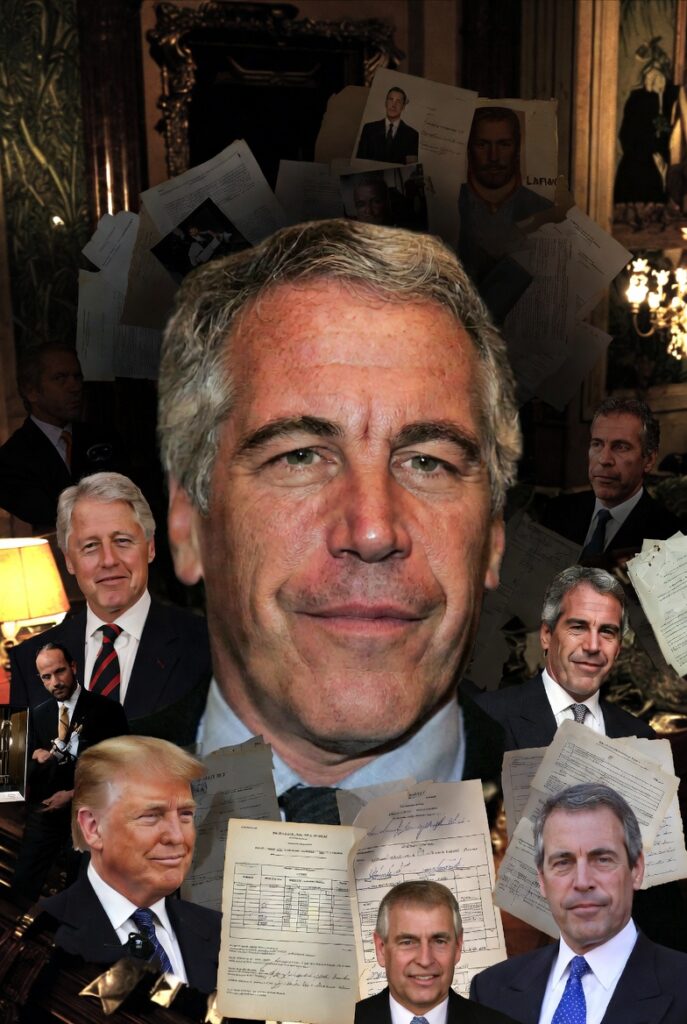
Former U.S. President Bill Clinton appears frequently in the files through flight logs, photographs, and witness testimony. Records indicate Clinton flew on Epstein’s plane multiple times in the early 2000s.
Some victims recalled Epstein boasting about his connections, including claims—strongly denied by Clinton—that he preferred young women. Clinton has stated he had no knowledge of Epstein’s crimes and that their interactions were tied to philanthropy.
Still, the disclosures have raised uncomfortable questions about post-presidential power, donor vetting, and ethical blind spots within elite philanthropy.
Donald Trump: Social Ties and Political Weaponisation
Donald Trump’s association with Epstein dates back to the 1990s, when both moved in New York and Palm Beach social circles. Trump once described Epstein publicly as someone who liked women “on the younger side,” a remark now frequently cited.
Trump later claimed to have severed ties and banned Epstein from Mar-a-Lago. Emails and third-party accounts released in recent files have revived scrutiny, prompting partisan clashes. Supporters frame the revelations as proof of elite corruption; critics argue they demand fuller investigation.
The Epstein case has become a political Rorschach test—less about justice and more about narrative control.
Prince Andrew and the Global Dimension
Perhaps no figure outside the United States has been as directly implicated as Britain’s Prince Andrew. Virginia Giuffre accused Epstein and Maxwell of trafficking her to the prince for sex while she was a minor.
Flight logs, photographs, and correspondence confirmed Andrew’s presence within Epstein’s circle. Though he denied wrongdoing and settled a civil lawsuit in 2022, the files have reignited calls for full cooperation with authorities and renewed debate over royal accountability.
The case underscores Epstein’s global reach, spanning political and diplomatic elites across continents.
JPMorgan Chase: Banking the Indefensible
Financial institutions played a critical role in sustaining Epstein’s operations. JPMorgan Chase served as Epstein’s primary bank for over a decade, even after his 2008 conviction.
Internal communications reveal executives were aware of suspicious transactions, large cash withdrawals, and payments to young women. Despite red flags, the relationship continued until 2013.
In 2023, JPMorgan agreed to a $290 million settlement with victims. The Epstein files now raise deeper questions about compliance failures, profit motives, and whether criminal accountability should extend beyond fines.
Billionaires, Philanthropy, and Moral Blindness
Tech and finance leaders—including Bill Gates, Elon Musk, Glenn Dubin, and Les Wexner—appear throughout the files in meetings, correspondence, or financial arrangements.
Gates admitted meeting Epstein multiple times after his conviction, expressing regret but insisting discussions were philanthropic. Wexner, founder of Victoria’s Secret, allegedly granted Epstein extraordinary control over his finances.
Victims allege modeling and networking opportunities were used as recruitment fronts. Together, these revelations expose how philanthropy and prestige can camouflage exploitation.
The Political Economy of Impunity
At its core, the Epstein scandal exposes a brutal truth: extreme wealth distorts accountability. Institutions that should have intervened—banks, prosecutors, regulators, universities—either failed or hesitated.
Senators investigating Epstein’s finances described an “impunity threshold,” beyond which evidence no longer triggers action. This erodes public trust and reinforces cynicism about democratic institutions.
The files suggest that impunity is not accidental—it is structural.
Amid the power and politics, it is easy to lose sight of those who matter most: the survivors. Their courage, persistence, and refusal to remain silent forced the truth into public view.
Their testimonies have already led to reforms in trafficking laws, victim compensation, and prosecutorial oversight. Whether these changes go far enough remains uncertain.
What the Epstein Files Ultimately Reveal
The Epstein files do not provide every answer. Many records remain sealed to protect victims or ongoing investigations. Yet what has emerged is unmistakable.
When wealth, influence, and institutional loyalty converge, justice becomes negotiable.
The Epstein scandal is not an anomaly—it is a warning. A warning about what happens when power operates without accountability, and when societies choose reputation over responsibility.
Power, Secrets and Broken Justice
The Epstein files do not give all the answers. Many parts are still hidden to protect victims or because investigations are ongoing. But what has come out so far shows a sad truth: when very rich and powerful people break serious laws, the system sometimes moves very slowly — or not at all — until public anger becomes too loud to ignore.
The real heroes in this long story are the brave young women who spoke out despite fear and shame. Their courage forced the world to look at uncomfortable truths about power and exploitation. History will judge not only Epstein, but the systems that allowed him to thrive—and the courage of those who finally forced the truth into the open.