


High in the Garhwal Himalayas of northern India lies a small glacial lake that has puzzled historians, scientists, and trekkers for decades. Scattered around its icy waters are hundreds of ancient human skeletons, giving it the haunting name “Skeleton Lake.” The story of Roopkund Lake in Uttarakhand combines archaeology, climate science, folklore, and modern genetic research—making it one of the most intriguing historical mysteries in the Himalayas.
By Newswriters News Desk
A Remote Lake in the High Himalayas
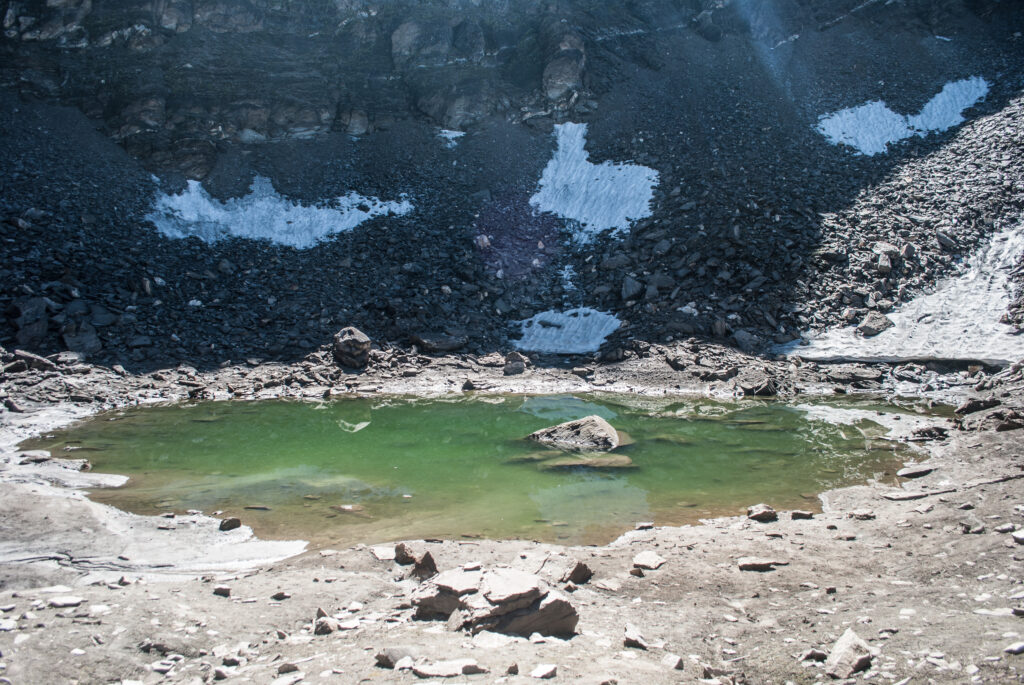
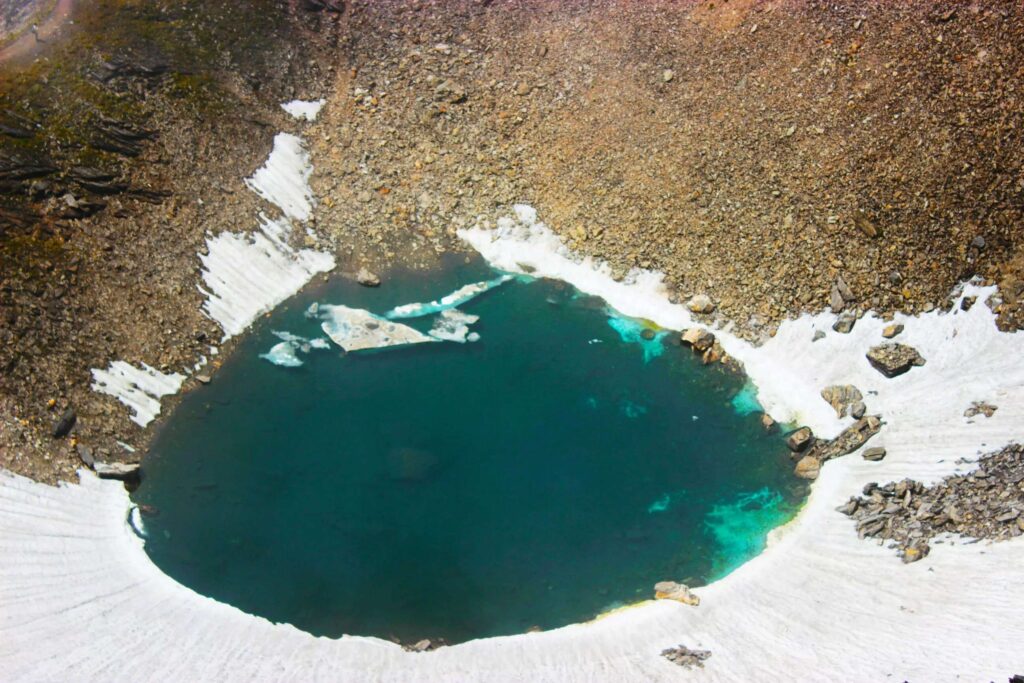
Roopkund Lake is a small glacial lake located in the Chamoli district of Uttarakhand in northern India. Perched at an altitude of about 5,020 metres (16,470 feet) above sea level, it lies between the towering Himalayan peaks of Trishul and Nanda Ghunti.
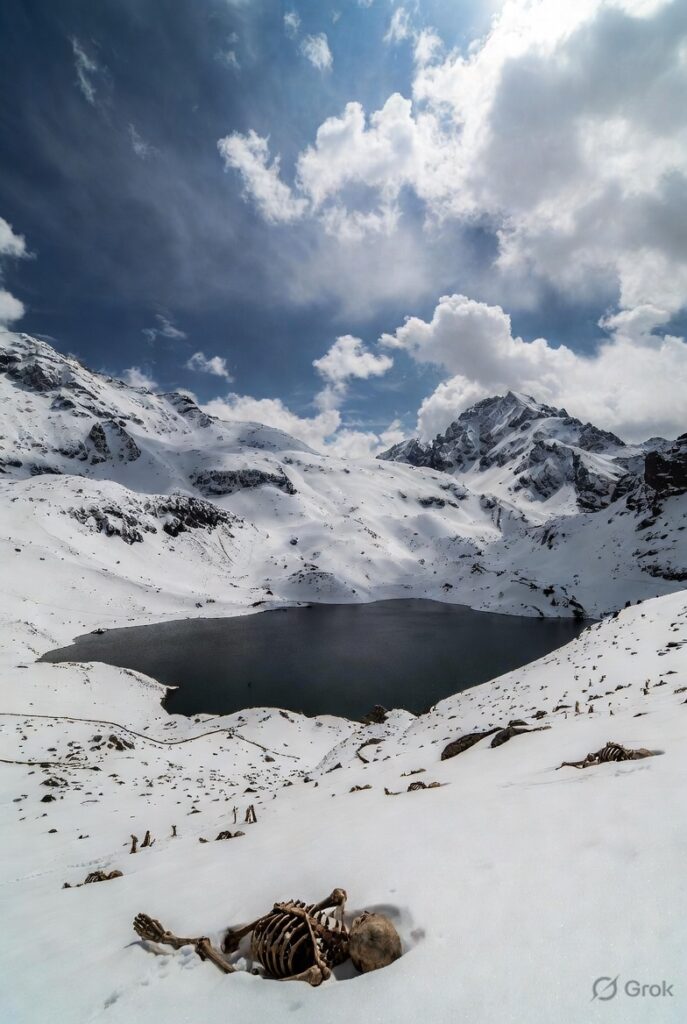
Despite its global fame, the lake itself is modest in size—usually no more than 40 metres across and about three metres deep. For most of the year, it remains frozen under snow and ice. During the brief summer thaw, however, the clear water reveals an unsettling sight: human bones and skulls scattered along the lakebed and surrounding slopes.
This unusual phenomenon has turned Roopkund into one of the world’s most mysterious archaeological sites.
Discovery of the “Skeleton Lake”
Although local shepherds and villagers had long known about bones around the lake, the discovery gained official attention in 1942 when a forest ranger reported the remains to British authorities. At first, colonial officials feared the skeletons might belong to Japanese soldiers who had attempted to infiltrate India during World War II.
However, closer examination revealed that the remains were centuries old, ruling out any modern military connection. Over time, researchers and mountaineers documented hundreds of skeletons, with estimates ranging from 300 to more than 500 individuals around the lake.
Many remains were astonishingly well preserved because of the extreme cold. Some skeletons were discovered with hair, leather footwear, wooden artifacts, and fragments of clothing still intact, offering valuable clues about the people who died there.
Theories Behind the Mass Death
For decades, the presence of so many skeletons at such a remote location sparked numerous theories. Scholars proposed explanations ranging from lost armies to epidemics or ritual sacrifices. Over time, scientific investigations narrowed the possibilities.
Catastrophic Hailstorm Theory
One of the most widely accepted explanations today is that many victims died in a sudden and violent hailstorm sometime around the 9th century CE.
Researchers studying the skulls noticed a distinctive pattern: many victims had fractures on the tops of their heads, consistent with being struck by hard, round objects from above. The injuries match what could occur during a severe storm with unusually large hailstones, sometimes described as “cricket-ball sized.”
Caught in the open high-altitude terrain with no shelter, the travellers may have been killed instantly by the storm, leaving their bodies to remain preserved in ice for centuries.
New Scientific Evidence: Multiple Groups of Victims
Modern DNA research has complicated the story. A major genetic study revealed that the skeletons do not all belong to a single group or time period.
Scientists discovered at least three genetically distinct groups among the remains. One group consisted of South Asian individuals dating to around the 9th century, while another group had genetic links to the eastern Mediterranean, who appear to have died at the site much later, possibly around the 18th or 19th century.
This discovery suggests that Roopkund was not the site of a single tragic event but rather multiple incidents separated by centuries. Exactly why these different groups reached such a remote Himalayan lake remains unclear.
Pilgrimage Routes and Cultural Context
Some historians believe the victims were connected to ancient pilgrimage traditions in the region. The lake lies close to routes associated with the famous Himalayan pilgrimage known as the Nanda Devi Raj Jat, a religious journey dedicated to the goddess Nanda Devi that occurs roughly once every twelve years.
Pilgrims travel through remote mountain valleys and high-altitude meadows during this journey. It is possible that one or more groups of pilgrims encountered extreme weather while crossing the region, leading to the tragic deaths that later became part of the Roopkund mystery.
Legends and Local Folklore Long before scientists began studying the skeletons, local folklore had already offered its own explanation.
According to traditional songs and oral legends in the region, a king named Raja Jasdhaval of Kanauj once undertook a pilgrimage to the shrine of Nanda Devi accompanied by his pregnant queen and a large entourage of dancers and attendants.
High in the Himalayas of Uttarakhand lies Roopkund Lake, one of the world’s most intriguing archaeological mysteries. When the ice melts, hundreds of human skeletons emerge from its waters—remains of travellers who died centuries ago under unexplained circumstances. Was it a deadly hailstorm, a lost pilgrimage, or multiple tragedies across time? The story of India’s “Skeleton Lake” blends science, history, and legend.
The group allegedly angered the goddess by behaving arrogantly during the sacred journey. In response, the goddess sent a devastating hailstorm of iron-like stones, killing everyone near the lake.
Interestingly, modern scientific findings about fatal hailstorms echo aspects of this ancient legend.
Archaeological and Scientific Importance
Roopkund has become an important site for researchers studying ancient migration, climate events, and human history in the Himalayas.
The lake has provided some of the earliest ancient DNA samples recovered in India, allowing scientists to reconstruct genetic histories of past populations. Studies have also contributed to understanding how extreme weather events in mountainous regions could cause sudden mass fatalities.
At the same time, the site offers insights into historic travel routes through the Himalayas, including pilgrimage networks, trade pathways, and seasonal movement of communities.
Tourism, Trekking, and Conservation Concerns
In recent decades, Roopkund became a popular destination for high-altitude trekking. The trek to the lake passes through alpine meadows such as Bedni Bugyal and offers panoramic views of Himalayan peaks including Trishul.
However, increased tourism has also raised serious environmental and conservation concerns. Some visitors reportedly removed bones or artifacts as souvenirs, disturbing the fragile archaeological site. In response, authorities have imposed restrictions on trekking routes and campsite access to help protect the area.
Preserving the skeletal remains and surrounding ecosystem has become a priority for both researchers and environmental groups.
A Mystery That Still Endures
Despite decades of investigation, the story of Roopkund Lake remains only partially solved. Scientific research has revealed clues about the identities and deaths of those whose remains lie there, yet many questions remain unanswered.
Why did groups from distant regions travel to this remote Himalayan lake? What circumstances led to multiple tragedies at the same location across centuries? And how did their stories fade from historical records?
Today, Roopkund stands as both a haunting archaeological site and a reminder of the unpredictable power of nature in the high Himalayas. Suspended between myth, science, and history, the Skeleton Lake continues to captivate researchers and travellers alike.