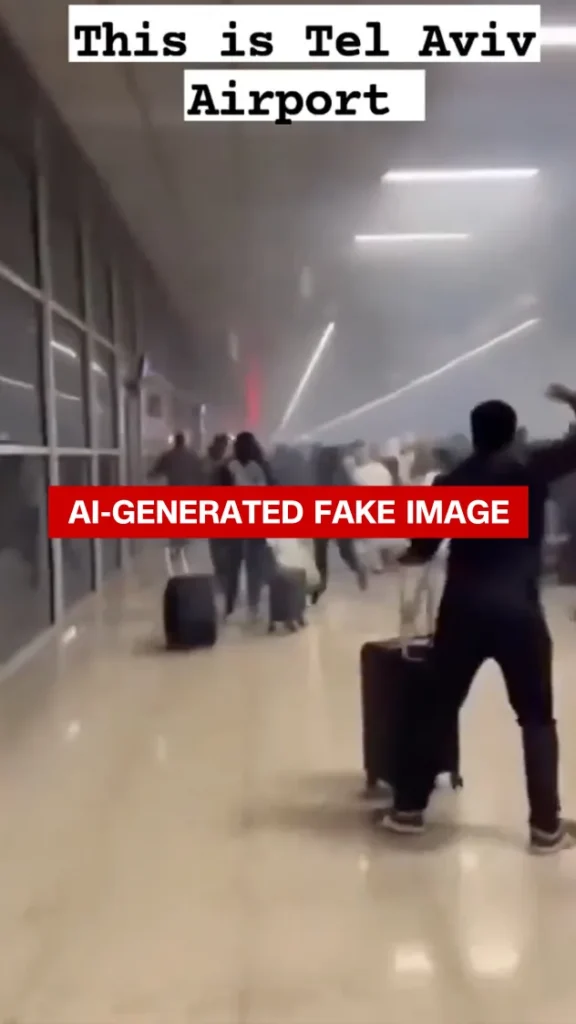


Modern wars are no longer fought only with missiles, drones, and soldiers. They are also fought with algorithms and synthetic media. During the ongoing Iran war, artificial intelligence has emerged as a powerful tool for producing fake images, deepfake videos, and manipulated battlefield footage that spread rapidly across social media platforms. These AI-generated visuals blur the line between truth and fabrication, shaping public perception and turning the digital information space into a parallel battlefield.
By Newswriters News Desk
The Information War Behind the Iran Conflict
The conflict involving Iran, Israel, and the United States has triggered a wave of AI-generated misinformation circulating online. On platforms such as X, Telegram, TikTok, and YouTube, users have been sharing fabricated videos and images purporting to show missile strikes, destroyed military bases, and political statements that never actually occurred.
Investigations by journalists and fact-checking organizations show that AI-generated war content is spreading faster than ever before, making it increasingly difficult for audiences to distinguish authentic reporting from digital propaganda.
Sources:
- https://www.altnews.in/documenting-the-war-or-fabricating-it-ai-generated-visuals-on-social-media-blur-the-line/
- https://slguardian.org/ai-disinformation-floods-x-as-iran-war-footage-turns-into-digital-battleground/
Fake Battlefield Videos Go Viral
One of the most widely shared forms of misinformation during the conflict has been fabricated combat footage.
Several viral clips claimed to show Iranian missiles destroying Israeli fighter jets or US military installations. However, investigators later discovered that some of these videos were actually taken from video games or computer simulations and edited to resemble real combat footage.
For example, footage circulated online claiming that an Israeli F‑35 Lightning II had been shot down by Iranian air defenses. The clip was later traced to a flight-simulation video game rather than real battlefield footage.
Such videos can attract millions of views within hours before fact-checkers manage to debunk them.
AI-Generated Images and Manipulated Satellite Photos
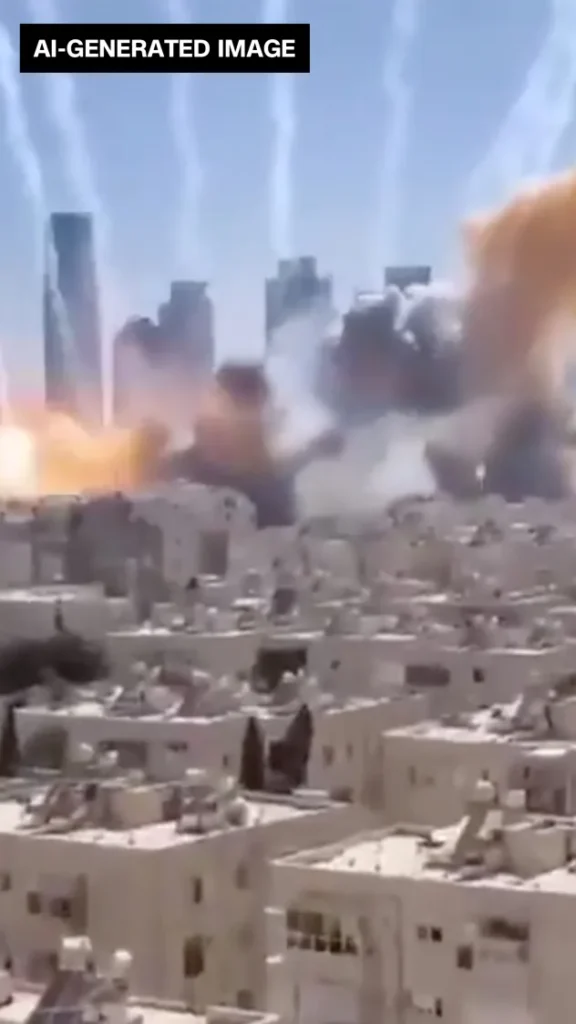
Beyond videos, AI-generated images have also played a major role in spreading misinformation during the war.
Some widely shared images claimed to show:
- massive destruction in Israeli cities
- US bases in the Gulf engulfed in flames
- Iranian missile strikes causing catastrophic damage
Many of these visuals were later found to be digitally generated or heavily manipulated.
Researchers have also detected fake satellite images circulating online that exaggerated military damage in order to promote political narratives about the war.
Source:
Deepfake Videos of Political Leaders
Another disturbing trend has been the emergence of deepfake videos featuring political and military leaders.
Deepfakes use artificial intelligence to replicate a person’s voice and facial movements, creating videos that appear authentic but are entirely fabricated.
In one case, a viral video falsely showed a senior Indian military official claiming that India had shared intelligence with Israel about Iranian naval movements. Fact-checkers later confirmed that the video was AI-generated and completely fake.
Deepfakes are particularly dangerous because they can inflame political tensions, spread false diplomatic signals, and influence public opinion before they are debunked.
Coordinated Disinformation Campaigns
Experts believe that many of the fake images and videos circulating during the Iran war are not random creations but part of coordinated information campaigns.
These campaigns often rely on networks of automated accounts or coordinated social media profiles that amplify synthetic media content. Once the material gains traction online, it spreads organically as ordinary users share it without verifying its authenticity.
Researchers say such campaigns are designed to influence multiple audiences simultaneously—domestic populations, international observers, and policymakers.
Why AI Misinformation Spreads So Quickly
Several factors explain why AI-generated war content spreads so rapidly.
Speed of Production
Generative AI tools can produce realistic images and videos within minutes, allowing misinformation to appear almost instantly after real events occur.
Emotional Impact
Images of explosions, casualties, or destroyed cities trigger strong emotional reactions and are therefore widely shared.
Algorithmic Amplification
Social media algorithms tend to promote highly engaging content, which often includes dramatic or sensational visuals.
Verification Delays
Journalists and fact-checkers typically require hours or days to verify footage, by which time misinformation may already have reached millions of viewers.
The Growing Challenge of Detecting Deepfakes
Detecting AI-generated media remains extremely difficult. While researchers are developing tools to identify synthetic images and videos, many sophisticated deepfakes still evade detection.
This creates a serious challenge for journalists, governments, and technology companies attempting to maintain information integrity during conflicts.
Some technology firms are now working on watermarking systems and AI detection software designed to identify synthetic media before it spreads widely online.
A New Era of Information Warfare
The Iran war highlights how artificial intelligence is transforming modern conflict. Alongside traditional military operations, countries and non-state actors are increasingly using digital propaganda to influence global narratives.
In this environment, the information battlefield can be just as important as the physical one. Fake videos and images can undermine trust in media, distort public understanding of events, and shape international perceptions of the war.
Conclusion
The spread of AI-generated fake images and videos during the Iran war demonstrates how rapidly information warfare is evolving. As generative AI tools become more powerful and widely available, distinguishing authentic war reporting from synthetic propaganda will become increasingly difficult. For journalists, policymakers, and the public, the challenge will be to develop stronger verification systems and digital literacy skills to prevent misinformation from shaping the narratives of global conflicts.