

Deepali D.
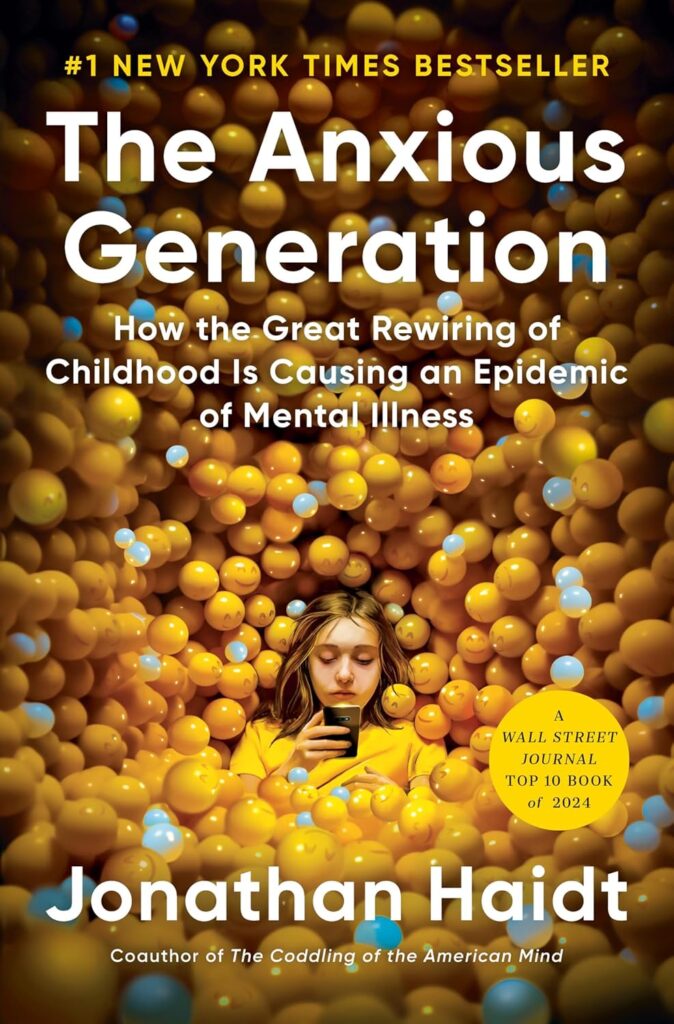
In The Anxious Generation: How the Great Rewiring of Childhood Is Causing an Epidemic of Mental Illness, social psychologist Jonathan Haidt offers a compelling, data-driven exploration of how the digital revolution—especially the rise of the smartphone and social media—has reshaped childhood and adolescence. The book’s central thesis is stark: the shift from a “play-based” childhood to a “phone-based” one has profoundly disrupted the social, emotional, and cognitive development of young people, leading to unprecedented levels of anxiety, depression, and loneliness.
Haidt traces this transformation to the early 2010s, when smartphones and social media became ubiquitous. Drawing on extensive research, he shows how the decline in unsupervised play, face-to-face interactions, and real-world exploration has coincided with a sharp rise in screen time and algorithmic engagement. The result, he argues, is a “rewired” generation—hyperconnected yet emotionally fragile, informed yet insecure.
What makes The Anxious Generation especially powerful is Haidt’s balance of rigorous evidence and moral urgency. He neither demonizes technology nor indulges in nostalgia; rather, he calls for a cultural and institutional reset. His practical recommendations—delaying smartphone use, restricting social media before age 16, reviving outdoor play, and reforming school policies—are both actionable and grounded in psychological insight.
At times, Haidt’s tone borders on alarmist, and skeptics might question whether technology alone explains the mental health crisis. Yet, his synthesis of neuroscience, psychology, and social theory makes a persuasive case that our digital environments are reshaping human development in ways we can no longer ignore.
Ultimately, The Anxious Generation is both a wake-up call and a roadmap—a deeply researched, urgent plea to reclaim childhood in an age of distraction. It should be essential reading for parents, educators, and policymakers alike.
