


By Newswriters News Desk
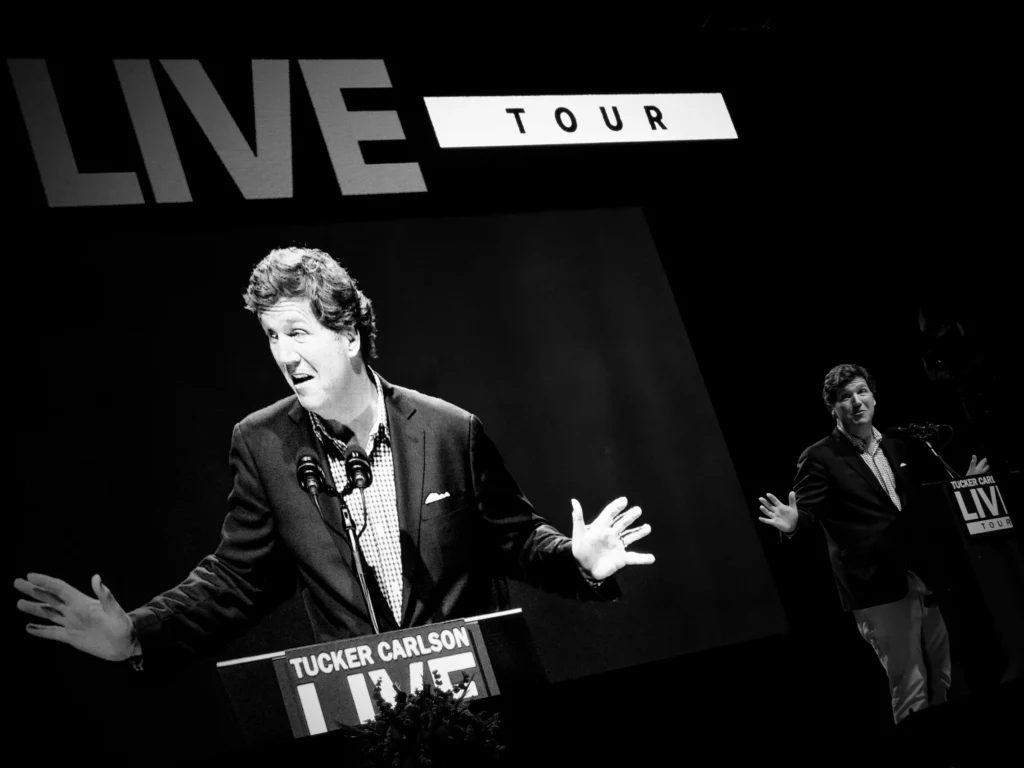
Tucker Carlson has emerged as one of the most influential and polarizing voices in independent media today, captivating global audiences—including many in India—with his unfiltered, anti-establishment brand of journalism. After his high-profile exit from Fox News in 2023, he launched The Tucker Carlson Show podcast and the Tucker Carlson Network (TCN), platforms that deliver long-form interviews, sharp commentary, and direct access to world leaders without corporate filters.
His approach—marked by extended, minimally interrupted conversations that let powerful figures present their perspectives—resonates with viewers who value sovereign narratives and skepticism toward Western mainstream media.
In February 2026, speaking exclusively at the World Government Summit in Dubai, Carlson praised India as a rising “great power” no longer subject to U.S. dictates, calling Prime Minister Narendra Modi an “impressive” historical leader whose legacy will endure for generations. This perspective aligns with India’s emphasis on strategic autonomy, making his work particularly relatable for audiences here who appreciate voices challenging global power imbalances.
Tucker Carlson’s distinctive brand of journalism stands out in today’s polarized media landscape as fiercely independent, anti-establishment, and unapologetically populist. Since breaking free from traditional cable news in 2023, he has built a massive following through
The Tucker Carlson Show podcast and his Tucker Carlson Network on X and his website—platforms that bypass corporate gatekeepers and deliver long-form, unfiltered conversations directly to viewers.
At its core, Carlson’s style emphasizes “informed journalism” through high-level access to world leaders and controversial figures, allowing them to speak at length without heavy interruption. In his February 2026 exclusive with India Today at the World Government Summit in Dubai, Carlson praised Prime Minister Narendra Modi as an “impressive” and “historical” leader whose impact will endure for generations.
He highlighted India’s rise as a “great power” that the US can no longer dictate to—on tariffs, energy choices like Russian oil, or foreign policy—echoing the frustrations many Indians feel about outdated Western condescension. Carlson’s call for sovereign decision-making aligns with India’s multi-alignment diplomacy, where the nation balances ties with the US, Russia, and others on its own terms.
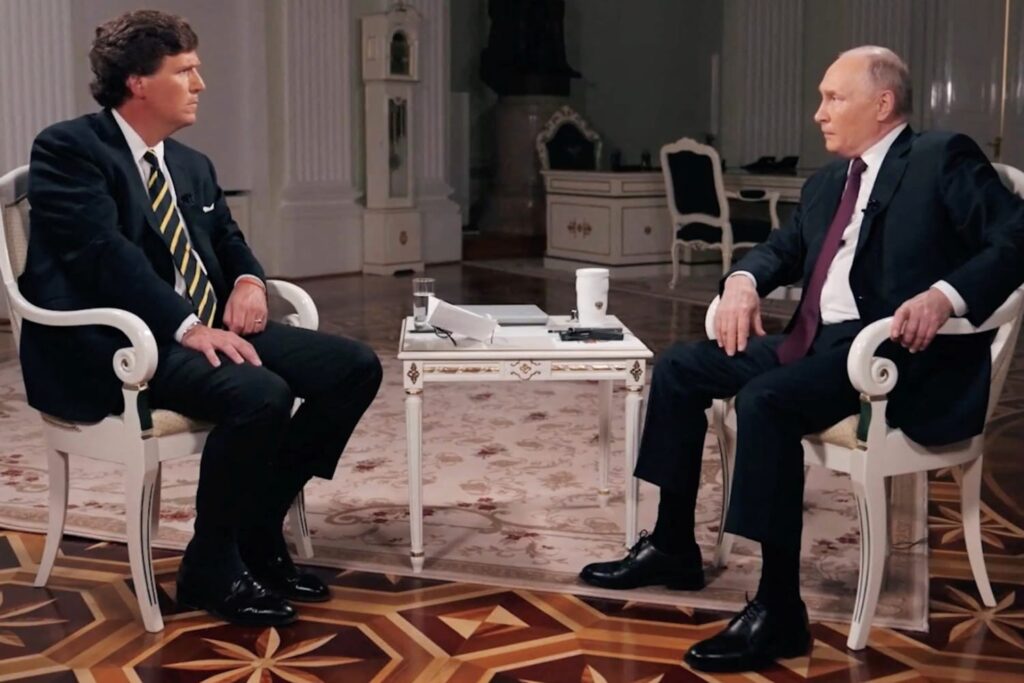
His February 2024 interview with Vladimir Putin exemplifies this brand: the first by a Western journalist since Russia’s Ukraine invasion, it ran over two hours with Putin delivering extended historical context and critiques of NATO expansion. While critics called it soft or propagandistic, supporters viewed it as a rare counter to one-sided coverage—much like how Indians value alternative perspectives on sensitive topics such as Kashmir or domestic policies that often face biased international scrutiny.
Carlson’s journalism evolved from sharp print pieces in the 1990s (influenced by witty, narrative-driven New Journalism) to provocative TV commentary and now independent digital content.
He pivots toward tabloid-style outrage when needed but prioritizes monologues that challenge elites, foreign interventions, and cultural shifts. He champions strong national leaders who put their people first—whether praising Modi’s confidence, Hungary’s Viktor Orbán, or even aspects of governance in places like Qatar—while critiquing globalist pressures that undermine sovereignty.
His brand of journalism rejects “regime media” spin, promotes truth-seeking through direct access, and celebrates rising nations charting independent courses.
In a world of filtered news, Carlson’s provocative, audience-driven style—topping Spotify charts and drawing millions on X—mirrors the growing preference in India for unscripted, leader-focused discussions that respect national pride and strategic autonomy.
Yet, his approach invites controversy, from hosting fringe guests to amplifying theories on immigration and global events, which some see as divisive. Still, his emphasis on questioning power and amplifying underrepresented viewpoints continues to influence global conservative discourse, offering a lens that many in India find relatable amid shifting geopolitics.

