



Balendra Shah celebrating with supporters after defeating Nepalese Prime Minister Sharma KP Oli. Courtesy: BBC
Democratic Flux in a Himalayan Republic
By Newswriters News Desk
The latest elections in Nepal represent another important moment in the country’s continuing political transition. Since the abolition of the monarchy in 2008 and the adoption of a new constitution in 2015, Nepal has struggled to stabilize its democratic institutions. Frequent government changes, coalition politics, ideological rivalries, and growing public dissatisfaction with traditional parties have shaped the political landscape.
Against this backdrop, the recent elections are widely viewed not merely as a routine democratic exercise but as a test of the country’s political maturity and institutional resilience. The results also carry implications beyond Nepal’s domestic politics. For neighbouring India—with which Nepal shares deep historical, cultural, and economic ties—the outcome will influence diplomatic engagement, economic cooperation, and regional strategic dynamics.
Nepal’s Electoral System and Political Context
Nepal elects members to its federal parliament—the House of Representatives—through a mixed electoral system designed to balance representation and stability. The 275-member lower house is elected through two methods:
- 165 members are elected through the First-Past-The-Post (FPTP) system in single-member constituencies.
- 110 members are chosen through Proportional Representation (PR) based on party vote share.
- The Rastriya Swatantra Party (RSP), led by Balendra Shah), has secured a historic landslide in the 275-seat House of Representatives. RSP has won around 102–112 of the 165 FPTP seats
This hybrid system was introduced after the promulgation of the 2015 constitution to ensure representation for marginalized groups such as women, ethnic minorities, and regional communities.
Despite these institutional reforms, Nepal’s politics has remained highly fragmented. Coalition governments are the norm, and ideological divisions between centrist democratic forces, communist factions, and regional parties often complicate governance. Since the restoration of multiparty democracy in 1990, the country has witnessed dozens of government changes, reflecting persistent instability.
Public frustration with corruption, unemployment, and political infighting has also encouraged the rise of new political actors and reformist movements, particularly among younger voters.
Major Political Forces in Nepal
Nepal’s electoral politics has traditionally been dominated by three major political blocs.
The first is the centrist democratic party, the Nepali Congress, historically associated with the democratic movement against both the Rana oligarchy and the monarchy. The party remains a major force in Nepalese politics and generally advocates closer engagement with India and Western democracies.
The second major bloc comprises various communist parties, the most prominent being the Communist Party of Nepal (Unified Marxist–Leninist). The communist parties have alternated in power with the Nepali Congress and often pursue a nationalist political narrative that emphasizes Nepal’s sovereignty and balanced relations with both India and China.
In recent years, however, Nepal has witnessed the emergence of new political actors. Among them is the reformist Rastriya Swatantra Party led by Kathmandu mayor Balen Shah, which has gained significant attention among urban voters and young citizens frustrated with the traditional political elite.
The rise of such new forces reflects a broader generational shift in Nepalese politics, where younger voters increasingly demand transparency, efficient governance, and economic opportunities.
Key Issues Shaping the Elections
Several major themes dominated the electoral campaign and influenced voter behaviour.
Governance and Corruption
Public anger over corruption and ineffective governance has been a central political issue. Many citizens believe that successive coalition governments have failed to deliver basic administrative efficiency, leading to growing distrust of the political establishment.
Calls for accountability, institutional reforms, and transparent governance have therefore become key electoral demands.
Economic Challenges and Migration
Nepal faces significant economic challenges, including limited industrial development, high youth unemployment, and dependence on remittances from migrant workers. Millions of Nepalis work abroad, particularly in the Gulf countries and Southeast Asia.
Economic reform and job creation have therefore emerged as major electoral priorities, especially for younger voters seeking opportunities at home rather than overseas.
Federalism and Inclusion
The 2015 constitution introduced a federal structure aimed at providing greater autonomy to provinces and ensuring inclusion for marginalized communities. However, debates continue over the effectiveness of federal governance and the representation of groups such as the Madhesis in the southern plains.
Questions of identity politics and regional representation remain sensitive issues in Nepal’s domestic political discourse.
Strategic Importance of Nepal for India
For India, developments in Nepal carry significant strategic and geopolitical implications. The two countries share an open border stretching nearly 1,700 kilometres, enabling free movement of people and goods.
The relationship between India and Nepal is often described as one of unique civilizational intimacy, marked by shared religion, culture, and family ties. Millions of Nepali citizens live and work in India, while many Indians travel freely to Nepal for pilgrimage, tourism, and business.
The bilateral relationship is also institutionalized through the 1950 Indo‑Nepal Treaty of Peace and Friendship, which provides reciprocal rights of residence, trade, and movement for citizens of both countries.
Beyond cultural ties, Nepal holds considerable strategic importance for India due to its location along the Himalayan frontier between India and China. Stability in Nepal therefore has implications for India’s security and regional diplomacy.
India–Nepal Relations: Opportunities and Frictions
Although India and Nepal share deep ties, the relationship has experienced periodic tensions.
One recurring source of friction has been border disputes, particularly in the Himalayan region around Kalapani, Lipulekh, and Limpiyadhura. These disputes occasionally become politically sensitive within Nepal, especially during periods of nationalist mobilization.
Another challenge has been Nepal’s growing engagement with China in infrastructure and connectivity projects. Beijing’s economic investments and diplomatic outreach have expanded Nepal’s external options, allowing Kathmandu to pursue a strategy of balancing relations between its two powerful neighbours.
Despite these complexities, India remains Nepal’s largest trade partner and key development partner. Nepal relies heavily on Indian ports and transit routes for access to global markets, and energy cooperation—particularly hydropower development—has become an important pillar of bilateral engagement.
Elections and the Future of India–Nepal Relations
The outcome of Nepal’s elections could shape India–Nepal relations in several ways.
Policy Continuity with New Political Actors
If traditional parties remain influential within coalition governments, India–Nepal relations are likely to continue along established diplomatic lines. However, the rise of reformist or new political forces could introduce fresh policy priorities, particularly in governance and economic development.
For India, this may open opportunities to deepen engagement through infrastructure, connectivity, and technology partnerships.
Balancing India and China
Nepal’s foreign policy has long been guided by the principle of maintaining strategic autonomy between India and China. Regardless of which party leads the government, Kathmandu is likely to continue this balancing approach.
However, India will remain a critical partner because of geographic proximity, economic interdependence, and deep societal connections.
Economic Cooperation and Connectivity
Political stability in Nepal could accelerate several long-pending bilateral projects, including cross-border rail links, highways, and electricity transmission lines.
Hydropower cooperation is particularly promising. Nepal possesses vast hydropower potential, and exporting electricity to India could become a major pillar of the country’s economic development.
Regional Stability and Strategic Implications
From India’s perspective, a stable and democratic Nepal contributes to security and stability in the Himalayan region. Political instability in Nepal could create governance gaps that affect border management, migration, and economic cooperation.
Conversely, a stable government in Kathmandu can strengthen regional connectivity initiatives, enhance economic integration, and contribute to cooperative security in South Asia.
A Political Turning Point
Nepal’s elections reflect the country’s continuing search for stable democratic governance after decades of political upheaval and institutional transformation. The rise of new political actors, growing public demand for accountability, and shifting geopolitical dynamics make this electoral moment particularly significant.
For India, the elections present both opportunities and strategic challenges. While historical ties and economic interdependence will remain central to the relationship, the evolving political landscape in Nepal may reshape the tone and priorities of bilateral engagement.
Ultimately, the future of India–Nepal relations will depend not only on electoral outcomes but also on the ability of both countries to build a forward-looking partnership based on mutual respect, economic cooperation, and regional stability in the Himalayas.
New Leader Balendra Shah
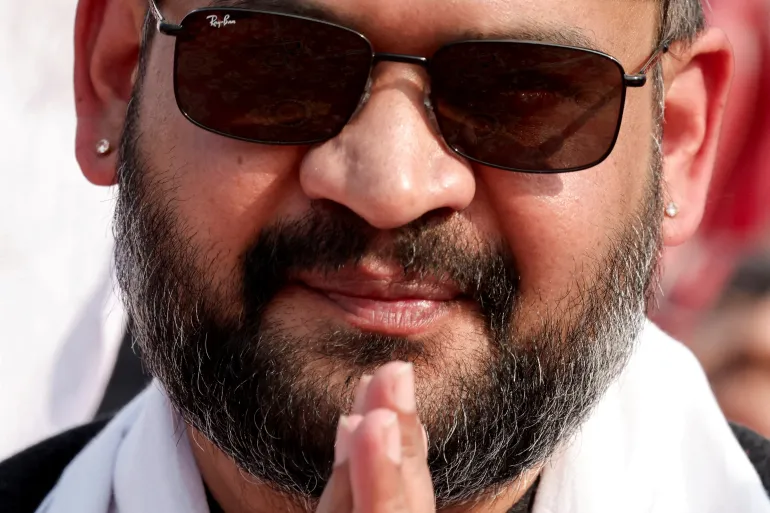
Balendra Shah, popularly known as Balen Shah or simply Balen, is a 35-year-old Nepali politician, structural engineer, and former rapper who has become one of the most prominent figures in Nepal’s recent political landscape.
Born on April 27, 1990, in Naradevi, Kathmandu, to a Maithili Madheshi family of Buddhist origin, he is the youngest of four siblings. His father, Ram Narayan Shah, practiced traditional Ayurvedic medicine, while his mother, Dhruv Devi Shah, was a homemaker. He grew up in Kathmandu during Nepal’s civil war period and developed an early interest in poetry, which later evolved into rap music.
Education and Early Career
He completed his schooling at V.S. Niketan Secondary School.
Earned a bachelor’s degree in civil engineering from Himalayan Whitehouse International College in Kathmandu.
Obtained a postgraduate (master’s) degree in structural engineering from Visvesvaraya Technological University, Belagavi (formerly Belgaum) in Karnataka
Before politics, Balen gained fame in Nepal’s underground hip-hop scene starting around 2012–2013. He released tracks like “Sadak Balak” and won rap battles (notably Raw Barz in 2013), using his music to critique corruption, social inequality, and political failures. This built him a strong following among youth.

