


As the conflict drags on, Washington faces a dangerous strategic dilemma
What began as a campaign aimed at quickly weakening Iran is turning into a far more complicated confrontation. As the conflict drags on, Washington faces a strategic dilemma: it may lack both the means to decisively defeat Iran and the political space to disengage without consequences. With regional alliances strained, global energy routes at risk, and the specter of nuclear proliferation looming, the war threatens to reshape the geopolitical balance of the Middle East.
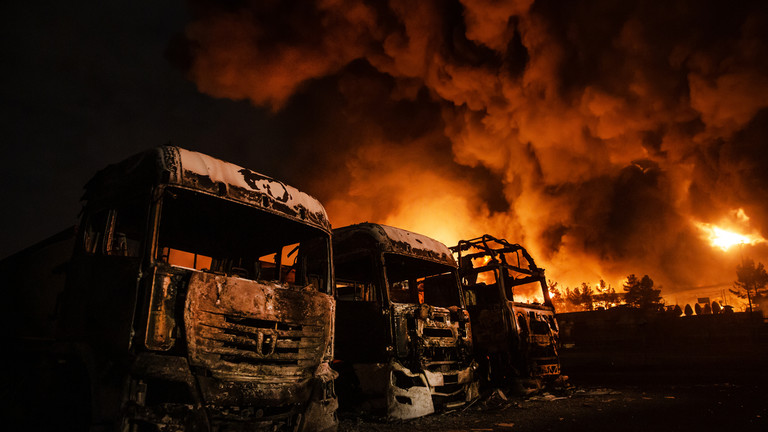
© Hassan Ghaedi / Anadolu via Getty Images
By Sergey Poletaev, Information analyst and publicist; co-founder and editor of the Vatfor project (Edited)
The war with Iran is already proving far more serious than the brief skirmish of last summer. One conclusion is clear: one of the three scenarios outlined in our initial analysis is no longer viable. The United States has failed to achieve the rapid collapse or surrender of Iran.
It now appears that the White House was counting on a blitzkrieg-style approach. Yet it is increasingly evident that there was no Plan B if that strategy failed. The Trump administration underestimated Iran’s resolve. Washington did not expect Tehran to retaliate decisively — let alone threaten to block the Strait of Hormuz or launch attacks against Gulf monarchies.
This leaves two possible outcomes: a ceasefire in the near future or a prolonged war of attrition.
Declare Victory and Leave?
The Trump administration appears uncertain about its next move. Conflicting statements have emerged almost simultaneously. At one moment, President Donald Trump claims Iran has been “decimated,” implying the war’s objectives have already been achieved. At another, he threatens further devastating strikes and vows to eliminate Iran’s leadership unless it accepts Washington’s terms.
In recent days, however, Washington appears to be attempting to clarify its strategy. US Defense Secretary Pete Hegseth and Secretary of State Marco Rubio have outlined two primary objectives: dismantling Iran’s naval capabilities and eliminating its ability to produce and launch missiles.
Meanwhile, European leaders — including German Chancellor Friedrich Merz — are calling for the conflict to end as soon as possible, largely because Europe is being severely affected by disruptions to oil and gas supplies from the Persian Gulf.
Ordinarily, the United States might ignore European dissatisfaction. But this conflict has produced an unusual situation: Washington finds itself increasingly isolated internationally. Apart from Israel, none of America’s traditional allies or client states have openly supported the attack on Iran.
Europe is uneasy, while the Arabian Peninsula shows signs of fearful hostility. Gulf states have refused to allow their airspace to be used for attacks on Iran, even as they themselves face Iranian missiles and drones. In an unprecedented step, the United States has reportedly had to rely on bases as far away as Romania to host aircraft for strikes against Iran.
Given these circumstances, Washington may soon seek a familiar exit strategy: declare victory and withdraw. The question is whether that remains possible.
Trump Turns to Putin Amid Escalating War
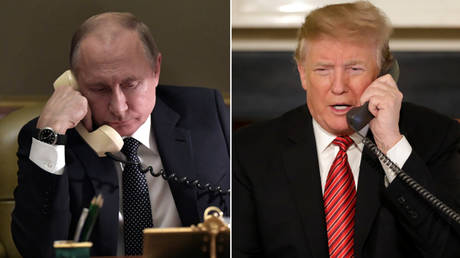
Amid the escalating crisis, President Donald Trump’s reported phone conversation with Russian President Vladimir Putin added another layer to the unfolding geopolitical drama. The call signaled that Washington may be quietly exploring diplomatic channels beyond its traditional allies to prevent the conflict from spiraling further.
For Moscow, which maintains working relations with both Iran and several Gulf states, the war presents an opportunity to position itself as a potential mediator while expanding its influence in Middle Eastern security dynamics. For the White House, reaching out to Putin may reflect a recognition that stabilizing the situation — particularly if the Strait of Hormuz remains contested — could require broader international involvement rather than purely military solutions.
A Small Problem That Could Become a Disaster
With each passing day, the United States becomes more deeply entangled in the conflict. Even if it withdraws, the situation will not simply revert to the pre-war status quo. The strategic and political costs will continue to grow.
Before launching its attacks, the US partially or fully evacuated several regional bases in Qatar, Bahrain, Kuwait, and the United Arab Emirates. At the time, this was seen as a temporary measure — a precaution lasting only a few days and similar to tactics used earlier in 2025.
But it is now uncertain whether these bases will be fully operational again once the conflict ends. Some may have been damaged, and restoring them would require approval from local governments.
More importantly, Gulf states may now question the value of hosting American military facilities. The war has demonstrated that US bases make them targets for Iranian retaliation — without necessarily guaranteeing protection.
The Iranian Knot
Another consequence is the likely strengthening of the Iranian regime itself. Having survived sustained military pressure, Tehran may emerge with greater domestic legitimacy and renewed international stature.
There is also the nuclear dimension of the conflict — a question with potentially far-reaching consequences.
At the same time, Israel is likely to resist any American attempt to disengage from the war. Israeli leaders reportedly saw the conflict as a historic opportunity to resolve the Iranian question once and for all — preferably through American military power.
From this perspective, Israel has strong incentives to keep the United States deeply involved in the war. Some analysts even suggest that provocations could be used to ensure Washington remains engaged.
In this dynamic, Israeli Prime Minister Benjamin Netanyahu risks becoming for Trump what Ukrainian President Volodymyr Zelensky was for Joe Biden — an example of the “tail wagging the dog.”
The Risk of an Endless War
While the White House may want to withdraw from the conflict, events may instead push it toward escalation. Achieving a decisive defeat of the Iranian regime would almost certainly require a ground invasion — something that currently appears highly unlikely.
Earlier suggestions that proxy forces might play such a role have largely collapsed. Iraqi Kurdish groups have declared neutrality, while Azerbaijan’s President Ilham Aliyev appears to have stepped back from any involvement after consultations with Tehran.
That leaves direct US military intervention — an option that currently seems politically and militarily improbable.
In the meantime, the conflict is likely to revolve around one strategic chokepoint: the Strait of Hormuz.
For Iran, blocking the strait represents its most powerful strategic lever. It is Tehran’s primary means of exerting pressure on the global economy and on its adversaries.
If the strait were reopened to oil tankers and cargo vessels, Iran’s leverage would diminish sharply. European calls for peace might fade, Gulf monarchies could again fall firmly under the American security umbrella, and external support from Russia and China would likely remain limited.
A successful reopening of the strait could therefore provide Trump with a symbolic victory — allowing him to claim he had forced the “Persian beast” back into its lair.
At that point, the conflict might lose its global significance and gradually evolve into a localized confrontation that could continue at varying intensities for years.
For the Gulf states, living with periodic missile and drone attacks might become the new normal.
Two Options for Iran
Iran’s unexpected resilience has left it with two main strategic options: continue the war of attrition or seek a negotiated pause.
1. A Prolonged War of Attrition
Pros: Iran may currently enjoy a temporary military advantage. Missile defense systems among its adversaries have been strained, and there is still no perfect counter to large swarms of Shahed drones.
Several Gulf states appear unprepared for sustained conflict, and their defensive capabilities remain limited.
This window may allow Iran to inflict meaningful strategic damage — particularly if Israeli air defenses weaken under continuous pressure.
Cons: Sustaining a prolonged war would be extremely difficult. The US and Israel still possess significant air superiority, and maintaining high levels of military production under constant airstrikes would be challenging.
More critically, Iran’s oil exports — its primary source of revenue — could remain severely restricted. Within months, this could push Tehran toward economic crisis or deeper dependence on Russia and China.
Unlike Russia, Iran lacks the geographic and economic depth needed for a long war under such conditions.
2. A Temporary Stalemate
Pros: Seeking a temporary ceasefire could give Iran time to rebuild its military capabilities and prepare for a future confrontation.
Cons: However, rebuilding missile and drone arsenals would not guarantee success in the next conflict. Adversaries would have time to develop countermeasures, and the element of surprise would be lost.
Iran might find itself in a weaker position in a future round of fighting.
The Nuclear Option
If the Strait of Hormuz is reopened and the war settles into a prolonged aerial confrontation, Iran may seek a dramatic strategic shift.
For Tehran, rapidly developing nuclear weapons could become the only way to fundamentally alter the balance of power.
Some unverified reports suggest that the late Ayatollah Ali Khamenei had been a key obstacle to Iran’s nuclear ambitions. If his successor takes a different view, Iran could potentially test a nuclear device within a few years.
Iran already possesses delivery systems in the form of ballistic and hypersonic missiles — weapons for which there is no guaranteed defense.
Such a development could trigger a broader nuclear cascade across the Middle East. Saudi Arabia would almost certainly pursue its own nuclear capability, potentially drawing smaller Gulf states into a tighter security bloc under Riyadh’s leadership.
In time, nuclear ambitions could spread further to countries such as Türkiye and Egypt.
This scenario would hardly be reassuring for Israel — the country whose confrontation with Iran helped ignite the current crisis.
The Trap of an Unfinished War
In the end, the greatest danger for Washington may not be outright defeat but strategic entrapment. A quick victory appears unlikely, yet withdrawal could carry serious geopolitical costs.
As the war grinds on, the United States risks being drawn deeper into a conflict whose outcomes it cannot fully control — one that could gradually transform the Middle East’s security order, trigger a new regional arms race, and leave behind a prolonged instability that neither side can truly win.
How the Iran War Could Reshape Global Geopolitics
Beyond the immediate military confrontation, the war has the potential to reshape global geopolitics in profound ways. A prolonged conflict could accelerate the fragmentation of the international order, pushing the Middle East further into competing security blocs while deepening rivalries among major powers. Countries such as Russia and China may expand their diplomatic and economic roles in the region, while Gulf states could diversify their security partnerships rather than relying solely on Washington.
At the same time, disruptions to energy routes through the Strait of Hormuz would reinforce the strategic importance of maritime chokepoints in global trade, affecting energy markets from Europe to Asia. In this sense, the Iran war is not only a regional crisis but also a turning point that could redefine power alignments, security strategies, and economic dependencies across the international system.
Courtesy: RT (Edited)

