


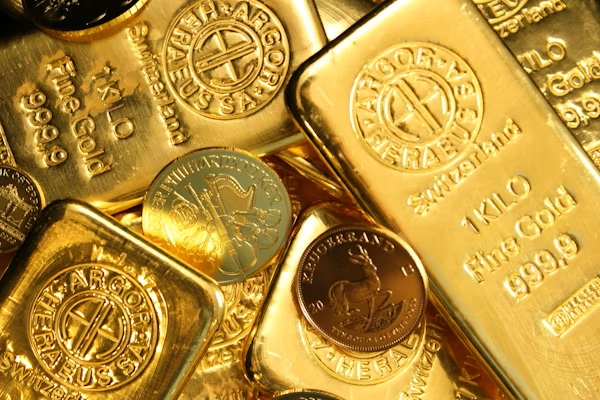
Gold has reasserted itself as a central pillar of the global financial system, driven by record prices, central bank buying, geopolitical uncertainty, and shifting monetary policies. What was once seen mainly as a hedge is now increasingly viewed as a strategic asset, reshaping investment decisions, national reserves, and market behaviour worldwide.
By Newswriters News Desk
The global gold market is undergoing a historic transformation, marked by record prices, shifting demand patterns, and deep structural changes in the world economy. Once viewed primarily as a hedge against inflation or a store of value in times of crisis, gold has now re-emerged as a strategic asset at the centre of global finance, geopolitics, and monetary policy. In 2025, gold prices have surged to unprecedented levels, reflecting a convergence of macroeconomic uncertainty, central bank behaviour, geopolitical instability, and changing investor psychology.
International gold prices have climbed sharply over the past year, crossing levels that were once considered unimaginable. The rally has been driven largely by expectations of monetary easing in major economies, particularly the United States. As markets anticipate interest rate cuts by the US Federal Reserve, real yields on bonds have softened, reducing the opportunity cost of holding gold, which does not offer interest income. At the same time, a weakening US dollar has made gold more attractive to investors holding other currencies, reinforcing global demand.
Geopolitical uncertainty has further strengthened gold’s appeal. Ongoing conflicts, trade tensions, and concerns over global political fragmentation have pushed investors towards assets perceived as safe havens. Gold has historically benefited during such periods of instability, and the current environment is no exception. What distinguishes the present cycle, however, is the scale and persistence of demand, particularly from institutional investors and central banks.
Central banks have emerged as one of the most powerful forces shaping the global gold market. Over the past few years, they have collectively purchased large quantities of gold, steadily increasing their reserves. This trend reflects a broader shift in reserve management strategies, with many countries seeking to diversify away from excessive dependence on the US dollar. Gold is increasingly seen as a politically neutral asset that provides protection against currency volatility, sanctions risk, and systemic shocks. Even when the pace of buying fluctuates from quarter to quarter, the long-term trajectory of central bank gold accumulation remains firmly upward.
Investment demand from financial markets has also surged. Gold-backed exchange traded funds and over-the-counter investment products have attracted significant inflows as investors search for stability amid volatile equity and bond markets. Inflation concerns, though varying across regions, continue to influence sentiment, particularly in economies where price pressures remain sticky or where fiscal deficits are widening. In this context, gold’s role as a hedge against both inflation and financial instability has regained prominence.
The surge in gold prices reflects deep anxieties in the global economy, including fears of inflation, slowing growth, and financial instability. Strong investment flows and sustained central bank demand have outweighed weaker jewellery consumption, while constrained mine supply has added to upward price pressure, creating a structurally tight market.
In contrast to investment and official sector demand, jewellery consumption has shown signs of strain, especially in price-sensitive markets. Elevated prices have dampened volume demand in major consuming countries, as households postpone purchases or opt for lighter jewellery. Nevertheless, in value terms, the jewellery market remains substantial because higher prices offset lower volumes. This divergence between volume and value highlights how gold’s function is shifting from adornment to asset, even within traditional consumer markets.
On the supply side, the global gold market faces structural constraints. Mine production growth has been modest, limited by rising extraction costs, regulatory hurdles, environmental concerns, and a lack of major new discoveries. Many of the world’s largest gold mines are mature, with declining ore grades, making production more expensive and complex. Recycling provides an additional source of supply, particularly when prices rise sharply, but secondary supply has not been sufficient to balance the strong surge in demand. This mismatch between demand growth and constrained supply has played a critical role in sustaining high prices.
Macroeconomic conditions continue to shape gold’s trajectory. Global debt levels are historically high, fiscal pressures are mounting in many economies, and growth prospects remain uneven. In such an environment, confidence in fiat currencies can weaken, strengthening the appeal of gold as a store of value. Monetary policy uncertainty, particularly regarding the pace and depth of future interest rate cuts, adds another layer of complexity. Even modest changes in real interest rates can have outsized effects on gold prices, making the market highly sensitive to economic data and central bank signals.
India’s relationship with gold reflects both tradition and strategy. While high prices have tempered jewellery volumes, gold remains a preferred store of value for Indian households amid inflation and economic uncertainty. Parallelly, the Reserve Bank of India’s steady addition to gold reserves mirrors a global shift among central banks seeking financial stability beyond the US dollar, reinforcing gold’s renewed relevance in a changing world order.
India occupies a unique and influential position in the global gold market, both culturally and economically. As one of the world’s largest consumers of gold, India’s demand patterns have a significant impact on global trends. Gold in India is deeply embedded in social traditions, religious practices, and household savings behaviour. It is not merely a commodity but a trusted financial asset passed across generations.
In recent years, high global prices have altered Indian gold demand dynamics. While jewellery consumption in volume terms has faced pressure due to rising prices, overall demand has remained resilient. Many Indian households continue to view gold as a hedge against inflation, currency depreciation, and economic uncertainty. This perception has been reinforced by episodes of financial volatility and concerns over job security and income growth. As a result, gold buying in India increasingly reflects investment motives rather than purely ornamental ones.
India’s gold imports remain substantial, though they fluctuate in response to prices, government policies, and seasonal factors such as weddings and festivals. Import duties and regulatory measures aimed at managing the trade deficit influence official import channels, sometimes encouraging recycling or unofficial flows. At the same time, financial products linked to gold, such as sovereign gold bonds and gold exchange traded funds, have gained traction, offering households alternatives to physical gold while retaining exposure to price movements.

The Reserve Bank of India has also steadily increased its gold holdings as part of its foreign exchange reserves, aligning with the broader global trend of central bank diversification. This reflects a strategic recognition of gold’s role in enhancing balance sheet resilience and managing external risks. India’s position as both a major consumer and an emerging financial power gives it a distinctive stake in the future of the gold market.
Looking ahead, the outlook for the global gold market remains broadly supportive, though not without risks. Many analysts expect prices to remain elevated, supported by central bank demand, geopolitical uncertainty, and constrained supply. However, the market is also vulnerable to corrections if economic growth strengthens significantly, real interest rates rise sharply, or the US dollar stages a sustained recovery. Short-term volatility is likely, but the longer-term structural factors underpinning gold demand appear durable.
For policymakers, investors, and consumers alike, gold is no longer just a defensive asset used during crises. It has become a strategic instrument shaped by shifting power dynamics, financial uncertainty, and evolving economic priorities. In a world marked by fragmentation and transition, gold’s enduring appeal lies in its ability to bridge past traditions and modern finance, offering stability in an era defined by change.
Major Gold Producers
Major gold production is concentrated in a handful of countries, though output is spread across several continents. China has remained the world’s largest gold producer for more than a decade, supported by extensive domestic mining operations, even as it restricts exports to retain supply at home. Australia follows closely, benefiting from large, high-quality deposits and a stable regulatory environment that encourages long-term investment.
Russia is another key producer, with gold playing an important role in its resource-driven economy and export revenues, particularly amid Western sanctions. The United States, led by mining activity in Nevada, is also among the top producers, while Canada has strengthened its position through technologically advanced and environmentally regulated mining operations. In Africa, Ghana and South Africa remain significant producers, although South Africa’s output has declined over the years due to aging mines and rising costs. Together, these countries account for a substantial share of global gold supply, shaping market dynamics through production trends and policy decisions.
Who Holds Major Gold Reserves
Global gold reserves are even more concentrated and reveal the strategic importance of gold in national balance sheets. The United States holds the largest official gold reserves in the world, with more than 8,000 tonnes stored largely at Fort Knox and other secure facilities, reflecting gold’s historical role in underpinning the dollar. Germany ranks second, having rebuilt and repatriated much of its gold over the past decade to strengthen public confidence and financial sovereignty.
Italy and France also hold substantial reserves, underscoring gold’s continued importance within the euro zone. In recent years, Russia and China have significantly expanded their gold holdings as part of a broader effort to diversify away from dollar-denominated assets and enhance monetary resilience. India, while not among the very top holders, has steadily increased its reserves through the Reserve Bank of India, reinforcing gold’s role as a strategic asset in managing external risks. These reserve holdings highlight how gold continues to serve as a cornerstone of financial security in an uncertain global economic order.
Gold’s Enduring Role in a Shifting Global Financial Order
As the global economy navigates an era of uncertainty, fragmentation and financial realignment, gold has reasserted itself not merely as a hedge but as a strategic anchor in both private portfolios and national reserves. With central banks reshaping reserve strategies, supply growth remaining constrained, and countries like India sustaining gold’s economic and cultural relevance, the yellow metal’s enduring appeal suggests that its current prominence is less a speculative spike and more a reflection of deeper structural shifts in the global financial system.
Photo: Aditya Saxena Unsplash

