


On December 24, 2025, the Indian Space Research Organisation (ISRO) achieved a major milestone with the successful LVM3-M6 launch of the BlueBird Block-2 communications satellite for US-based AST SpaceMobile. Weighing approximately 6,100 kg, this next-generation spacecraft—featuring the largest commercial phased-array antenna ever deployed in low Earth orbit—marks the heaviest payload ever lifted by an Indian rocket. The mission underscores India’s rising prowess in the global commercial space sector, enabling direct-to-smartphone broadband connectivity worldwide and bolstering confidence in upcoming human spaceflight efforts like Gaganyaan.
By Newswriters News Desk
The Indian Space Programme, spearheaded by the Indian Space Research Organisation (ISRO), stands as a testament to India’s scientific prowess and commitment to self-reliance in space technology. From humble beginnings in the 1960s, ISRO has evolved into a global force, achieving remarkable feats on a modest budget compared to its international counterparts.
As of December 2025, the programme continues to make headlines with cutting-edge missions that blend scientific exploration, commercial ventures, and international collaborations. A prime example is the recent launch of the BlueBird Block-2 communications satellite on December 23, 2025, marking India’s heaviest commercial payload to date. This mission, executed via the LVM3-M6 rocket from Sriharikota, underscores India’s growing role in the global space economy, providing space-based cellular broadband services through a partnership with US-based AST SpaceMobile.
The launch not only highlights ISRO’s technical capabilities but also aligns with Prime Minister Narendra Modi’s vision of strengthening foundations for future endeavors like human spaceflight and expanding commercial services. With over 434 foreign satellites launched for 34 countries, India is positioning itself as a reliable launch provider. This report delves into the history, key achievements, recent developments in 2025, and future plans of the Indian Space Programme, illustrating its trajectory toward becoming a cornerstone of global space activities.
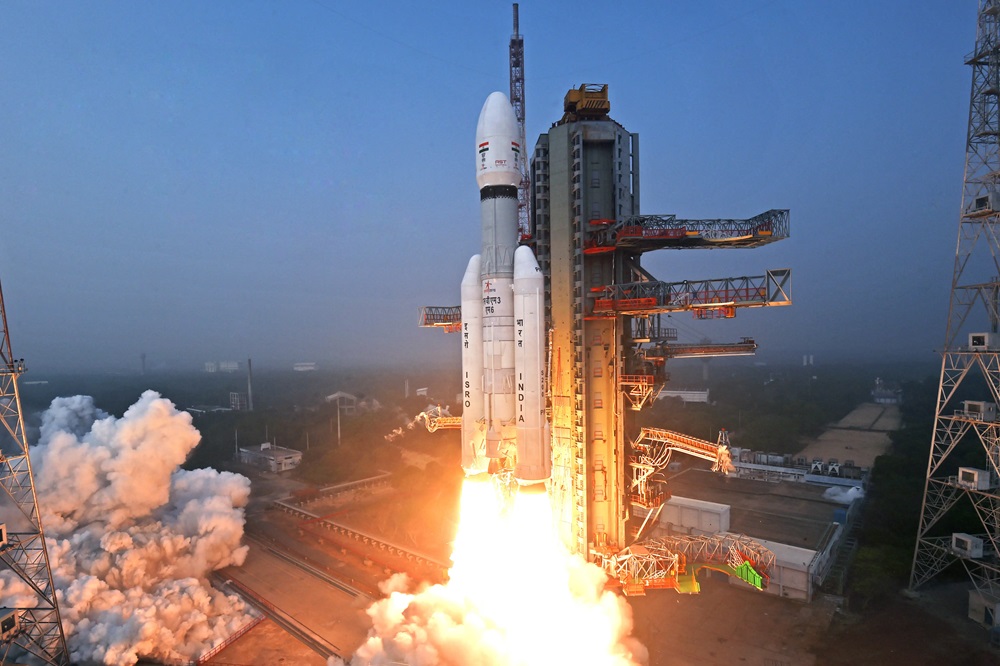
ISRO’s LVM3 places BlueBird Block-2 satellite into low Earth orbit
Historical Evolution
The roots of India’s space journey trace back to the visionary leadership of Dr. Vikram Sarabhai, who founded the Indian National Committee for Space Research (INCOSPAR) in 1962. This evolved into ISRO in 1969, with a mandate to harness space technology for national development. Early efforts focused on sounding rockets, with the first launch from Thumba in 1963 marking India’s entry into space activities.
The 1970s saw foundational milestones, including the launch of India’s first satellite, Aryabhata, in 1975 aboard a Soviet rocket. This marked the beginning of India’s satellite-building capability, even as the country relied on foreign launchers initially. Building on this, ISRO intensified efforts toward self-reliance in orbital launch technology. Parallel development of indigenous sounding rockets in the Rohini series during the late 1960s and 1970s provided critical experience in propulsion, guidance, and staging.
These foundational steps culminated in the creation of India’s first homegrown satellite launch vehicle, the SLV-3 (Satellite Launch Vehicle-3), an all-solid, four-stage rocket capable of placing small payloads into low Earth orbit. After a partially successful experimental flight in 1979, the SLV-3 achieved full success on July 18, 1980, when it successfully deployed the Rohini-1 (RS-1) satellite from Sriharikota. This historic achievement made India the sixth nation (or seventh, depending on counting criteria) to independently launch its own satellite using an indigenous rocket, establishing full orbital launch capability and paving the way for future indigenous vehicles like the ASLV, PSLV, and beyond.
Subsequent Rohini satellites (RS-D1 in 1981 and RS-D2 in 1983) further validated the SLV-3’s reliability and demonstrated early remote sensing and technology payloads, solidifying India’s growing independence in space access.1.5sFast20
The 1990s and early 2000s brought maturation with the Polar Satellite Launch Vehicle (PSLV), first launched in 1993. Despite an initial failure, PSLV became ISRO’s workhorse, achieving over 50 successful missions by 2025, including record-breaking feats like launching 104 satellites in a single flight in 2017. The Geosynchronous Satellite Launch Vehicle (GSLV) followed, with cryogenic engine development overcoming technology denial regimes imposed by Western nations. The indigenous cryogenic stage debuted successfully in 2014, enabling heavier payloads to geostationary orbits.
ISRO’s philosophy emphasized cost-effectiveness and societal benefits, such as remote sensing for agriculture, disaster management, and telecommunications. The Indian National Satellite (INSAT) system revolutionized broadcasting and weather forecasting, while the Indian Regional Navigation Satellite System (IRNSS), now NavIC, provided indigenous navigation services.
By the mid-2010s, ISRO had transitioned from experimental to operational phases, fostering a vibrant ecosystem involving private players through NewSpace India Limited (NSIL).
This historical foundation laid the groundwork for ambitious interplanetary missions, transforming India from a developing nation in space to a leader in frugal innovation.
Major Achievements
ISRO’s achievements span lunar, Martian, and solar explorations, alongside robust satellite constellations. The Chandrayaan-1 mission in 2008 was a landmark, confirming water molecules on the Moon’s surface through its Moon Impact Probe—a discovery credited globally. Chandrayaan-2 in 2019, though the Vikram lander crashed, succeeded with its orbiter, providing high-resolution lunar mapping.
The pinnacle came with Chandrayaan-3 in 2023, achieving a soft landing near the Moon’s south pole on August 23, making India the fourth nation to land on the Moon and the first at the south pole. The Pragyan rover’s operations yielded insights into lunar soil composition, propelling India’s lunar science forward.
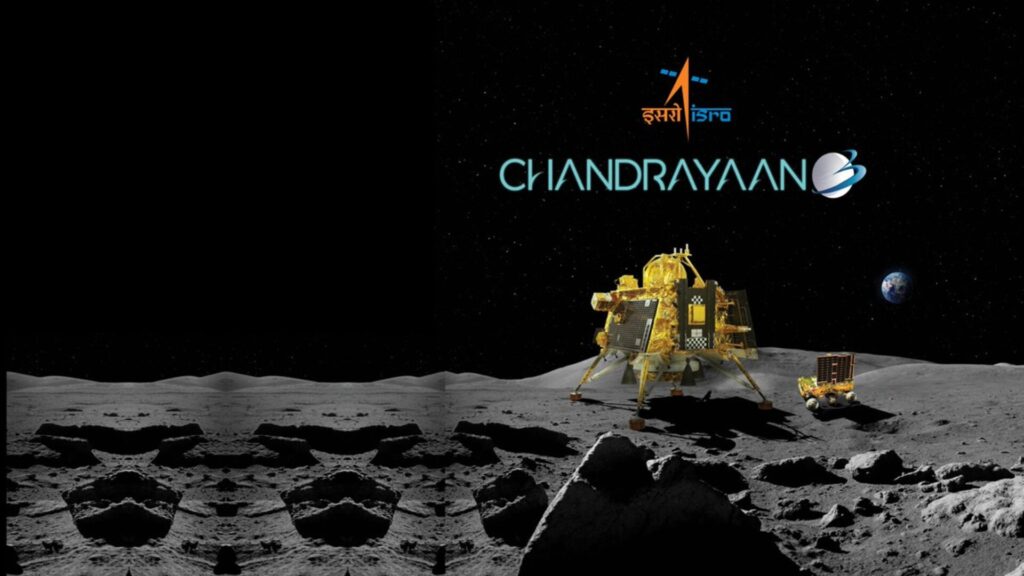
Chandrayaan-3 successfully lands on the Moon
Equally groundbreaking was the Mars Orbiter Mission (MOM), or Mangalyaan, in 2013. Entering Martian orbit on the first attempt at a cost of just $74 million, it made India the first Asian nation to reach Mars and the fourth globally. MOM’s longevity exceeded expectations, capturing data on Martian atmosphere and surface.
In solar studies, Aditya-L1, launched in 2023, positioned India as the first Asian country with a dedicated solar observatory at the L1 Lagrange point, monitoring coronal mass ejections for space weather forecasting.
Commercially, ISRO’s PSLV and GSLV have launched satellites for international clients, earning revenue and building trust. The LVM3 (formerly GSLV Mk III), dubbed ‘Bahubali,’ has proven versatile, launching Chandrayaan missions and commercial payloads like OneWeb satellites.
Human spaceflight preparations under Gaganyaan aim to send astronauts to low Earth orbit by late 2025. Uncrewed tests have validated crew modules, with international collaborations enhancing safety protocols.
Technological spin-offs include advancements in remote sensing via the Earth Observation (EOS) series, aiding climate monitoring and urban planning. ISRO’s contributions to disaster response, like during cyclones, exemplify space technology’s societal impact.
These accomplishments have elevated India’s global standing, with partnerships like NISAR (NASA-ISRO Synthetic Aperture Radar) for Earth observation.
Recent Developments in 2025
2025 has been a pivotal year for ISRO, marked by over 200 significant milestones and a blend of successes and challenges. The year began with the Space Docking Experiment (SpaDeX) on January 16, where two satellites, SDX-01 and SDX-02, successfully docked in low Earth orbit, making India the fourth nation to demonstrate this technology essential for future space stations. This coincided with ISRO’s 100th rocket launch, deploying a navigation satellite.
In May, the PSLV-C61 launched EOS-09, enhancing Earth observation capabilities. July saw the GSLV-F16 deploy NISAR, a joint NASA-ISRO mission for mapping global ecosystems and natural hazards. November’s LVM3-M5/CMS-03 mission further bolstered communication infrastructure.
The capstone was the December 23 LVM3-M6 launch of BlueBird Block-2, a 6.5-tonne satellite—the heaviest ever by an Indian launcher. Weighing over 6 tonnes, this AST SpaceMobile asset features the largest commercial communications array in LEO, enabling direct broadband to smartphones without specialized equipment. The mission, under a NSIL commercial agreement, separated the satellite precisely after 15 minutes, reinforcing India’s launch reliability.
Other highlights include approving Chandrayaan-5/LUPEX with JAXA for lunar polar exploration and discovering an exoplanet via ground-based telescopes. Despite a mixed year with some delays, ISRO’s focus on self-reliance shone through.
Future Plans
Looking ahead, ISRO aims to triple annual spacecraft production and capture 8% of the global space market by 2030. Gaganyaan’s crewed flight in late 2025 will make India the fourth nation with independent human spaceflight.
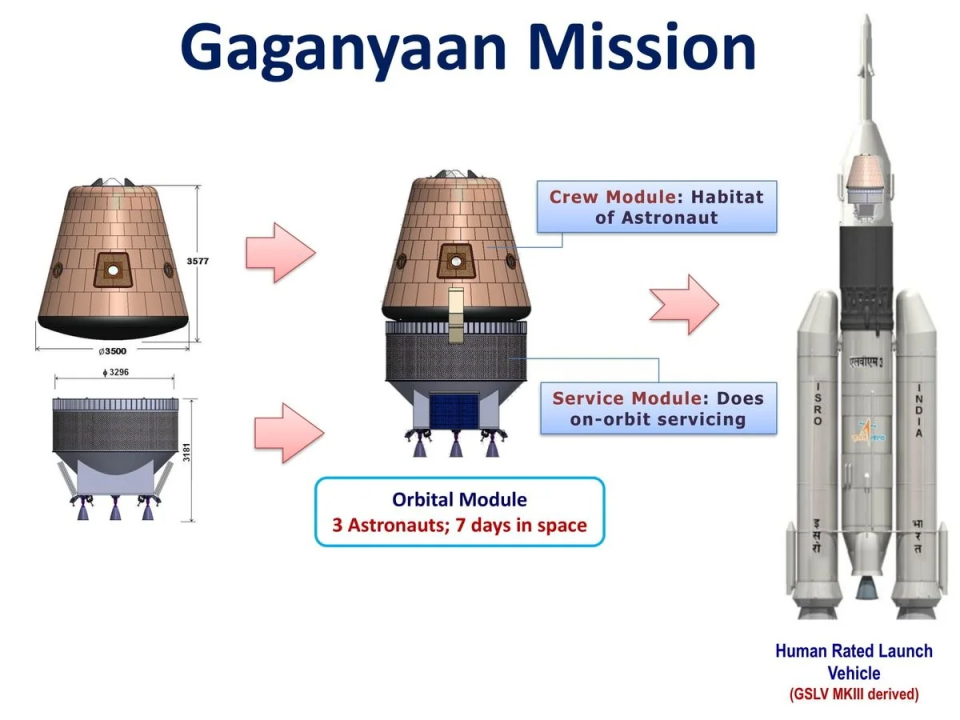
The Gaganyaan Mission
Plans include the Bharatiya Antariksh Station by 2035, Shukrayaan Venus orbiter in 2028, and Mangalyaan-2. Collaborations with private sectors will drive innovation, with reusable launch vehicles like RLV-TD advancing sustainability.
The Indian Space Programme exemplifies resilience and ingenuity, from early experiments to 2025’s commercial triumphs. As ISRO pushes boundaries, it not only advances science but also inspires generations, contributing to a space-faring future for humanity.
Ascending Orbit: From Record-Breaking Launches to a Self-Reliant Space Future
The Indian Space Programme continues its remarkable ascent, blending frugal innovation, scientific ambition, and expanding commercial reach. The triumphant LVM3-M6/BlueBird Block-2 mission on December 24, 2025, not only sets new records for payload capacity and international partnerships but also paves the way for ISRO’s bold future roadmap—including Gaganyaan crewed flights, a Bharatiya Antariksh Station by 2035, and deeper global integration. As India targets an 8% share of the worldwide space economy by 2030, these achievements inspire confidence that the nation’s space journey will deliver lasting benefits for humanity and generations to come.

