


A recent commentary challenging India’s conventional approach to China has reignited debate over the true nature of India-China relations. Questioning the notion of “armed coexistence,” Pravin Sawhney of the Force channel argues that China does not view India as a peer competitor and points to economic, technological, and military asymmetries between the two countries. This analysis examines the key arguments, their implications, and what they reveal about the evolving balance of power in Asia.
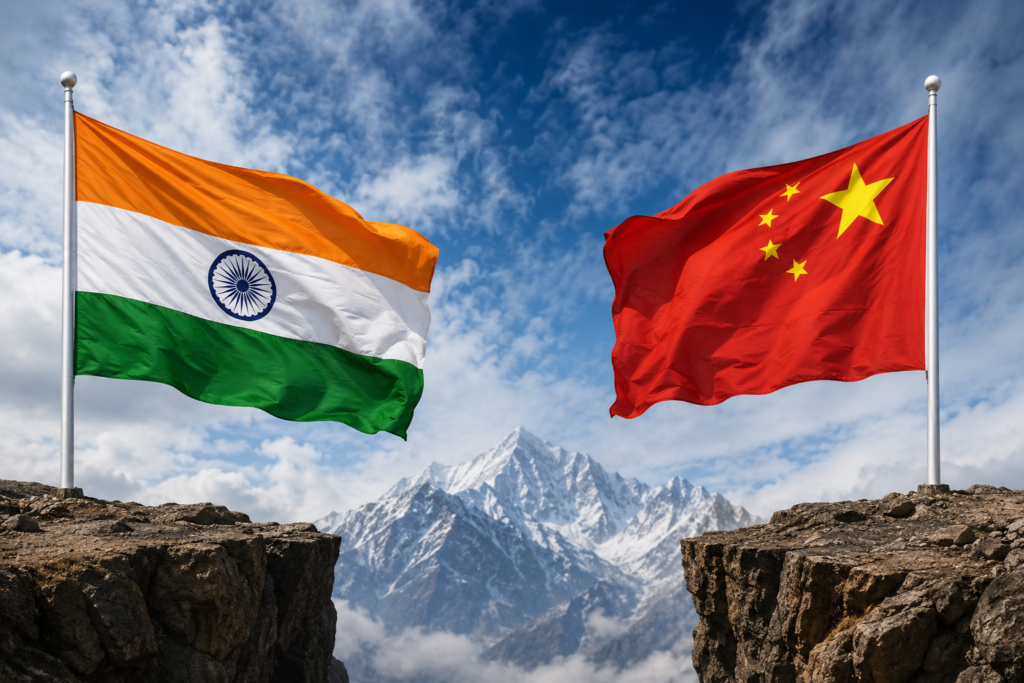
By Muneshwar Prasad
Rethinking the Debate on India-China Relations
India-China relations remain one of the most consequential geopolitical relationships in Asia. Despite periodic diplomatic engagement and economic exchanges, tensions persist over the border dispute, strategic influence, military modernization, and regional power dynamics.
The video by Pravin Sawhney, a defence analyst posted on his channel “The Force” presents a provocative argument: that India fundamentally misreads China by treating it as a strategic competitor, whereas China neither views India as an equal rival nor fears India’s rise.
According to this perspective, the concept of “armed coexistence” used by former Foreign Secretary Vijay Gokhale is flawed because it exaggerates India’s strategic standing relative to China.
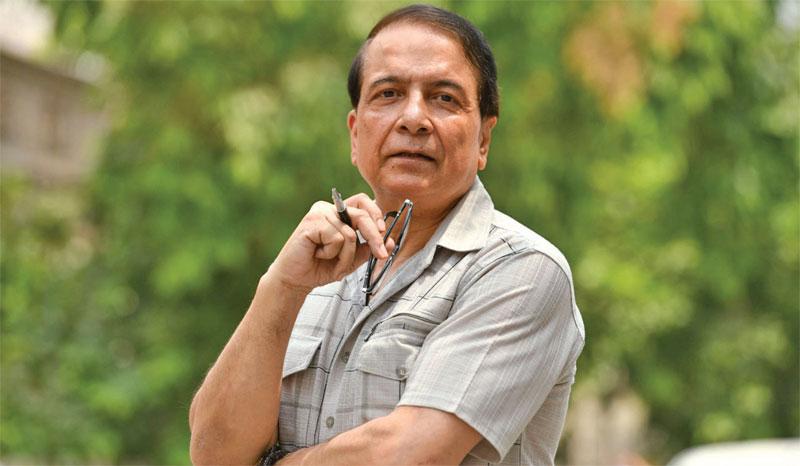
Pravin Sawhney is a former Indian Army officer, defence analyst, author, and editor associated with FORCE magazine. He has written extensively on military affairs, India-China relations, defence modernization, and strategic technologies including artificial intelligence.
While the argument is controversial and at times overstated, it raises important questions about how India understands China, the nature of power asymmetry between the two countries, and the challenges of managing relations between a rising superpower and an aspiring major power.
The Concept of “Armed Coexistence”
The discussion begins by examining Vijay Gokhale’s characterization of India-China relations as one of “armed coexistence.” The phrase combines two ideas. The first is armed competition, implying military rivalry and strategic competition. The second is coexistence, suggesting economic interdependence and the necessity of maintaining stable relations despite disagreements.
The Pravin Sawhney rejects this formulation, arguing that genuine strategic competition exists only when both sides possess roughly comparable capabilities. According to him, China’s military, technological, and economic strengths far exceed India’s, making the relationship fundamentally asymmetric.
This critique reflects a broader debate in international relations. Competition does not necessarily require parity. Historically, states of unequal strength have often competed. However, the degree of asymmetry does affect the nature of competition. China today possesses a much larger economy, greater industrial capacity, superior technological capabilities in many sectors, and a significantly more modern military. Consequently, India’s challenge is not to match China immediately but to manage competition while narrowing the gap over time.
The Legacy of Galwan and the Question of Deterrence
A central element of the argument concerns the 2020 border crisis in eastern Ladakh and the Galwan Valley clashes. The speaker contends that China’s actions demonstrated a lack of respect for India’s military capabilities and deterrent power.
From this perspective, the People’s Liberation Army’s advance into disputed areas was possible because Beijing believed India would not respond militarily. The subsequent diplomatic negotiations, which focused largely on disengagement rather than restoration of the pre-April 2020 status quo, are presented as evidence of India’s limited leverage.
This interpretation highlights an uncomfortable reality. The Galwan crisis exposed weaknesses in the bilateral relationship and shattered assumptions that economic engagement alone could stabilize the border. It also revealed the dangers of strategic mistrust and differing perceptions of the Line of Actual Control.
However, critics of this view would argue that deterrence is not measured solely by preventing incursions. India’s rapid military mobilization, infrastructure development, economic restrictions on Chinese firms, and strengthened partnerships with countries such as the United States, Japan, and Australia also formed part of its response. Whether these measures succeeded is open to debate, but they suggest a more complex picture than simple strategic helplessness.
Cyber Warfare and the Future Battlefield
One of the most striking sections of the discussion concerns cyber warfare. The speaker argues that China possesses the capability to inflict severe damage on India without firing a single shot. He points to alleged Chinese cyber operations targeting critical infrastructure, including power grids, hospitals, and government networks.
The argument reflects a growing reality of twenty-first-century conflict. Modern warfare increasingly extends beyond traditional battlefields into cyberspace, information networks, financial systems, and critical infrastructure. Major powers are investing heavily in cyber capabilities because digital attacks can disrupt economies and societies without the political costs associated with conventional military operations.
The nature of warfare is rapidly evolving beyond tanks, missiles, and troops. In the digital age, cyberattacks on power grids, financial networks, communication systems, and critical infrastructure can disrupt entire societies without a single shot being fired. As major powers invest heavily in cyber capabilities, the ability to wage conflict in cyberspace is emerging as a decisive element of national security and strategic competition.
The Pravin Sawhney goes further by suggesting that China could theoretically paralyze large parts of India through coordinated cyber attacks on transportation, communications, banking, and energy systems. While such claims may be difficult to verify and perhaps exaggerate China’s capabilities, they underscore an important concern: cybersecurity has become a critical dimension of national security.
For India, this implies that military modernization alone is insufficient. Investments in cyber resilience, digital infrastructure protection, artificial intelligence, and technological self-reliance are increasingly important components of strategic preparedness.
Doklam and Galwan: Alternative Interpretations
The speaker also challenges conventional explanations of the Doklam crisis of 2017 and the Galwan crisis of 2020.
According to many Indian analysts, China’s actions were partly motivated by concerns over India’s growing strategic partnership with the United States. The speaker rejects this interpretation. He argues that China’s actions were instead linked to specific regional and territorial considerations, including military reforms, force deployment requirements, and India’s decision in 2019 to reorganize Jammu and Kashmir and create the Union Territory of Ladakh.
This argument reflects a broader methodological issue in international relations. States often interpret an adversary’s actions through their own strategic assumptions. China may see its actions as responses to perceived security concerns, while India interprets them as coercive attempts to alter the status quo.
The reality may involve elements of both explanations. Territorial disputes, domestic political decisions, military modernization, and geopolitical competition with the United States are all interconnected factors shaping Beijing’s behavior. Reducing complex events to a single cause risks oversimplification.
Economic Asymmetry and the Development Gap
Perhaps the strongest aspect of the argument concerns economic realities.
China’s economy is several times larger than India’s. It remains the world’s manufacturing powerhouse and plays a central role in global supply chains. China’s advances in infrastructure, industrial production, artificial intelligence, renewable energy, electric vehicles, and advanced manufacturing have significantly increased its global influence.
At the heart of the India-China debate lies a fundamental question: Is India engaged in a genuine strategic competition with China, or does the vast gap in economic, technological, and military capabilities make such a comparison misleading? The discussion challenges prevailing assumptions in Indian foreign policy and calls for a more realistic assessment of power, deterrence, and regional geopolitics.
The Pravin Sawhney uses this economic disparity to argue that India cannot realistically claim strategic competition with China. He notes differences in per capita income, technological capabilities, and industrial capacity.
While the gap is undeniable, the conclusion is more debatable. Economic asymmetry does not eliminate competition. India remains one of the world’s fastest-growing major economies, possesses significant demographic advantages, and has emerged as an important destination for global investment. Many multinational firms are seeking alternatives to excessive dependence on China, creating opportunities for India.
The challenge for India is therefore not whether competition exists but how to compete effectively despite asymmetry.
Technology, Artificial Intelligence, and Strategic Power
The discussion devotes considerable attention to technological competition, particularly in artificial intelligence. The speaker argues that China has established substantial advantages in hardware, software, data availability, talent, and energy resources.
Technology has become a key determinant of geopolitical power. Artificial intelligence, semiconductor manufacturing, quantum computing, and advanced telecommunications increasingly influence military effectiveness, economic productivity, and national security.
The Pravin Sawhney correctly identifies that the principal technological rivalry today is between China and the United States. Nevertheless, India cannot remain a passive observer. Its future strategic relevance depends heavily on its ability to build indigenous technological capabilities and integrate itself into emerging global innovation networks.
The lesson is not that India cannot compete, but that competition requires sustained investments in education, research, industrial policy, and technological infrastructure.
Multipolarity and Strategic Realism
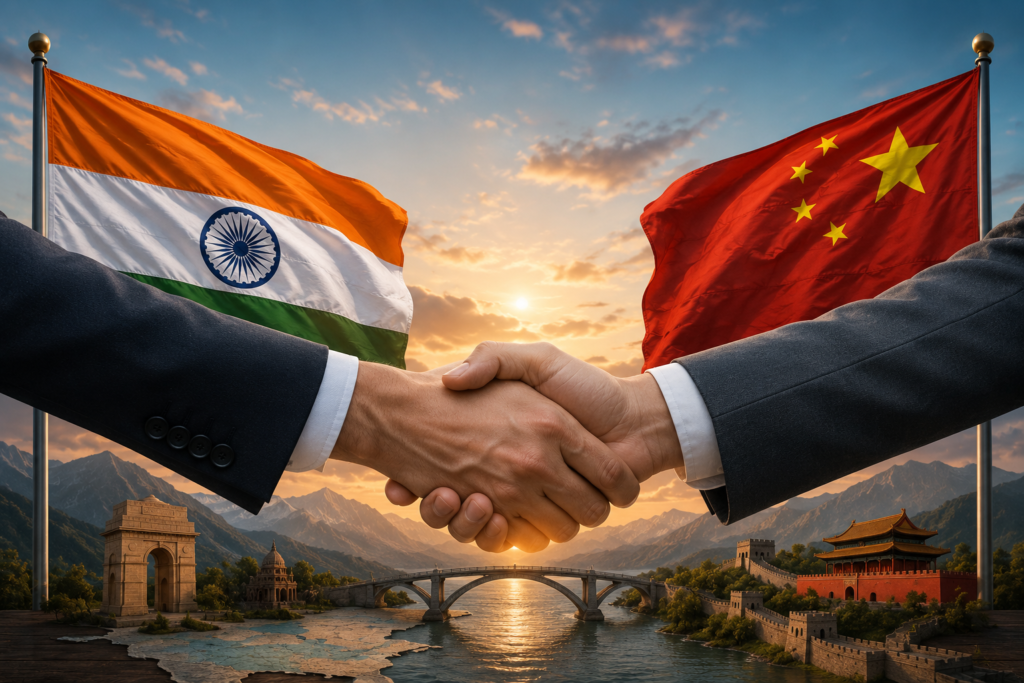
A recurring theme in the discussion is skepticism toward India’s vision of a multipolar Asia. The speaker argues that China has already emerged as a great power, while India remains a developing power struggling with significant economic and technological challenges.
This critique touches upon an important strategic question: what does multipolarity actually mean?
India’s foreign policy seeks a world where power is distributed among several major actors rather than concentrated in one or two superpowers. Such a vision allows middle powers greater strategic autonomy.
However, multipolarity is not merely declared; it must be supported by economic strength, military capability, technological innovation, and diplomatic influence.
The speaker suggests that India risks overestimating its current position. Whether one agrees with this assessment or not, it highlights the importance of aligning strategic ambitions with national capabilities.
The Case for Normalization
The video concludes by advocating improved relations with both China and Pakistan. The argument is grounded in geography rather than ideology. Since geography cannot be changed, neighboring states must eventually find ways to coexist.
This view echoes a longstanding principle in international relations: states may choose their friends, but they cannot choose their neighbors. Stable relations with neighboring countries often contribute to economic development, regional integration, and security.
Multipolarity is not merely declared; it must be supported by economic strength, military capability, technological innovation, and diplomatic influence.
At the same time, normalization requires mutual trust and reciprocal commitments. Persistent border disputes, terrorism concerns, and competing geopolitical interests make such normalization difficult. Nevertheless, the argument serves as a reminder that diplomacy remains indispensable even amid rivalry.
Conclusion
The video presents a highly critical assessment of India’s strategic thinking on China. Its central claim is that India exaggerates the extent of competition with China and fails to appreciate the depth of the power gap separating the two countries. It argues that China’s military, technological, and economic advantages fundamentally shape the relationship and that India should prioritize pragmatic cooperation over notions of rivalry.
Although some claims are debatable and certain conclusions appear overstated, the discussion raises important questions about deterrence, cyber warfare, technological competition, economic asymmetry, and strategic realism. The broader lesson is that effective foreign policy requires a clear understanding of both national strengths and limitations.
For India, the challenge is not simply whether to compete or cooperate with China. Rather, it is how to balance competition, coexistence, deterrence, diplomacy, and economic development in a rapidly changing Asian order. The answer to that question will significantly influence the future of Asia and the emerging global balance of power.
About the Author
Muneshwar Prasad is a communication scholar and researcher with a keen interest in journalism, media studies, and contemporary affairs. He has extensive experience as both a journalist and a media academic, bringing together professional practice and scholarly insight.

