


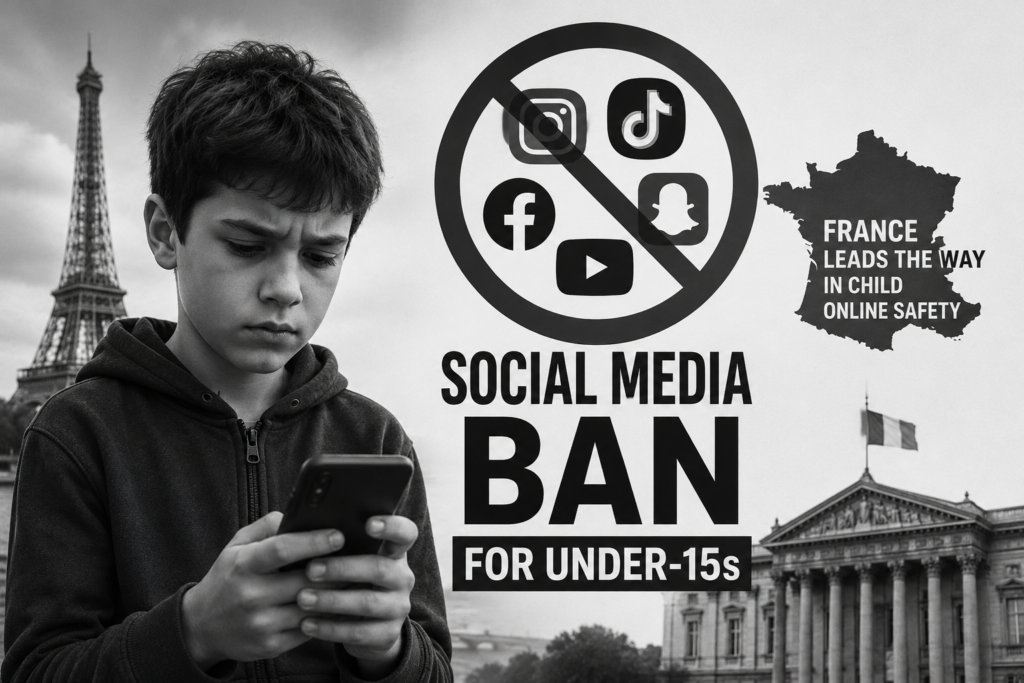
France has banned social media access for children under 15, requiring platforms to introduce strict age verification. The landmark legislation aims to curb cyberbullying, online addiction and harmful content, setting a precedent that could reshape child online safety regulations across Europe.
By Newswriters News Desk
France has become the first country in the European Union to ban access to social media platforms for children under the age of 15, marking a significant step in the global debate over protecting young people from the harmful effects of excessive online engagement. The legislation, approved by both houses of the French Parliament, is expected to come into force before the start of the new academic year in September, subject to constitutional review.
The new law prohibits children under 15 from creating accounts on social media platforms and requires technology companies to implement reliable age-verification systems. Platforms will also have a four-month transition period to identify and close existing accounts belonging to underage users. The French government says the responsibility for enforcing the ban will rest with social media companies, which must adopt age-verification methods approved by the country’s privacy regulator.
President Emmanuel Macron, who has repeatedly called for stronger safeguards against excessive screen time and online harms, welcomed the legislation as a major milestone in protecting children.
The law forms part of a broader digital safety agenda aimed at reducing the negative impact of social media on young users, including cyberbullying, anxiety, depression, sleep disorders and exposure to harmful content.
The legislation also expands restrictions on mobile phone use in schools, reflecting growing concern among policymakers about the influence of digital devices on students’ mental health, learning outcomes and social development. Educational and scientific platforms, including online encyclopedias such as Wikipedia and certain open-source educational resources, are exempt from the ban. Messaging and some non-social digital services may also receive limited exemptions depending on their functionality.
France’s move follows Australia’s landmark decision to prohibit social media access for children under 16, a measure that has encouraged governments worldwide to reconsider how digital platforms should protect minors. Several European countries, including Spain, Denmark and Greece, are also examining similar regulations, while the European Commission continues to explore continent-wide measures to strengthen online child safety.
However, the legislation has also generated debate over its implementation. Privacy advocates and digital rights groups have questioned how platforms will verify users’ ages without collecting sensitive personal information from millions of adults.
Critics argue that mandatory age verification could raise concerns about data security, online anonymity and compliance with European privacy laws. Others believe enforcing the ban will be technically challenging, particularly for existing accounts and users attempting to bypass restrictions.
Despite these concerns, supporters argue that the legislation represents a necessary intervention to address the growing mental health crisis among adolescents linked to social media use. Child welfare organisations and many parents have welcomed the move, saying stronger regulation is essential to protect children from online addiction, cyberbullying and algorithm-driven content that can adversely affect their well-being.

As governments around the world grapple with balancing digital innovation, privacy and child protection, France’s decision is likely to become an important test case. Its success—or failure—could shape future digital safety policies across Europe and beyond.

