


Across the world, democratic institutions are under mounting strain. From the rise of strongman politics and eroded checks on power to plummeting public trust, polarized societies, and the rapid spread of misinformation, the health of democracy is widely seen as fragile.
By Muneshwar Prasad
The rise of strongman politics, the erosion of checks on executive power, plummeting public trust, deepening polarization, and the rapid spread of misinformation have combined to make the health of democracy appear fragile in many places.
What once seemed like distant or temporary challenges now register as systemic symptoms affecting both young democracies and long-established ones. The question is no longer whether democracy is under strain, but how societies respond when the norms that sustain self-government begin to fray.
The United States provides a particularly visible illustration. Despite intense partisan disagreement on nearly every policy question, a substantial majority of Americans now say their democracy faces a serious crisis. Trust in the federal government has fallen to levels not seen in decades of polling.
Shared agreement on basic facts has fractured, with citizens increasingly sorting into separate information environments. Confidence in the press, in electoral processes, and even in fellow citizens continues to decline.
Aggressive assertions of executive authority, the politicization of institutions once viewed as relatively neutral, and a cultural undercurrent that sometimes treats political violence as conceivable rather than unthinkable all point to democratic backsliding even in a country with deep constitutional roots and long experience of competitive elections.
These American trends do not stand alone. They mirror broader global patterns. In many countries, faith in elections and representative institutions has weakened. Independent media face economic pressure, legal harassment, or outright capture by political or commercial interests aligned with those in power.
The temptation to prioritize passionate mobilization over reasoned deliberation has grown stronger as social media rewards outrage and simplifies complex problems into tribal contests.
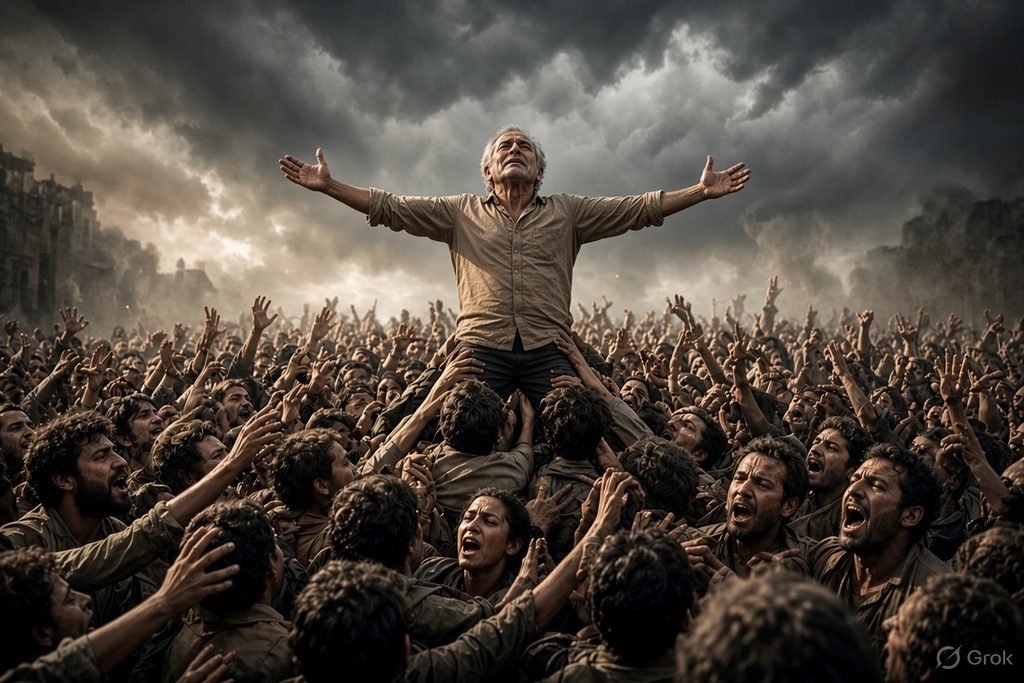
Leaders who present themselves as the sole authentic voice of “the people” against corrupt elites or foreign threats have gained ground in settings as different as Central Europe, Latin America, South Asia, and parts of Africa. In each case, the rhetoric of emergency or existential threat is used to justify concentrating power, weakening judicial independence, or rewriting electoral rules.
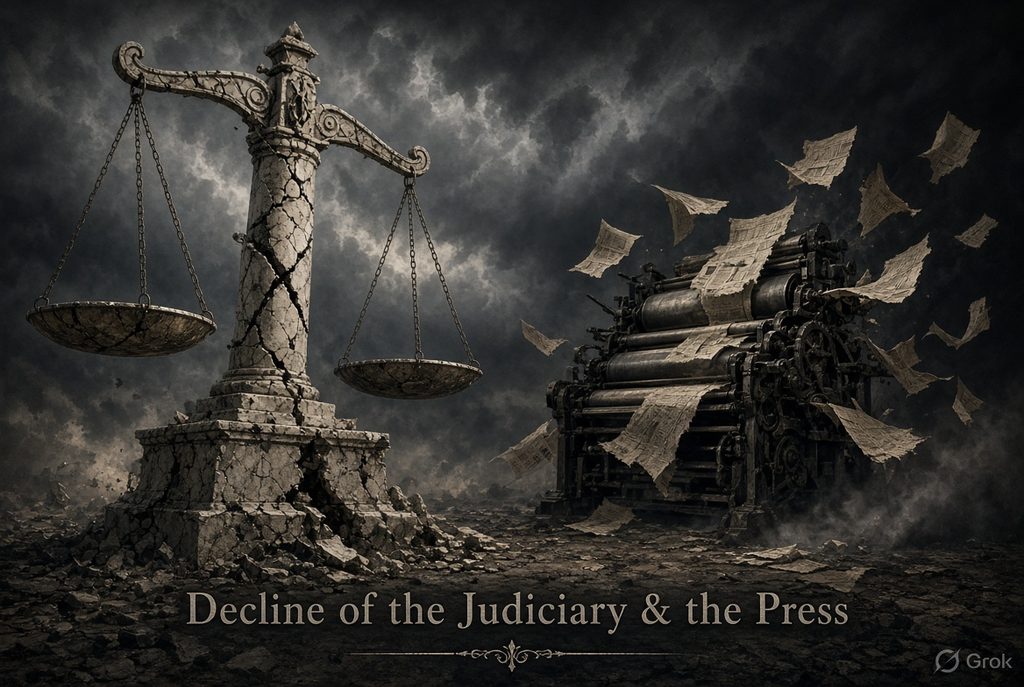
The common threads are recognizable. Polarization reduces the willingness to accept electoral defeat as temporary and legitimate. Misinformation and selective exposure make it harder for citizens to share a common factual baseline. Declining trust in intermediary institutions—courts, civil service, universities, journalism—leaves populations more dependent on charismatic leaders or online networks that reinforce existing beliefs.
When checks and balances are portrayed as obstacles rather than safeguards, the institutional architecture that distinguishes democracy from majoritarian dominance begins to erode. History shows that democracies rarely collapse overnight; they more often hollow out through the gradual normalization of practices that once would have been considered unacceptable.
Yet the picture is not uniformly bleak. Many societies continue to demonstrate resilience. Independent courts have blocked overreaches. Journalists and civil society groups have exposed abuses at personal risk. Citizens in multiple countries have turned out in large numbers to defend electoral integrity or protest power grabs.
Competitive elections still produce alternation in office in numerous places, even amid intense division. These counterexamples matter because they show that democratic norms are not self-enforcing; they require active defense by people who value them.
The deeper challenge is cultural as much as institutional. Democracy depends on a critical mass of citizens capable of distinguishing verifiable facts from ideology, of accepting that political opponents remain fellow members of the political community, and of prioritizing the long-term health of the system over short-term partisan advantage.
When large portions of a population come to view the other side as existential enemies rather than legitimate competitors, the incentives for restraint weaken.
When media ecosystems reward confirmation over scrutiny, the shared reality necessary for collective decision-making shrinks.
Rebuilding trust is therefore not primarily a matter of new laws or institutional redesign, though both have roles. It requires renewed habits of intellectual honesty, civic education that emphasizes evidence and argument rather than identity, and a willingness to defend procedural norms even when they constrain one’s preferred side.
Strengthening democracy everywhere ultimately rests on informed and engaged citizens who refuse to treat facts as optional and who recognize that the norms of self-government—free speech, independent institutions, peaceful transfer of power, equal application of rules—are more valuable than any single electoral outcome.
Societies that neglect these foundations invite the very strongman politics and institutional decay they claim to fear. The crisis is real, measurable in opinion data and institutional indicators across continents. Whether it deepens or is reversed will depend less on abstract theories of democracy than on the practical choices of citizens and leaders who still prefer self-government to its alternatives.
The record of the past decade shows that the outcome remains contested. The work of defending democratic norms is unfinished and, in many places, increasingly urgent.
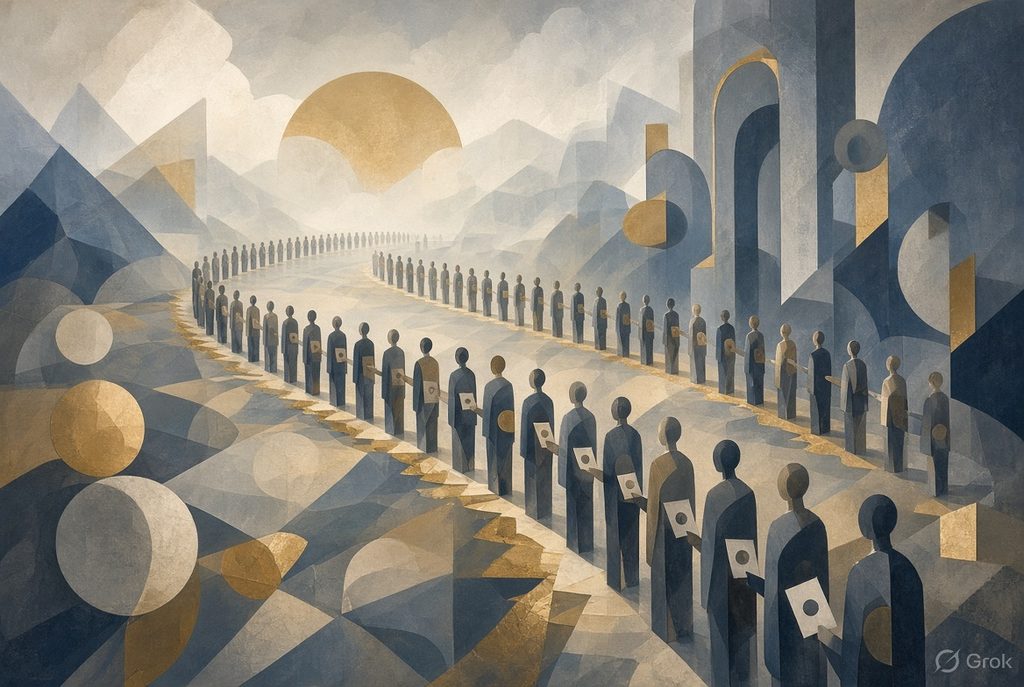
Democracy’s greatest vulnerability is not the ambition of strongmen or the noise of polarized crowds, but the quiet willingness of citizens to trade institutional restraint for the comfort of certainty. The crisis is real and measurable, yet it remains reversible wherever people still insist on facts over fervor, procedure over passion, and—most critically—believe in rational judgment rather than being swayed by emotional appeal.
The fate of democracy will not be decided by abstract forces of history, but by whether enough of us choose, day after day, to defend the norms that make freedom possible.

