


Declining marriage and birth rates, growing individualism and economic pressures are transforming family life. The challenge is to preserve the human relationships that sustain society without imposing a single model of living.
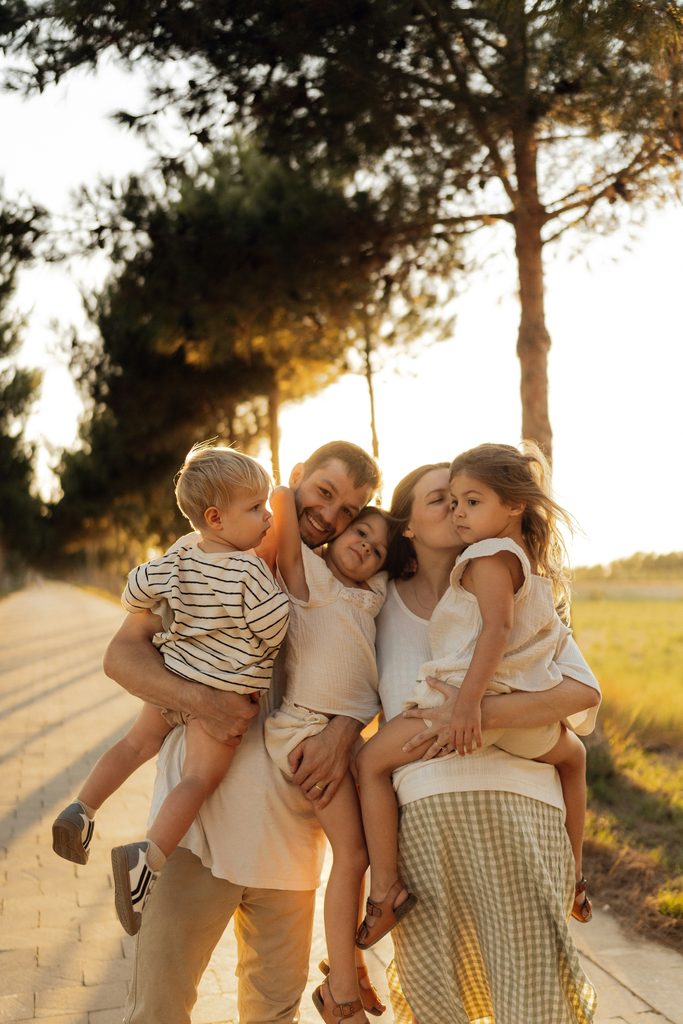
By Mikhail Afanasyev
Head of Research, RT’s Social Well-Being Index project
Courtesy: RT (Russia Today)
Edited and refined for Newswriters.in. Originally published by RT under the headline “Humanity without family is unlikely to remain humanity”.
The family as the foundation of society
Human civilisation has evolved through relationships of kinship, care, cooperation and mutual responsibility. Long before the emergence of modern states, markets and formal institutions, families provided the basic framework within which people were born, nurtured, socialised and prepared for life in society. They transmitted language, cultural traditions, values and collective memories across generations.
The family has never been a static institution. Its structure and functions have changed across historical periods and civilisations. Nevertheless, its fundamental role in providing emotional security, nurturing children and caring for vulnerable members of society remains significant.
The Greek philosopher Aristotle recognised the social nature of human beings and regarded the household as an elementary unit of social organisation. The larger community, in his understanding, emerged from smaller associations of human beings. Although contemporary societies are far more complex, the underlying insight remains relevant: human life depends not merely on individual achievement but also on relationships of interdependence.
This raises an important question for the modern world: what happens when societies increasingly organise themselves around individual aspirations while the institutions that sustain long-term relationships become weaker?
The changing landscape of family life
Across much of the world, marriage rates and fertility levels have declined, while people are increasingly marrying later or choosing not to marry. Single-person households have become more common in many societies, and traditional patterns of family formation are undergoing substantial change.
The Organisation for Economic Co-operation and Development (OECD), in its Society at a Glance 2024 report, documented a long-term decline in fertility across its member countries. The average total fertility rate fell from 3.3 children per woman in 1960 to 1.5 in 2022. The report also highlighted the influence of housing costs, financial insecurity, childcare expenses and changing personal preferences on decisions about parenthood.
These developments are not confined to any one region or cultural tradition. However, their pace, causes and consequences vary considerably between countries.
A decline in marriage rates does not necessarily mean that people have abandoned intimate relationships or family responsibilities. Many couples live together without formal marriage, while single parents, extended families and other arrangements continue to provide care and support. The more important question is whether people have access to stable, nurturing relationships and reliable networks of support.
Nevertheless, declining fertility and the growing number of people living alone can create significant social and economic challenges. Ageing populations may place greater demands on healthcare and pension systems, while smaller families may have fewer members available to care for elderly relatives. Communities can also lose some of the informal networks through which people support one another during illness, unemployment or personal crises.
The issue, therefore, is not simply the decline of a particular family structure. It is the possibility that the social relationships on which human well-being depends may become increasingly fragile.
Individual freedom and the limits of individualism
Modern societies have expanded individual freedom in important ways. Greater educational opportunities, women’s economic independence, improved reproductive healthcare and changing social attitudes have enabled people to make choices that were once constrained by rigid social conventions.
These changes should not be dismissed as evidence of moral decline. The traditional family has not always been a place of security or equality. Domestic violence, unequal responsibilities, restrictions on women’s autonomy and the exclusion of people who do not conform to prevailing norms have been persistent problems.
A humane understanding of family life must acknowledge these realities. Preserving families cannot mean preserving injustice within them.
At the same time, individual freedom does not eliminate the human need for attachment, companionship and belonging. A society that celebrates personal autonomy but neglects the conditions required for lasting relationships risks creating a contradiction: people may enjoy greater freedom of choice while experiencing greater loneliness and social isolation.
The distinction is between individualism as the protection of personal rights and individualism as the belief that people can flourish entirely independently of others. The former is indispensable to a democratic society; the latter overlooks the relational character of human existence.
Human beings need freedom, but they also need care. They need opportunities for self-development, but they also need relationships in which responsibility extends beyond immediate personal interests.
The economic pressures behind family change
It is tempting to attribute declining marriage and fertility rates primarily to changing values, consumerism or the pursuit of individual pleasure. Such explanations, however, overlook the economic circumstances in which people make decisions about relationships and parenthood.
For many young adults, securing stable employment, affordable housing and financial independence has become difficult. The cost of education, healthcare, childcare and raising children can make family formation appear financially risky. Long working hours, insecure employment and the absence of adequate parental support can further complicate the decision to have children.
The OECD’s research emphasises that economic security and family policies influence reproductive decisions. Affordable childcare, parental leave, stable employment and the ability to combine professional and family responsibilities can help people realise their aspirations for family life.
Women’s growing participation in education and employment has also transformed household relationships. The challenge is not to reverse these gains but to create conditions in which women and men can pursue careers while sharing the responsibilities of parenting and care.
This is where the relationship between the economy and family life becomes particularly important. Economic systems are essential for generating prosperity, but prosperity cannot be measured exclusively through production, consumption or financial accumulation. It must also be assessed in terms of the quality of human relationships, the security of childhood and the capacity of communities to care for their members.
A society that makes family formation prohibitively expensive cannot reasonably expect individuals to overcome these barriers through appeals to tradition alone.
The demographic challenge
Fertility rates below the level required for long-term population replacement can, if sustained, contribute to population ageing and eventual population decline. These changes have implications for labour markets, economic growth, public finances and intergenerational support.
Yet demographic change should not be reduced to a simple question of producing more children. Population trends differ widely across countries, and fertility is influenced by a combination of economic conditions, cultural expectations, reproductive choices and public policy.
Nor should people who remain single or choose not to have children be treated as less responsible members of society. Human contribution cannot be measured exclusively through parenthood. People without children can make substantial contributions through their work, friendships, caregiving, scholarship, community service and other forms of social participation.
The appropriate objective is to ensure that people who wish to form families and have children are not prevented from doing so by avoidable economic and institutional barriers.
Demographic sustainability and individual dignity need not be competing goals. Thoughtful public policy can support both.
Rebuilding the social bonds that sustain humanity
The weakening of family relationships should also encourage us to reconsider the broader social environment in which families operate. Families do not exist in isolation. Their ability to nurture children, care for older people and support individuals depends partly on the institutions and communities around them.
Governments have a responsibility to promote affordable housing, accessible healthcare, quality education, secure employment and adequate childcare. Employers can contribute through reasonable working hours, parental leave and family-friendly workplace practices. Educational institutions can help young people develop an understanding of relationships, empathy, cooperation and shared responsibility.
Communities, meanwhile, can strengthen intergenerational contact and create opportunities for people to support one another beyond the boundaries of their immediate households.
Technology also presents a paradox. Digital platforms connect people across continents, yet online interaction does not always provide the emotional depth of sustained personal relationships. Digital communication can strengthen family bonds when distance separates relatives, but it cannot automatically replace the time, attention and physical presence that care often requires.
The task is not to reject modernity or romanticise the past. It is to ensure that technological and economic progress remains compatible with human needs.
Humanity depends on relationships
The future of humanity will not be determined by demographic statistics alone. It will also depend on the quality of the relationships through which people experience love, trust, responsibility and belonging.
Family remains one of the most important settings in which these values can be cultivated. But its significance lies not merely in marriage, biological reproduction or adherence to inherited conventions. It lies in the capacity to nurture human beings, transmit knowledge and values, provide care and connect generations.
A family that offers dignity, security and affection can be a powerful source of human flourishing. A family marked by coercion, violence or persistent inequality, by contrast, undermines the very values it is expected to protect.
The challenge for contemporary societies is therefore twofold: to preserve the social and emotional functions of family life while making families more equitable, inclusive and compatible with individual freedom.
Humanity does not cease to be human simply because people marry less often or have fewer children. But a society that systematically weakens care, commitment, intergenerational solidarity and meaningful human connection risks losing essential foundations of its humanity.
The real question is not whether everyone must live within a traditional family structure. It is whether we can build a world in which nobody is deprived of the relationships and support necessary to live a dignified human life.
Ultimately, humanity needs more than individual freedom and material progress. It needs relationships that give life meaning, responsibility a purpose and future generations a place in the world. The family, in its many humane forms, remains central to that endeavour
Photo: Seljan Salim, Unsplash

